
Medellin, Colombia – Mexico is seeking a delicate diplomatic path after the United States threatened to impose tariffs on countries supplying oil to Cuba, a move President Claudia Sheinbaum has warned could deepen the island’s worsening humanitarian crisis.
As one of Cuba’s last remaining energy lifelines, Mexico now finds itself balancing pressure from Washington with its longstanding commitment to sovereignty and regional solidarity, amid escalating US efforts to economically isolate Havana.
“We do not want tariffs on Mexico, but we will always look for diplomatic channels to seek solidarity with Cuba,” Sheinbaum said, adding that she had instructed her foreign minister to reach out to the U.S. State Department.
Sheinbaum has also warned that cutting off oil shipments could cause a serious humanitarian crisis in Cuba, affecting transportation and key infrastructure, including hospitals and electricity generation.
“Applying tariffs on countries that supply oil to Cuba could trigger a far-reaching humanitarian crisis, directly affecting hospitals, food, and other basic services for the Cuban people,” she said, adding that the situation must be resolved.
“La aplicación de aranceles a países que suministran petróleo a Cuba podría desencadenar una crisis humanitaria de gran alcance, afectando directamente a hospitales, alimentación y otros servicios básicos del pueblo cubano”, ha expresado Sheinbaum.
Sheinbaum did not specify whether Mexico would suspend shipments of oil or refined products to Cuba, which she said account for about one percent of Mexico’s total production. She stressed, however, that her government is exploring alternative ways to support the island.
Meanwhile, according to Kpler, Cuba has oil reserves sufficient for only 15 to 20 days, with rolling blackouts of up to 12 hours already becoming routine in Havana—an early indication of the impact the threatened tariffs could have on daily life.
What the Trump administration is doing
Trump has justified the increased tariffs by citing the Cuban government’s alleged ties to Russia, Hamas, and Hezbollah; and while the statement did not name Mexico, Sheinbaum’s government has been the top supplier of oil to the island since 2025, surpassing Russia and Venezuela.
Trump has framed the tariff policy as part of a broader effort to weaken the Cuban government, repeatedly suggesting the regime is close to collapse. When asked whether he was trying to “choke off” Cuba, he said he was not, but added that the island “looks like it’s something that’s just not going to be able to survive.”
Since the US operation in January which removed President Nicolás Maduro, Trump has also said Venezuelan oil would no longer be allowed to reach Cuba, declaring that Havana’s government is “ready to fall.”
Cuba’s response: Accusations of economic warfare
Cuba’s president, Miguel Díaz-Canel Bermúdez, said in a post on X that Trump sought to “suffocate” the island’s economy and that the tariffs revealed the “fascist, criminal, and genocidal nature of a clique that has hijacked the interests of the American people for purely personal gain”.
Cuban Foreign Minister Bruno Rodríguez and a number of other Cuban officials condemned Trump’s executive order. Rodríguez called it a “brutal act of aggression against Cuba and its people … who are now threatened with being subjected to extreme living conditions.”
Mexico’s position: Between Washington and Havana
As Cuba’s current top oil supplier since 2025, Mexico falls directly in the line of US pressure, and as of Tuesday, January 27, Sheinbaum said Pemex had at least temporarily paused some oil shipments to Cuba.
As of Monday, February 2, 2026, Sheinbaum’s administration is aiming to ship oil to Cuba for humanitarian reasons, “without seeking confrontation.” But they also said aid would consist of “other” products for the coming week.
“Mexico is gonna cease sending them oil,” U.S President Donald Trump told reporters in the White House Oval Office. He did not elaborate on why he believed this to be the case.
She has struck an ambiguous position, claiming the pause was part of general fluctuations in oil supplies and a “sovereign decision” not made under pressure from the U.S. Sheinbaum has said Mexico will continue to show solidarity with Havana, but has not clarified what kind of support Mexico will offer.
Trump and Sheinbaum discussed their current affairs last Thursday, and while Mexico’s president claims not to have addressed the “issue of Cuba,” she conceded that Mexico’s foreign affairs secretary had discussed with Rubio that it was “very important” for Mexico to maintain its humanitarian aid to Cuba and that Mexico was willing to serve as an intermediary between the U.S. and Cuba.
Sheinbaum’s ambiguity towards the matter highlights the extreme pressure Mexico and other Latin American nations are under as Trump has grown more confrontational following the Venezuelan operation.
Rising pressure on Mexico–US relations
The threat of US tariffs tied to Cuban oil shipments comes amid broader tensions between Washington and Mexico, including renewed comments from President Donald Trump about potential military action against drug-trafficking cartels inside Mexico – rhetoric that exposes strained security cooperation even as Mexico firmly rejects foreign intervention on its part.
At the same time, Mexico and the U.S. are preparing to renegotiate the USMCA trade agreement, heightening the diplomatic stakes for President Sheinbaum as she seeks to balance cooperation with Washington against domestic political pressures.
In this context, speculation has intensified that Mexico might reduce or alter its oil shipments to Cuba under mounting US pressure, a scenario that illustrates how intertwined trade, security and energy diplomacy have become in the current dispute.
Cuba’s energy crisis and immediate risks
Cuba is experiencing increasingly severe power outages as fuel supplies dwindle, with reports of blackouts lasting up to 12 hours or more in parts of Havana and rolling power cuts now common across the island. These disruptions are affecting refrigeration, water pumping, and basic household routines.
Officials and foreign leaders warn that the threatened tariffs and tightening fuel access could directly undermine essential services, potentially disrupting hospital operations, food distribution, and other basic infrastructure relied on by ordinary Cubans. Mexico’s president highlighted this risk, suggesting the measures could “directly affect hospitals, food supplies and other basic services for the Cuban people.”
Mexico’s state-owned oil company Pemex reported shipping nearly 20,000 barrels of oil per day to Cuba between January and September 2025, making Mexico the largest oil supplier to Cuba.
After a visit to Mexico City by US Secretary of State Marco Rubio, however, those shipments reportedly dropped to around 7,000 barrels per day, according to satellite-tracking data cited by energy analysts. With Venezuelan supplies cut off, Cuba has become increasingly dependent on Mexico to meet its basic energy needs.
Oil as a structural political force
The capture of Maduro inside Venezuela marks a geopolitical turning point for Havana, whose energy, strategic and political ties with Caracas sustained much of its survival as a state.
Venezuela’s subsidized shipments under former President Hugo Chávez and Maduro underpinned Cuba’s electricity generation, transportation, and broader economic stability, reflecting an energy interdependence that became a cornerstone of Latin American politics for more than six decades.
The recent capture of Maduro — and the consequent effective end of this oil lifeline — marks a significant geopolitical turning point, stripping Cuba of its most dependable external ally and exposing the fragility of a model built on external energy support and leaving the island markedly more vulnerable to external pressure.
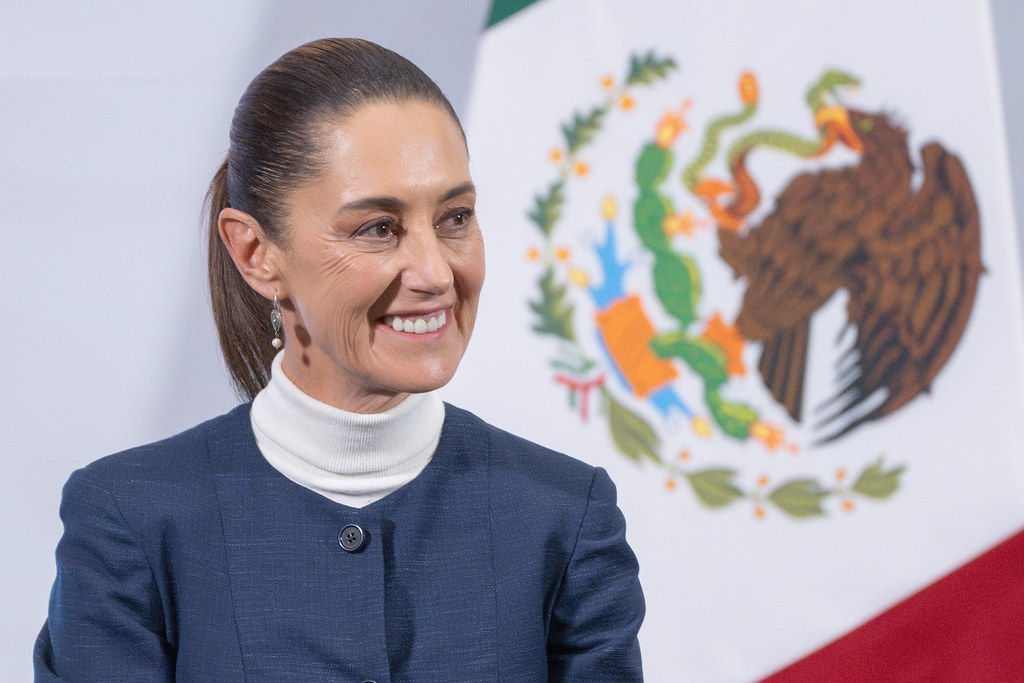
Featured image: Claudia Sheinbaum
Source: Eneas de Troya via Flickr
Licence: Creative Commons Licenses