
Caracas, Venezuela – The early hours of January 3, 2026, will be remembered as one of the most shocking nights Venezuelans have experienced in recent history. Many remember the intense red flashes, or how the walls of their homes shook, while others recall the loud noises of helicopters and bombs ringing through the streets as the United States attacked Venezuela and captured long-time leader Nicolás Maduro.
At 2:00 AM, the military operation ordered by US President Donald Trump began. The plan involved more than 150 aircraft which attacked military bases, airports, and other strategic sites for the Chavista government. All this was done to create a distraction while special forces penetrated the heart of Fuerte Tiuna, where Maduro and his wife Cilia Flores, now on trial in New York for crimes related to drug trafficking, resided.
Latin America Reports spoke to Venezuelans about how they experienced this historic moment.
Alexandra Arismendi, who lives near the Miraflores presidential palace, said: “I was very close to what happened. We felt a lot of anxiety and uncertainty.” She added that at the time she did not think about leaving her home because she was afraid of going outside and getting hurt.
In the days since the attack, Arismendi describes an eerie sense of calm, especially at night when silence reigns in the Venezuelan capital. “After [Saturday morning], there has been a quietness and a calmness – you can almost cut the silence with scissors. I haven’t slept much since what happened,” she told Latin America Reports.
Another attack was reported at the airport in Higuerote, a coastal town in Miranda state roughly an hour and a half from Caracas. Margarita Rodríguez, 73, a resident of Higuerote, described feeling confused about what the loud noises she heard early in the morning were.
In an interview with Latin America Reports, Rodríguez explained that she went out into the street, like many of her neighbors, to try to find out what was happening. Some said it was a fire at the airport terminal, while others said a coup was taking place. “I heard several explosions, like three or four,” she recalled.
Rodríguez added that she was unable to sleep for several hours because she was afraid of further bombings. “We thought our house might be destroyed,” she said.
Alexander Ortega, a shopkeeper who traveled to Higuerote after the Christmas holidays, explained that he was asleep when the first bombing occurred, but then, after receiving a call from his family in Caracas, he understood the situation.
Shortly after, when he heard the sounds of the second attack, he was overcome with fear. “I heard the second wave completely because it was like two bombs falling. ‘Boom, boom.’ Those were really noticeable because I was awake by then, and they shook the windows and the whole apartment,” he told Latin America Reports.
In the days since the attack, more information has come to light about what happened on Saturday morning. The U.S. operation to extract Maduro left at least 80 dead and hundreds wounded, according to information released on January 6 by Venezuelan authorities. United States officials estimate the death toll of Saturday’s intervention as 75, according to the Washington Post.
The Venezuelan Army has announced that 23 soldiers from the country died in the attack, while the Cuban government said that 32 Cuban soldiers who were collaborating with the Chavista administration also died in the incident.
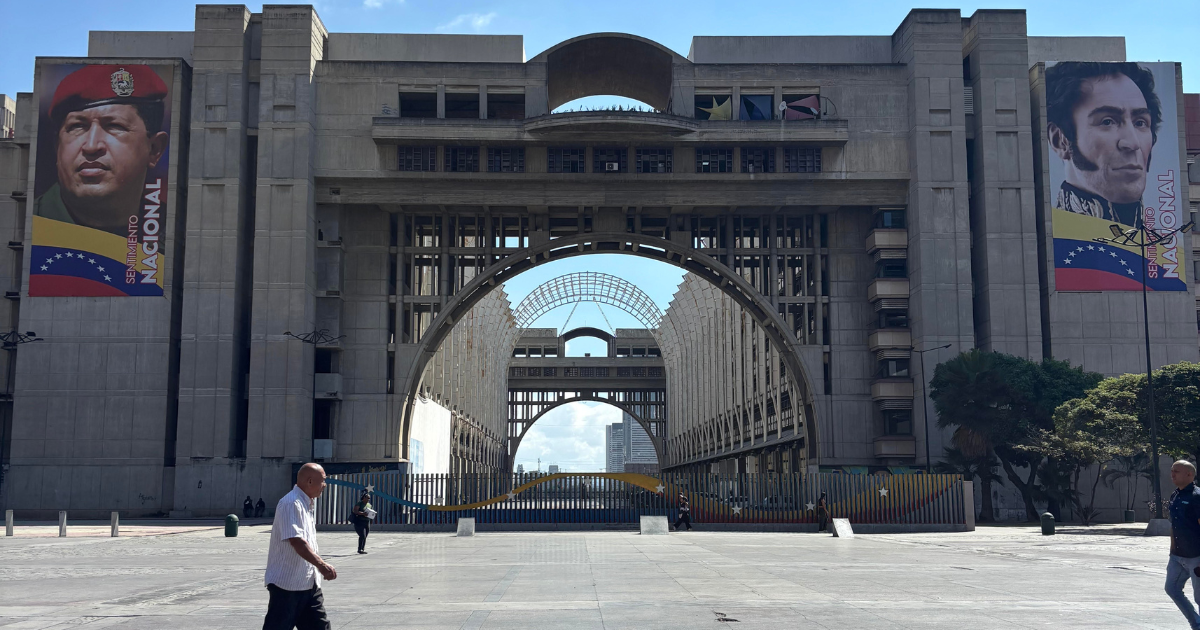
Featured image description: Citizens walk through Plaza Diego Ibarra in Caracas after the United States attacks.
Featured image credit: Julio Blanca