
Caracas, Venezuela — The cabinet of Venezuela’s interim president, Delcy Rodríguez, has seen some shake ups in recent days, with the appointments of a handful of new ministers in an apparent attempt to consolidate power just months after her predecessor, Nicolás Maduro, was captured by the United States.
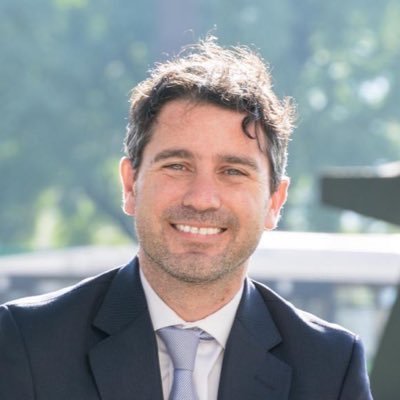
The reshuffling of officials in the ministries of Defense, Transportation, Housing, Culture, Electric Power, and Higher Education is a move by Rodríguez to buy time and remain in power longer, according to Benigno Alarcón, founder of the Center for Political and Government Studies at Andrés Bello Catholic University in Caracas.
“I believe that what Delcy Rodríguez is trying to do is a political reshuffle within the government, aiming to stay in power as long as possible so that when an election is held, it will be one that she can control to some extent,” he told Latin America Reports.
Alarcón believes that the roadmap proposed by the Trump administration after its January 3 attacks has not yet entered its most critical phase — a political transition — precisely because of resistance from diehards in the Chavismo movement.
“We are seeing that the political deadlock continues, so we cannot say we are facing a transition at this moment. It is important to remember that [U.S. Secretary of State] Marco Rubio’s plan outlined a three-phase strategy, with the third phase being the transition. Well, clearly we haven’t entered that phase yet, and clearly Delcy Rodríguez is trying to prevent us from entering it,” he commented.
Ministerial changes lacking in scope
The recent appointments do not send a clear signal that a democratic reinstitutionalization is actually taking place in the country, according to the professor, since those who have been named ministers so far are part of the Chavista inner circle.
“What they’re basically doing is placing people whose merits, let’s say, are essentially their closeness to and the trust of those in power, right? In other words, in that sense, nothing has changed; everything remains more or less the same,” he stated.
Alarcón explained that there is a “recycling” of Chavista figures. “Some people from a faction within Chavismo are leaving, and others are coming in — let’s say because in the past they were either marginalized, overlooked, or had their chance and then were left out, and now they’re coming back,” he added.
Recycling Chavismo
The new ministers appointed by Rodríguez are:
- Gustavo González López as Minister of Defense;
- Jorge Márquez Monsalve as Minster of Housing;
- The engineer Rolando Alcalá as the Minister Energy and Electricity;
- Jacqueline Faría as Transport Minister;
- Magistrate Carlos Alexis Castillo as the Minister of Social Process of Labor;
- Editor Raúl Cazal as Culture Minister;
- Professor Ana María Sanjuán as Minister of University Education, Science and Technology.
A clear example of Alarcón’s so-called Chavista recycling is Gustavo González López, who now heads the Ministry of Defense, replacing Vladimir Padrino López — a key figure in Maduro’s government who held that position for over 10 years, making him the longest-serving minister in in that ministry’s history.
Before joining the Ministry of Defense, González López was appointed in January 2026 by Rodríguez to lead the direct security of the presidency and military counterintelligence.
Additionally, in late 2024, he played a key role in the oil industry as Director of Strategic Affairs and Production Control.
The military officer is also known for having led the Bolivarian National Intelligence Service (SEBIN) for two terms (2014–2018 and 2019–2024). Under his command, the agency centralized much of the internal political control.
“I believe that what Maduro did at the time was to place, so to speak, the military component in the hands of a general he trusted, Vladimir Padrino López, and leave the military to him, making him a bridge between the civilian political sector and the military sector. Well, at this point, the bridge was changed, so to speak. So now you have González López as Delcy’s right-hand man, because he worked with her in the past, first as director of SEBIN,” Alarcón said.
The reconfiguration of Rodríguez’s cabinet seems to respond more, according to Alarcón, to a strategy of internal protection than to a democratic opening.
While the names in the portfolios are being recycled and the bridges with the military sector are being reinforced with figures of extreme trust, the true transition proposed by the international community remains in limbo.
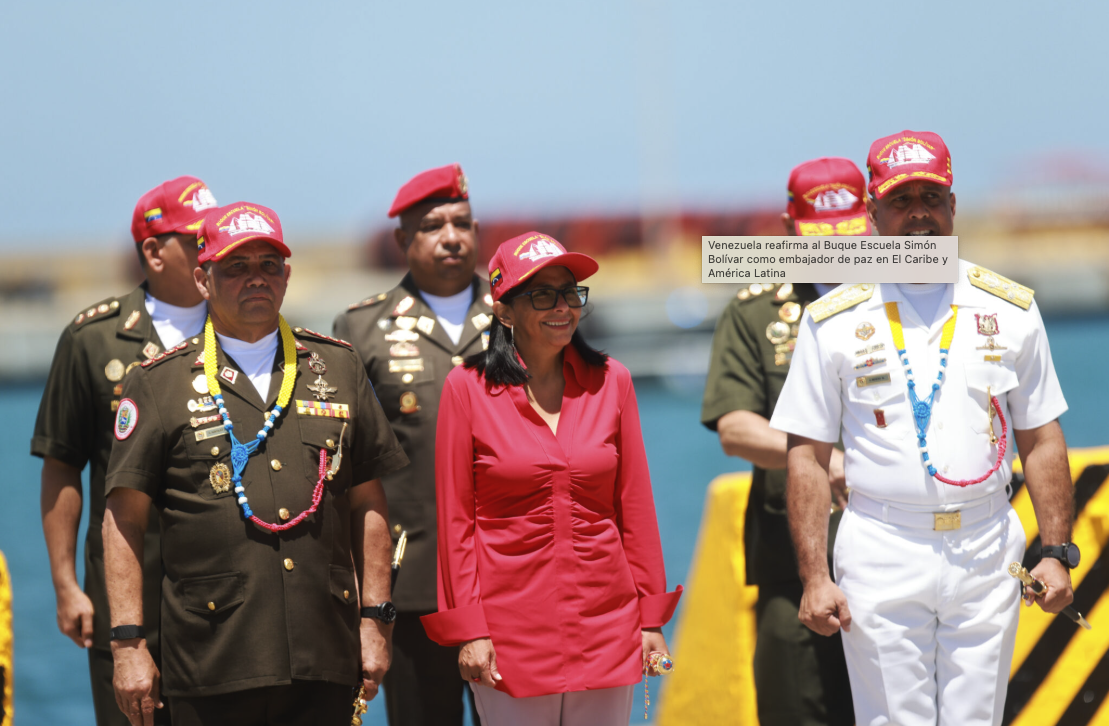
Featured image: Delcy Rodríguez at a recent naval ceremony.
Image credit: Vice Presidency of Venezuela