
Colombia’s Senate passed a bill prohibiting Female Genital Mutilation (FGM) today after a long battle by women’s rights activists.
The ‘Law on Girls Without Mutilation’ passed unanimously in the final session of congress and just requires presidential approval to come into effect.
Colombia is the last country in the Americas where FGM is still practiced, a ritual that is linked to the Embera Indigenous community.
Between January 2024 and March 2026, the government registered 98 cases of girls being subjected to FGM, which is defined by the World Health Organization (WHO) as “procedures that involve partial or total removal of the external female genitalia, or other injury to the female genital organs for non-medical reasons.” The WHO estimates that 230 million women worldwide are victims of FGM, the vast majority living in Africa.
The procedure poses risks such as bleeding, infection, extreme pain and death. The existence of FGM in Colombia was not known until 2007, when two Embera girls died after being mutilated.
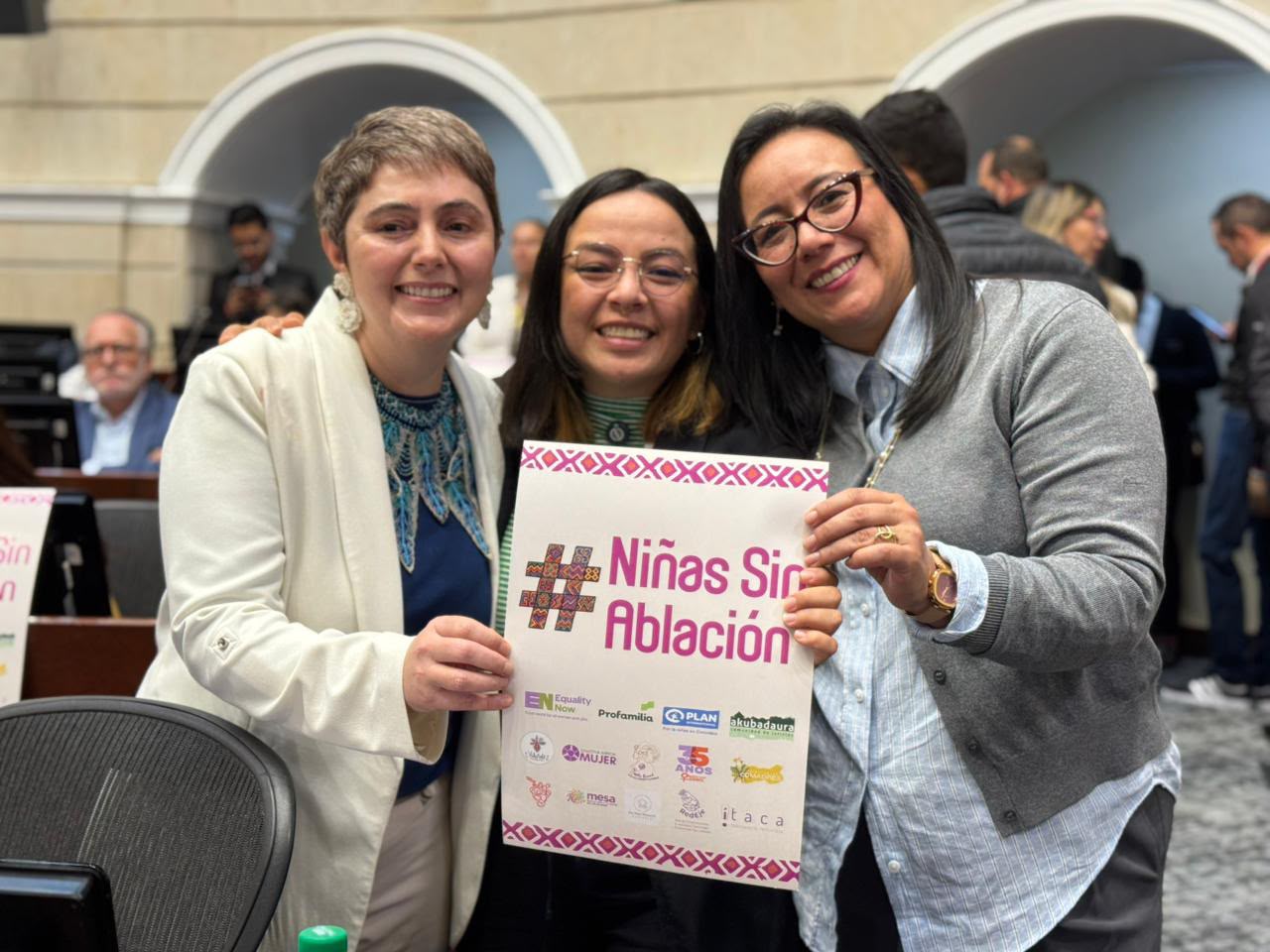
The law was authored by lower house representatives Jennifer Pedraza, Alexandra Vásquez, and Carolina Giraldo, as well as Senator Angélica Lozano.
The legislation was developed in consultation with academics, social organizations, and women from the Embera community.
“As such, it takes a preventive and cultural approach—rather than a punitive one—with the aim of
protecting victims and potential victims of this practice, which occurs primarily
among newborn girls,” said a press release following the bill’s passing.
Featured image description: Carolina Giraldo, Jennifer Pedraza, and Alexandra Vásquez smile after the bill’s passing.
Image credit: Courtesy of Jennifer Pedraza