
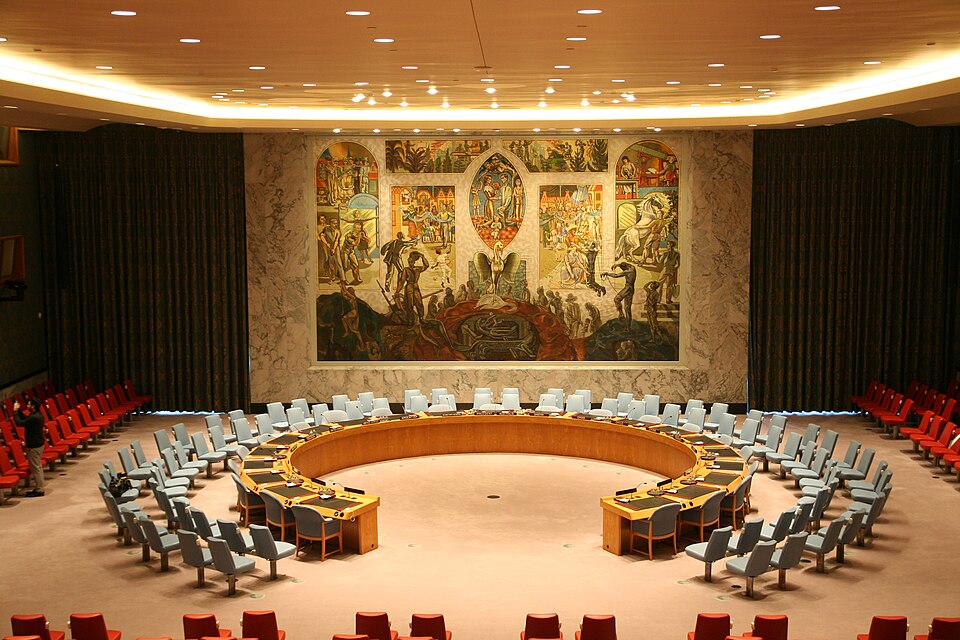

Bogotá, Colombia – A coalition of advocacy groups in Colombia sent an open letter to the president of the United Nations Security Council yesterday sounding the alarm about threats to the country’s peace process.
As the historic 2016 deal with FARC rebels approaches its ten-year anniversary, the letter – which represents “Ethnic Peoples and campesinos” – draws attention to the many threats to the peace process, including political and security conditions.
The letter comes less than a month before right-wing president-elect Abelardo de la Espriella takes office, who has pledged to oppose key tenets of the peace process and begin an all out war on insurgents.
With the Security Council due to hold a session on Colombia on 15 July, the signatories of the letter encouraged the UN’s “proactive engagement” with the Afro-Colombian, Indigenous and peasant communities most affected by the conflict.
The letter, addressed to the temporary president of the Security Council, Zénon Mukongo Ngay, begins by expressing the signatories’ concerns regarding Colombia’s increased polarization, which has historically led to outbreaks of political violence in the country.
The deep division in Colombian society is illustrated by presidential elections in which centrist candidates won less than 10% of the vote. Hard-right populist de la Espriella overcame leftist Senator Iván Cepeda in the second round by less than 1% after a historic turn-out.
While the letter does not mention de la Espriella by name, it denounces “repeated attacks by important political sectors on the Peace Agreement and its key aspects.”
De la Espriella claims that he will eliminate the Special Jurisdiction for Peace (JEP) – the body responsible for investigating crimes committed during the conflict – calling it a “tribunal of revenge.”
He also announced this week that he plans to abolish both the office of the Peace Commissioner and the Presidential Office for Human Rights and International Humanitarian Law.
These promises have raised concerns that victims of the conflict may be denied access to long-awaited justice.
The Washington Office on Latin America (WOLA) is one of over 200 groups and individuals to put their names to the letter.
WOLA’s Andes Director, Gimena Sánchez-Garzoli, told Latin America Reports that the signatories aim to harness international support for the Peace Agreement to block domestic political attempts to derail it.
She said the strategy had precedent, citing failed attempts by ex-President Iván Duque, who came to power in 2018, to fulfill his pledges to dismantle aspects of the Peace Agreement. “He wasn’t able to because the international community, and foreign states in particular, were so behind it,” said Sánchez-Garzoli.
Nevertheless, President Duque was able to hamper the process of peacebuilding through his objections to the JEP and other clauses of the 2016 deal, which many analysts say contributed to the resurgence of armed violence in recent years.
Along with the election of de la Espriella, Donald Trump’s return to office presents another political headwind for the peace process in Colombia, according to Sánchez-Garzoli.
Since his election, the mandate of the UN Verification Mission in Colombia – responsible for monitoring the peace process – has been reduced in scope.
The Ethnic Chapter of the Peace Agreement – designed to ensure the representation of and oversight by indigenous and Afro-Colombian social organizations – is no longer under its remit.
Sánchez-Garzoli told Latin America Reports that this came about as a result of pressure from the Trump administration.
The letter argues that “Ethnic Peoples, Peasants, and Victims of the Conflict should be the first to benefit from the results of the implementation of the Peace Agreement”, noting that these sectors have suffered most from the consequences of its insufficient implementation.
These include “illegal mining, clashes [between armed groups], and the increasing use of explosive devices dropped by drones,” as well as the recruitment of minors.
The letter therefore exhorts UN leaders to engage with Afro and Indigenous groups, with the hope of re-centering the experiences of these communities in any assessment of the peace process.
Sánchez-Garzoli believes this is particularly important because the Verification Mission’s new head, Slovakian diplomat Miroslav Jenča, may be yet to develop a “nuanced understanding of the complexities of the peace process and the importance of Afro and Indigenous issues.”
“They [the UN] need to be in touch and listening to what those communities say.”