
Cuban Foreign Minister Bruno Rodríguez Parrilla revealed in a recent press conference that the U.S. and Cuba are not currently engaged in talks to end the enduring diplomatic crisis between the two nations.
This cessation of dialogue is a recent development; in March, Cuban President Miguel Díaz-Canel announced that Washington and Havana were negotiating in order to de-escalate bilateral tensions that have steadily risen over the course of this year.
Since January, the administration of U.S. President Donald Trump has repeatedly threatened the Cuban leadership with regime change and tightened punitive sanctions on the island.
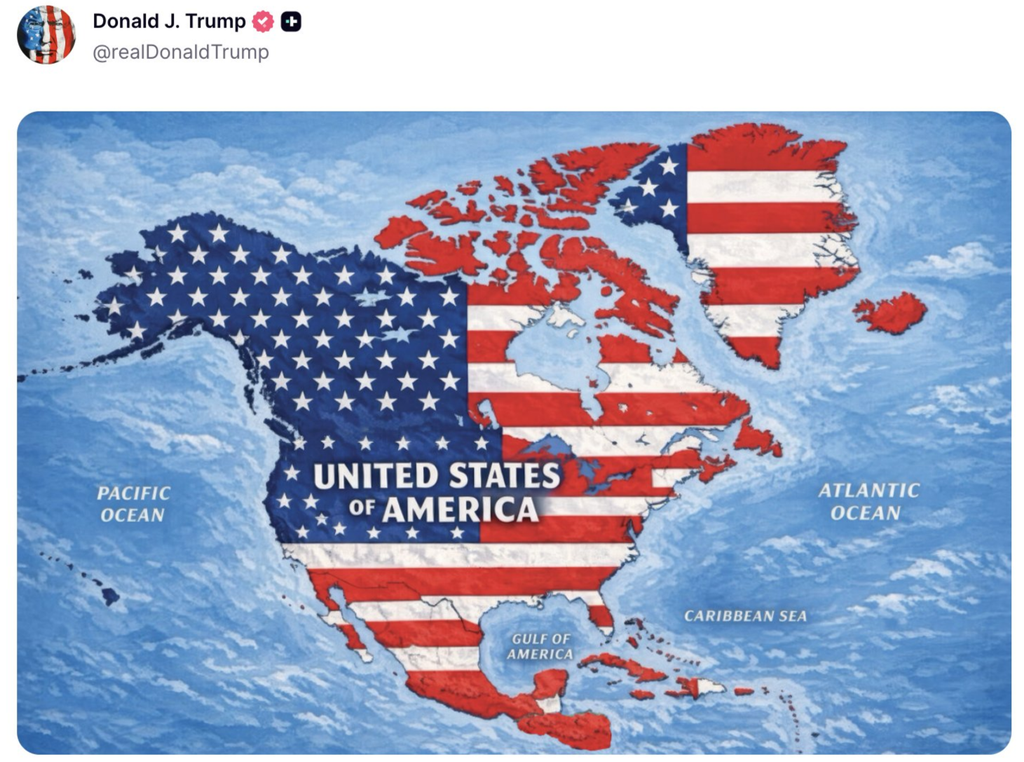
Most recently, Trump posted a picture on Truth Social that depicted various independent countries in North America and the Caribbean under the American flag. Díaz-Canel responded to the image by asserting that Cuba would never again be an imperial colony.
U.S. threats are not just rhetorical, the North American superpower has attempted to isolate the island economically; a near-complete blockade of oil imports since January has been particularly damaging to the island, causing repeated nationwide blackouts.
Various sectors of the Cuban economy and figures associated with the governing Cuban Communist Party have been targeted.
Last week, for example, the U.S. State Department announced sanctions targeting Fidel Ernesto Castro, the grandson of former Cuban President Raúl Castro, and various Cuban companies associated with their energy, mining and banking sectors.
“I denounced [during the press conference] the collective punishment to which the U.S. government is subjecting the people of Cuba, with its energy siege, the extreme tightening of the blockade, and the application of secondary sanctions,” Rodríguez Parrilla wrote on X.
According to a Cuban government report, U.S. economic sanctions against the island resulted in economic losses worth more than US$8 billion dollars between March 2025 and February 2026.
The damage does not include the losses incurred as a result of the oil blockade or the extensive U.S. secondary sanctions imposed on Cuba in May.
The story of negotiations so far
In response to this economic pressure, Cuba passed a package of 176 pro-market reforms in June.
The new measures included removing the 100-worker cap on private businesses, allowing individuals to own stakes in multiple firms and opening up key sectors, such as tourism and fuel trading, to foreign investment.
Many experts speculated that this gradual economic decentralization was effectively a diplomatic olive branch extended to the U.S. administration by the Cuban government.
There have been some other signs that negotiations were progressing. In May, CIA director John Ratcliffe flew to Cuba in May to hold talks with his Cuban counterpart in order to “improve dialogue”.
One month earlier, the Cuban government – which is widely criticized by human rights groups for conducting arbitrary arrests – released thousands of prisoners in a “humanitarian gesture”.
The gesture may have been a response to the Trump administration briefly lifting the oil blockade to allow a Russian tanker to dock in the Cuban port city of Matanzas.
Mervyn Bain, a Professor of International Relations at the University of Aberdeen, argued that “the changes that have been made in Cuba this year – the prisoner releases and some of the economic changes as well – show a willingness from Cuba to reform”.
Nevertheless, Bain noted that a total de-escalation was always unlikely.
“The two sides are not going to get an agreement because the U.S. would want more political change than Cuba’s willing to give up,” she told Latin America Reports.
There were previous reports suggesting that negotiations had reached an impasse over the U.S. side demanding that Díaz-Canel step down in order for negotiations to continue. The Cuban leader emphatically ruled out resigning.
Another deal that would have seen Cuba privatize its state-run oil company in exchange for much needed U.S. energy supplies to the island was temporarily on the table, but fell through because of Cuban hesitation and the opposition of the Cuban-American lobby in Florida, which has historically opposed any negotiation with the Cuban regime, according to the Miami Herald.
Bain speculated that opposition by these Cuban-American pressure groups in the U.S. was partially in response to the involvement of ex-leader Raúl Castro’s grandson – Cuban security official and political advisor Raúl Guillermo Rodríguez Castro – in negotiations.
“Raul Castro’s grandson supposedly took part in the negotiations … the fact that Raul Castro still has so much political influence in Cuba is feeding into that more hardline position within the U.S.”
“He was one of the original revolutionaries in 1959 … who changed the relationship with the U.S. so fundamentally”
This hardline Cuban-American lobby would not want to make a deal that saw the domination of Cuba by the Castros continue, Bain suggested.
In recent months U.S.-Cuba relations have continued to sour, making a deal seem less likely than ever; the U.S. announced in May that it planned to indict Raúl Castro over his alleged role in ordering the destruction of two civilian aircraft in 1996.
The State Department also released a report accusing the Cuban government of supporting sedition on U.S. soil, maintaining extensive espionage operations against the U.S. and promoting anti-Americanism worldwide.
Critics of the document argue that it is designed to justify a future U.S. attack against the island.
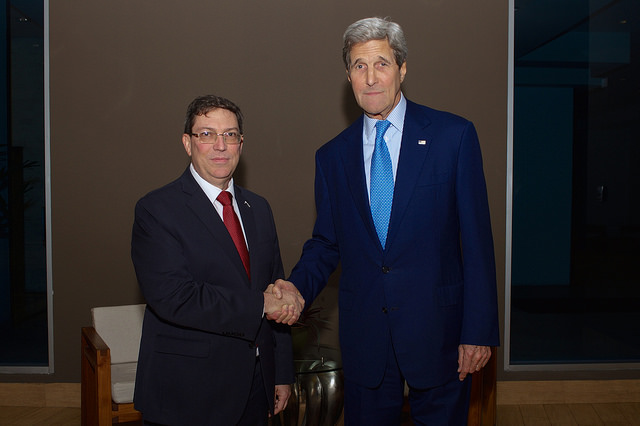
Featured Image: Cuban Foreign Minister Bruno Rodríguez Parrilla and former U.S. Secretary of State John Kerry meet in 2015.
Image Credit: US Embassy Panama via Flickr
License: Creative Commons Licenses