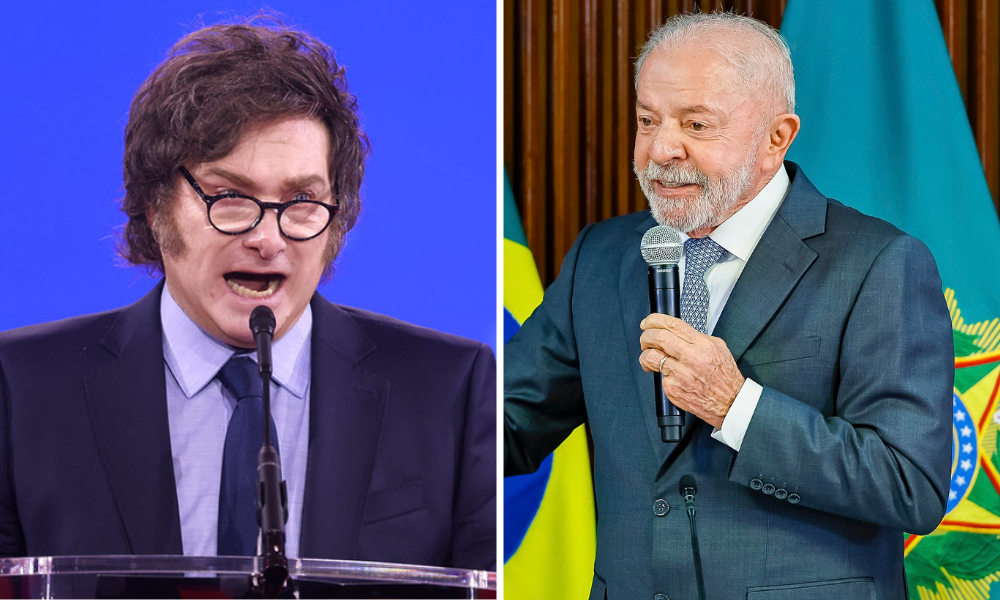

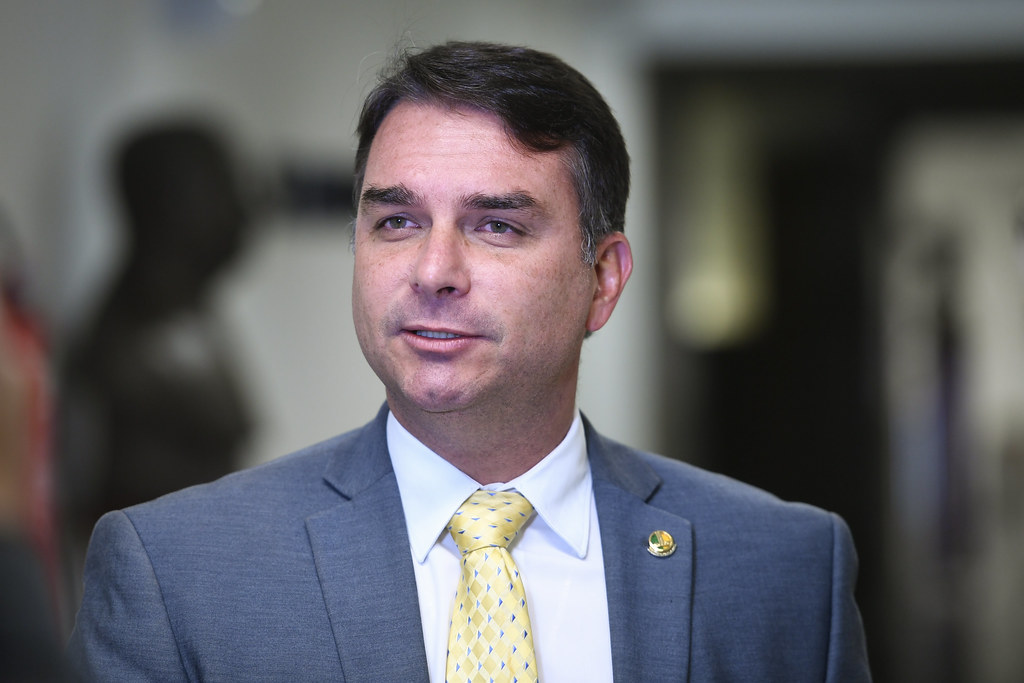
São Paulo, Brazil – Senator Flávio Bolsonaro and President Luiz Inácio Lula da Silva are heading to a run-off election for Brazil’s presidency on October 25 after finishing less than two percentage points apart in the closest first-round result since the country returned to direct presidential elections following its military dictatorship.
With virtually all ballot boxes counted, Bolsonaro, of the right-wing Liberal Party (PL), received 47.03% of valid votes, against 45.16% for Lula. Bolsonaro received approximately 56.1 million votes and Lula 53.9 million. The difference of around 2.2 million votes is the smallest between the two leading presidential candidates in a first round since 1989. The previous record came four years ago, when Lula finished 6.1 million votes ahead of Flávio’s father, former President Jair Bolsonaro.
That election ended with Lula defeating the then-president by less than two percentage points in the runoff. This time, a Bolsonaro enters the second round in first place. Flávio’s result also exceeded the final polls. A poll from Datafolha published days before the election gave Lula 45% of valid votes and Bolsonaro 40%. Two weeks earlier, Bolsonaro had 36% of total voting intentions against Lula’s 40%.
Bolsonaro’s campaign spent the final stretch of the first round calling for a “useful vote,” the Brazilian term for abandoning a preferred candidate to support one with a better chance of reaching or winning the runoff. The appeal was directed largely at voters considering other candidates on the right and center-right.
Those candidates included Goiás Governor Ronaldo Caiado, Minas Gerais Governor Romeu Zema, writer Augusto Cury and Renan Santos, leader of the Missão party. All remained in single digits in the final polls. Bolsonaro opened the count ahead of Lula and remained there as results came in from across the country on Sunday. The margin narrowed as more votes were counted, but Lula never overtook him.
The right expands its power in Congress and the states
The presidential vote was accompanied by gains for the right in Congress and state governments. The PL secured 28 of the Senate’s 81 seats in 2027, making it the largest party in the chamber. Lula’s Workers’ Party (PT) will have nine.
The new composition could also change the relationship between Congress and the Supreme Court. At least 51 senators in the incoming legislature have said they would support, under some circumstances, the impeachment of Supreme Court justices, three short of the 54 votes required to remove a member of the court.
The results were particularly strong for the right in São Paulo, Brazil’s largest state and electoral college. Governor Tarcísio de Freitas, a former minister under Jair Bolsonaro, was reelected in the first round with 62.65% of the vote, against 36.42% for former Lula finance minister Fernando Haddad.
Guilherme Derrite and André do Prado won São Paulo’s two Senate seats. Derrite, who served as public security secretary under Tarcísio, received more than 13.2 million votes, the highest total ever recorded by a Senate candidate in Brazil.
Conservative candidates also won governorships without a runoff elsewhere in the country. Sergio Moro was elected in Paraná, Jorginho Mello won reelection in Santa Catarina and Cleitinho Azevedo won Minas Gerais. The PL and allied parties won 10 state governments in the first round, compared with five for the PT and parties aligned with Lula.
The Bolsonaro family expanded its presence in elected office. Former first lady Michelle Bolsonaro and Bia Kicis won the two Senate seats in the Federal District, while Carlos Bolsonaro was elected senator in Santa Catarina. Jair Renan Bolsonaro won a seat in the Chamber of Deputies there, and Jair Bolsonaro’s brother Renato was elected to the lower house from São Paulo.
Candidates on the right also recorded some of the largest individual votes for the Chamber of Deputies. Lucas Pavanato, in São Paulo, and Nikolas Ferreira, in Minas Gerais, each received more than two million votes. In São Paulo, the PL increased its delegation in the Chamber from 17 to 19 seats, while the PT-led federation remained at 11.
Flávio also received more first-round votes than his father did in 2022. Jair Bolsonaro received 51 million votes in the first round four years ago, while Lula had 57.2 million. Flávio increased the Bolsonaro vote by roughly five million, while Lula received more than three million fewer votes than in 2022.
Bolsonaro looks to the defeated candidates
Most of the candidates eliminated on Sunday competed on the center-right or right, giving Bolsonaro several potential sources of additional votes before October 25.
His campaign is seeking the support of Caiado, Zema and Cury and is expected to approach the Progressive Party (PP), União Brasil (Brazil Union) and Republicanos (Republicans), which remained neutral in the first round. Flávio Bolsonaro reached election day without formal coalitions or endorsements from other parties.
Those votes will not necessarily move together. Caiado and Cury did not immediately endorse either finalist, while Renan Santos had said before the election that he would not support Bolsonaro. Zema stopped short of formally endorsing Flávio immediately after the vote but said he would be “against the PT” in the runoff.
Bolsonaro’s campaign also intends to keep corruption at the center of its attacks on Lula. Rather than concentrating on the Mensalão and Petrobras scandals that dominated previous presidential campaigns, his team has focused on allegations involving Lula’s son, Fábio Luís Lula da Silva, known as Lulinha, in an investigation into fraud involving pensions and social security benefits.
The strategy gives Bolsonaro three weeks to try to bring together voters who backed different candidates in the first round while preserving the support that carried him from 36% in Datafolha two weeks before the election to more than 47% of valid votes on Sunday.
Lula will rely on turnout and the 6×1 workweek
Lula has fewer defeated candidates whose electorates are closely aligned with his Workers’ Party. His campaign will instead have to recover voters who supported him in 2022 but did not do so this time and increase turnout among groups where the president performs better.
More than 32 million eligible voters did not vote in the first round. Lula’s campaign had already identified abstention as a problem before election day, particularly among older and lower-income voters.
The result also caught the president’s campaign by surprise. Lula had led every major national poll entering the final stretch, while internal tracking commissioned by the campaign reportedly failed to detect the late movement toward Bolsonaro. The mood at the PT’s election headquarters on Sunday was described by party officials as one of concern and frustration.
One of Lula’s first political bets after the first round will be a proposed constitutional amendment aimed at ending the six-day workweek followed by one day of rest, known in Brazil as the “6×1” schedule. The proposal is scheduled to be considered by the Senate on Tuesday, October 6.
PT strategists hope the proposal will shift part of the campaign toward wages and working conditions and sharpen the party’s traditional appeal to lower-income voters.
The party will also try to prevent the major centrist parties from formally endorsing Bolsonaro.
Such endorsements would not give him additional television time under second-round electoral rules, but Lula’s campaign is concerned that a series of declarations from PP, União Brasil, Republicanos and defeated presidential candidates could allow Bolsonaro to present himself as the candidate of a unified anti-PT bloc.
Featured image: Flavio Bolsonaro
Image credit: Edilson Rodrigues/Agência Senado via Flikr