
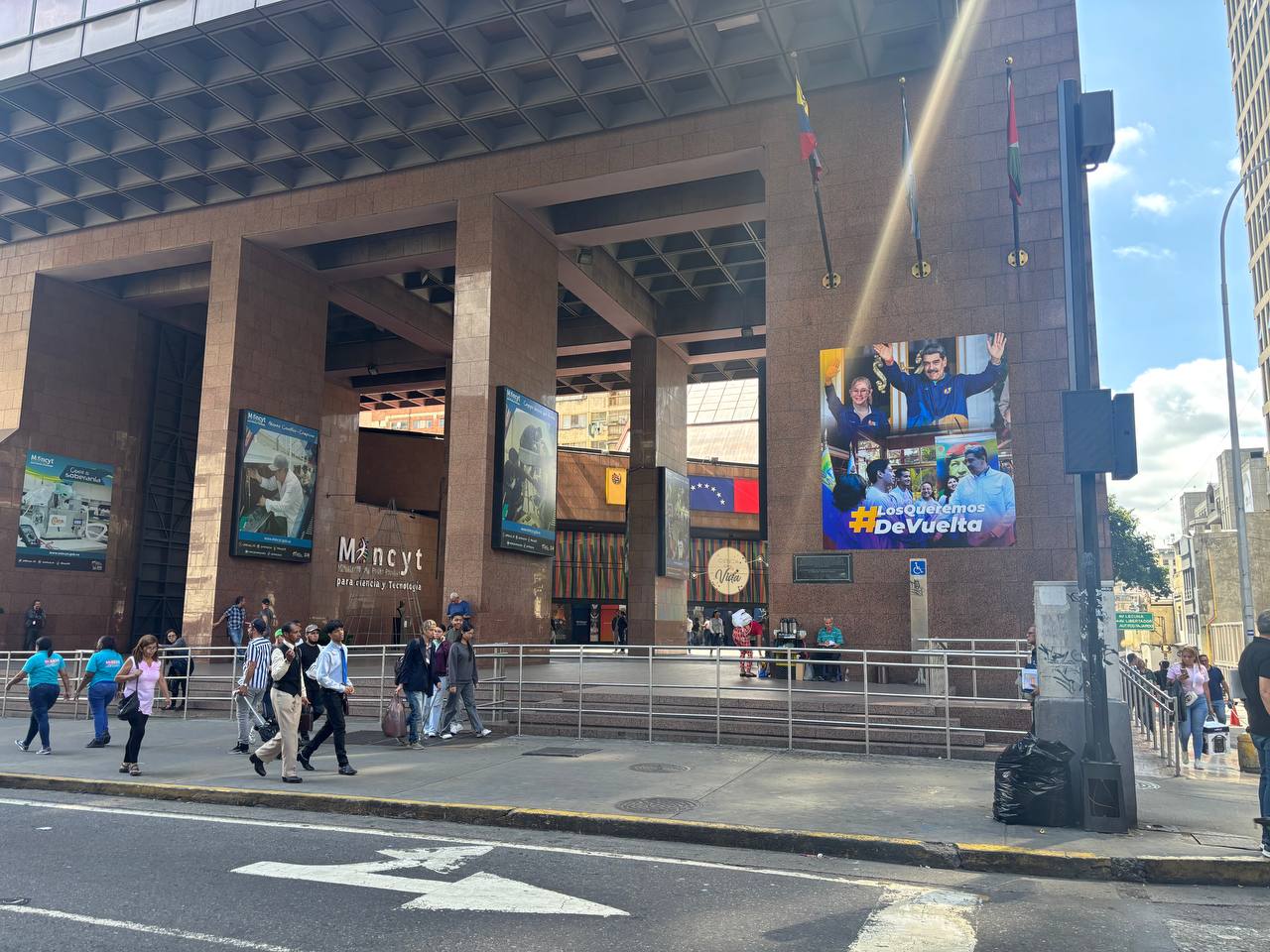
Caracas, Venezuela — One month on from the U.S. attacks on Venezuela’s capital, billboards and signs around Caracas defiantly call for the return Nicolás Maduro and his wife, Cilia Flores, who were captured in the operation and shuttled to New York to face drug charges.
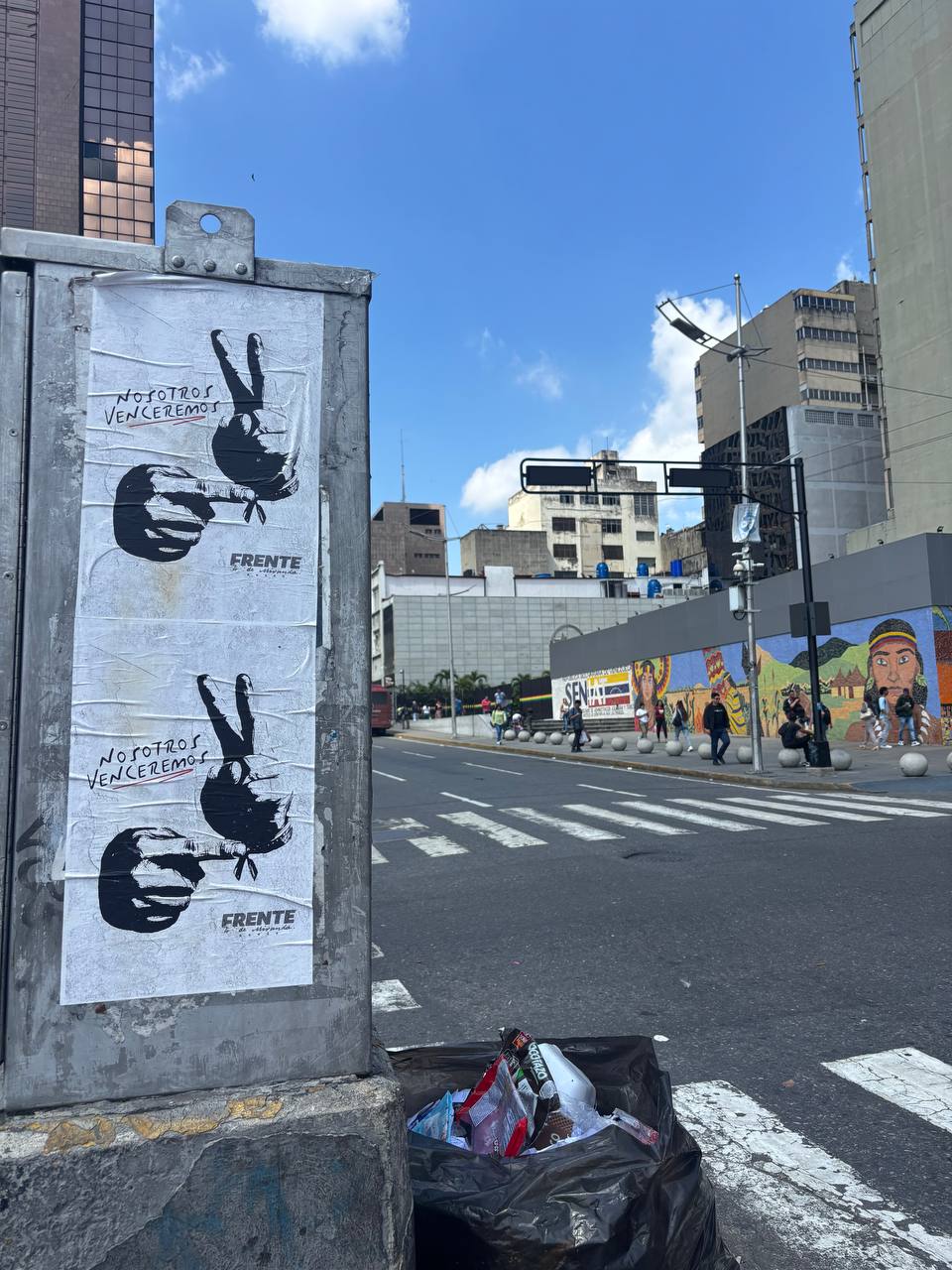
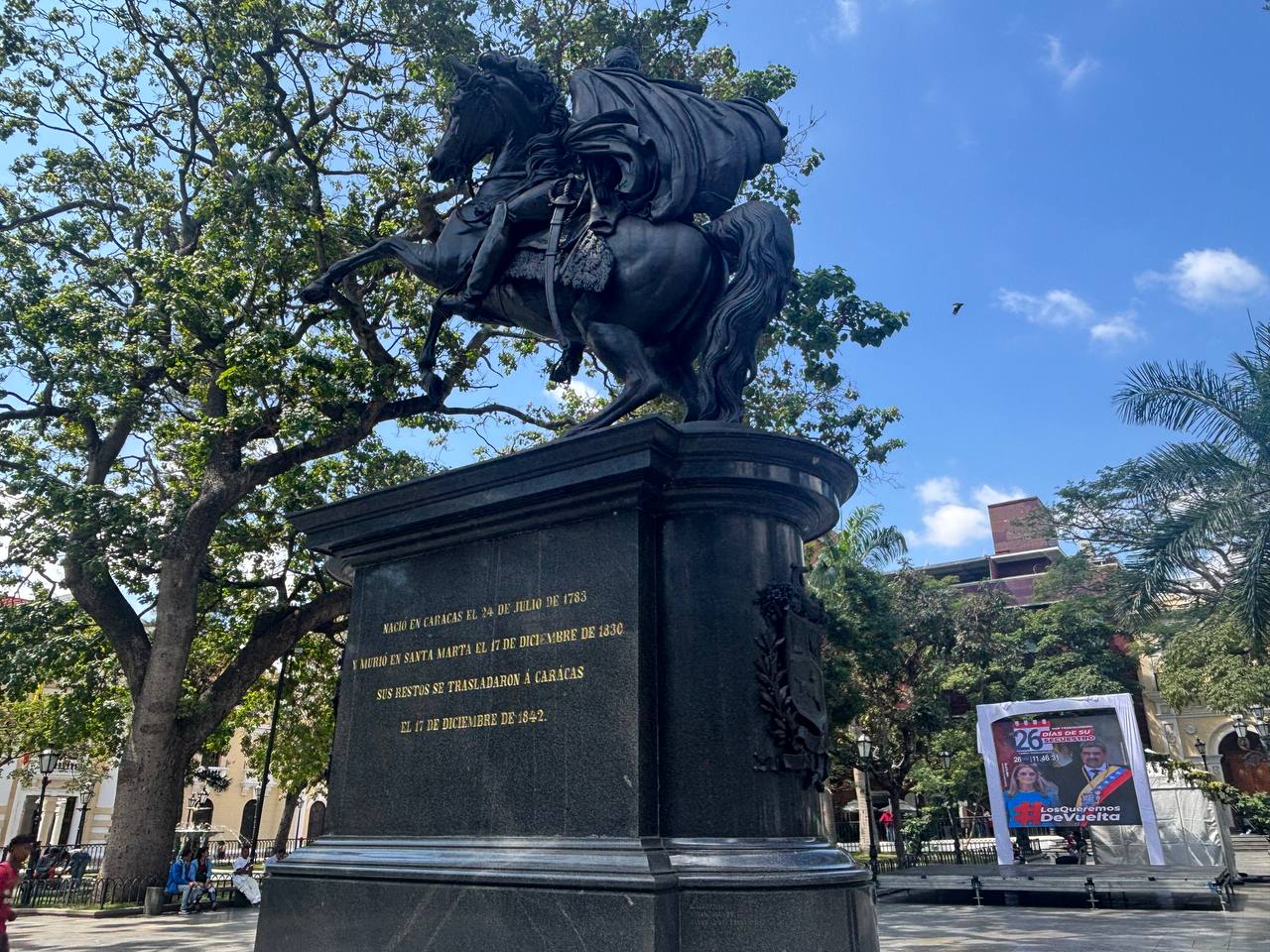
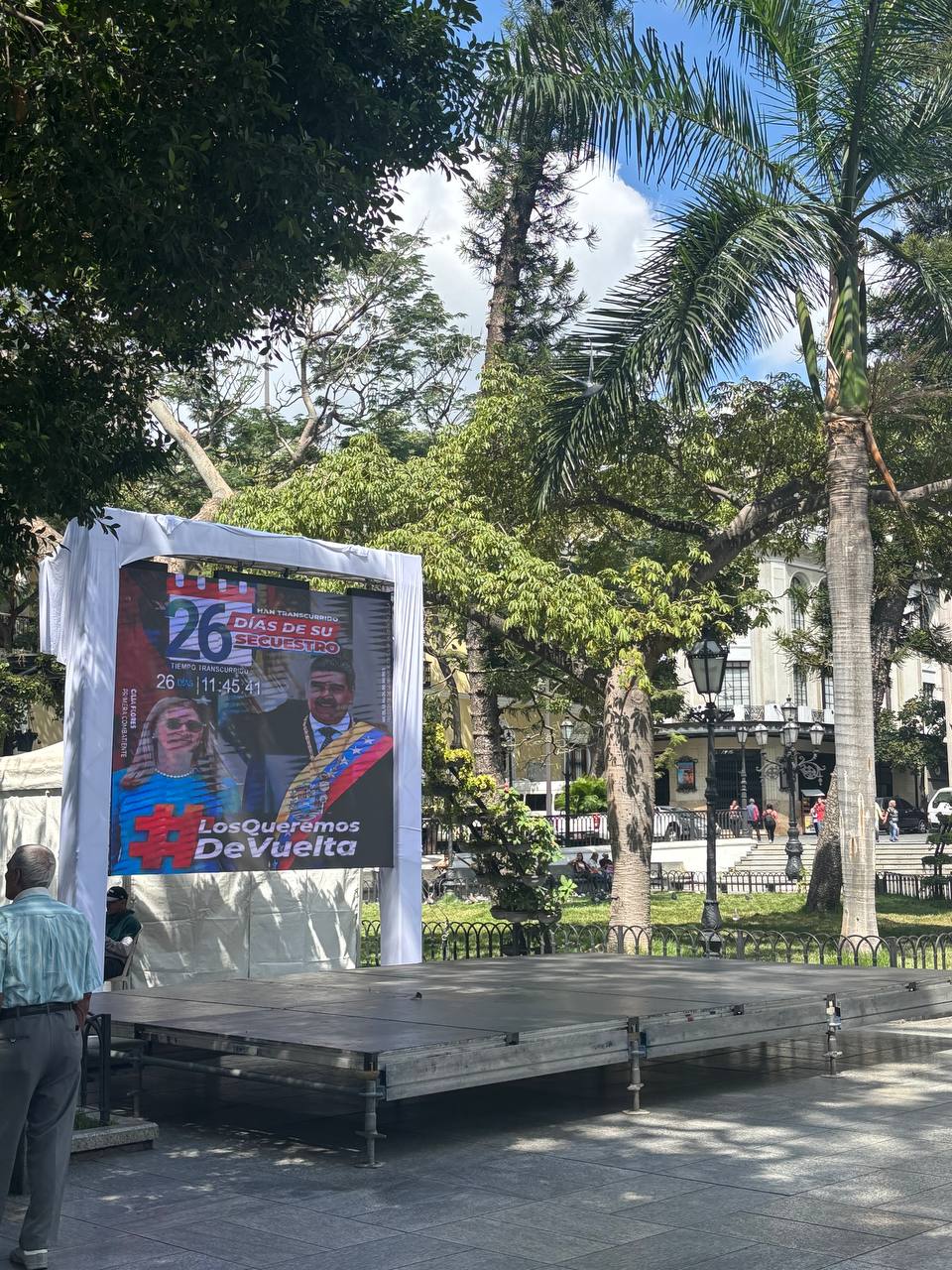
The main avenues of the Venezuelan capital, which have resumed a normal pace after a tense calm immediately following the January 3 attacks, are now plastered with large billboards, posters, and even LED screens that keep count of the days, hours and minutes that the former president and his wife have been in U.S. custody.
Messages scrawled on the government propaganda include:
- “We want them back”
- “Free Maduro”
- “We will win”
- And “I am the president of Venezuela and I consider myself a prisoner of war,” which Maduro stated at his arraignment in New York.
The messages have even taken to the sky. On January 24, Maduro’s vice president and the current interim President of Venezuela, Delcy Rodriguez, posted a video of an elaborate drone show which featured the outline of Maduro and Flores and messages spelled like “The people will bring them back.”
The images and video content is often reposted via a network of social media accounts of ministries, state institutions and government supporters.
Caraqueños consulted by Latin America Reports said they’re not surprised by the propaganda, especially after decades of living under the governments of Maduro and his predecessor, Hugo Chávez, whose eyes have been painted on numerous structures across Venezuela since his death in 2013 to signify his lasting presence.
“To be honest, I’m not at all surprised that they took the time (quite quickly, by the way) to publish those billboards. And although I’m not surprised, it’s still shocking how they use any means to manipulate,” said Lucía León, who lives in downtown Caracas.
She has mixed views about Maduro’s capture by the US.
“On the one hand, I think the Trump administration’s action was wrong, and on the other, I think there was no other option,” she said.
León disagrees with some of the terminology used by the government as well. “It was not a kidnapping because they are ultimately criminals, and that is why I find it absurd that this is the narrative they are using; it was a capture,” she said, lamenting that her government’s leaders “still think we are fools.”
Chavismo’s communications challenge after Maduro’s capture
Chavismo, the leftist, populist ideology created by Maduro’s predecessor has, over the years, been mostly successful in lifting Chavez and his anti-imperialist movement to an almost sacred level — especially amongst its most ardent supporters.
One party member even replaced the word “Lord” with “Chavez” when reciting the “Lord’s Prayer” shortly after his death.
Now, the movement is facing a different challenge, as its leader hasn’t died, but was rather captured and taken to the U.S. to face drug trafficking charges, according to Ayrton Monsalve, a political scientist and director of La TV Calle, an independent news outlet.
“Under these circumstances, it has shortcomings and strong weaknesses in terms of consistency, action and communication,” he told Latin America Reports.
The government’s inability to defend itself against attacks by what they call “the empire” (the United States), has also put them in a tough position, he said, adding that under pressure, the government has moved from a discourse of armed political resistance (to the U.S.) to one of consular and diplomatic demands for the protection of Maduro’s rights.
He also noted that beyond the “Free Maduro” façade, the government is rapidly seeking to reorganize itself with the expectation that Maduro may never return.
The Guardian reported that Rodriguez and her brother, Jorge, head of the National Assembly, “pledged to cooperate” with the Trump administration before Maduro’s removal, and the government has already announced the freeing of some political prisoners and the first shipment of oil to the U.S. — all moves which would seem to contradict the demands for Maduro’s freedom splattered on billboards across Caracas.
“There is strong agitation on social media regarding the transfer of confidence to Delcy Rodríguez,” said Monsalve, adding that what Maduro did have in his favor was the ability to bring together all of the Chavismo factions.
Monsalve pointed out the importance of propaganda to the Chavismo movement, saying that despite all the economic hardships the “regime never skimped on spending heavily on propaganda.”
He also offered up a prediction for the evolution of government propaganda ahead of potential future elections.
Whereas now the messaging is focused on rescuing Maduro, “Soon, I am sure, we will begin to see some graffiti, but perhaps that graffiti will soon be converted into POP material, banners, and more elaborate material surrounding Delcy,” he concluded.
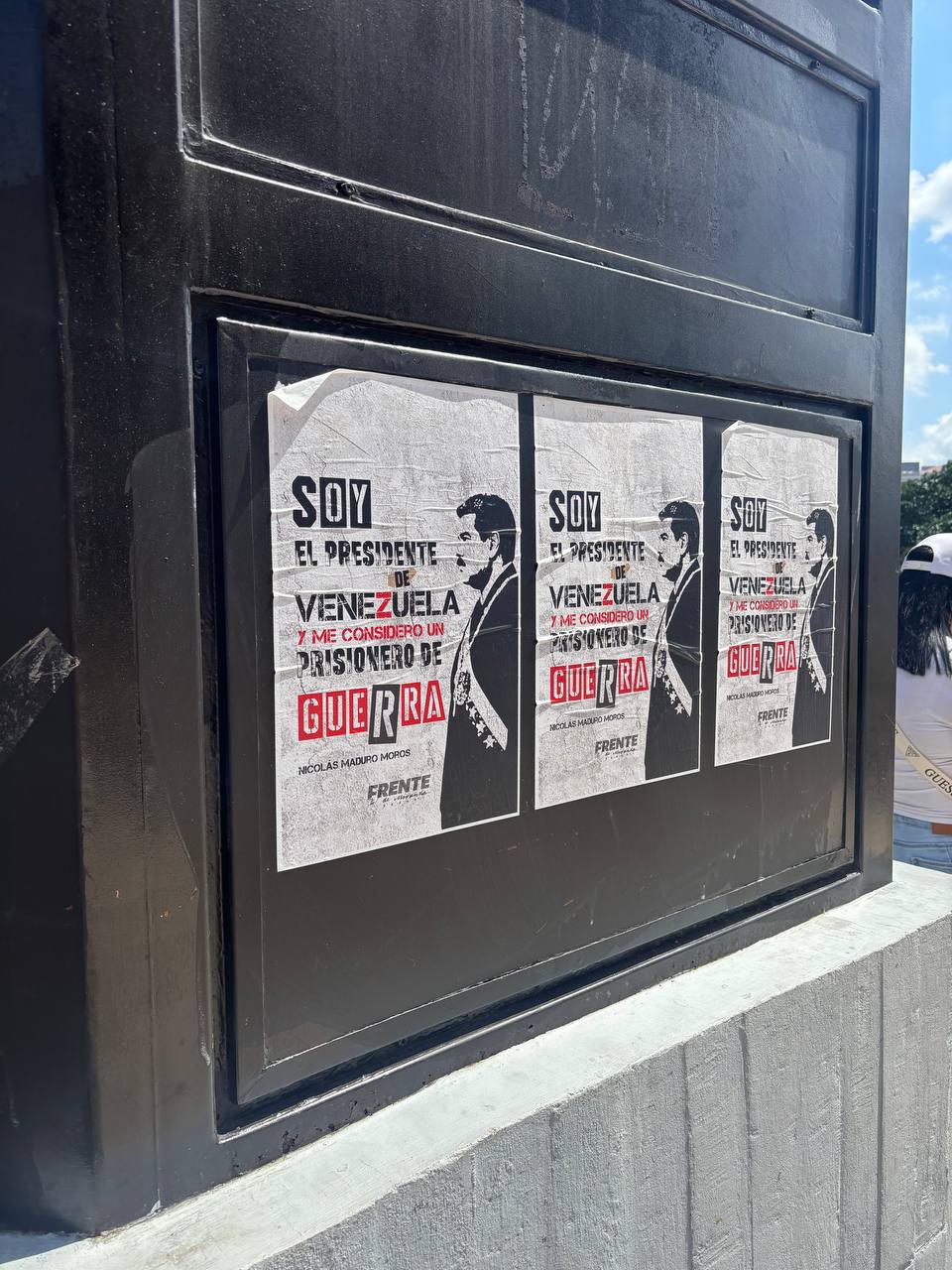
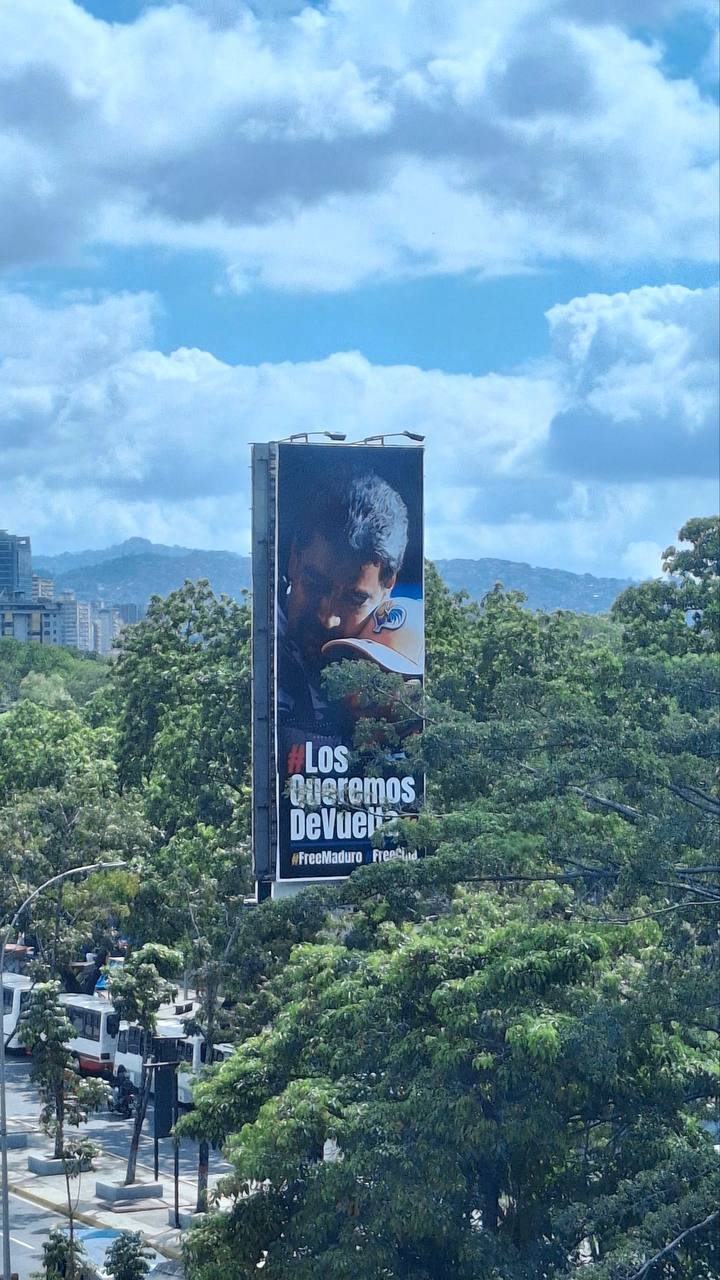
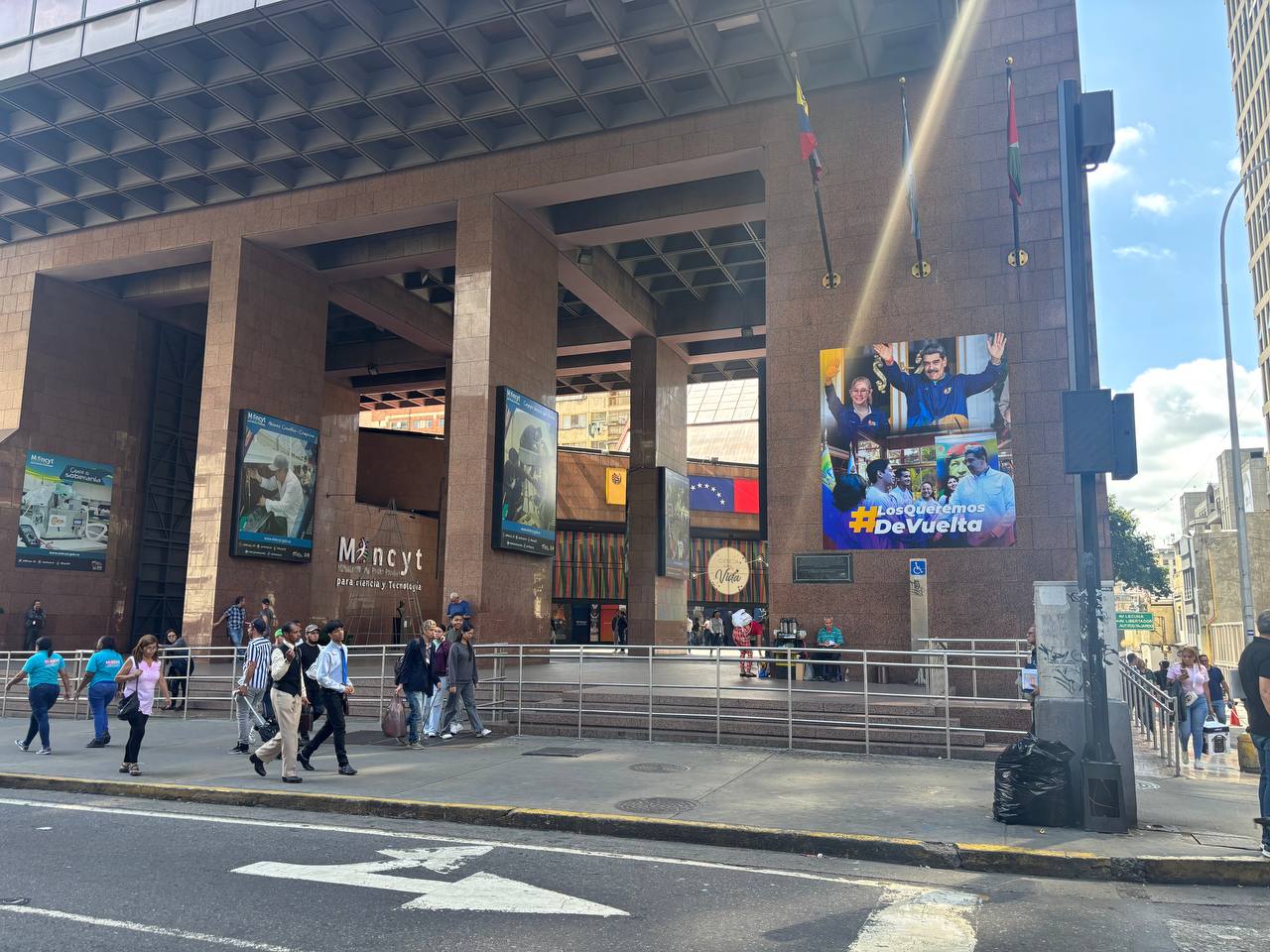
Featured image: Billboards demanding Maduro’s return from the US are plastered all over Venezuela’s capital, Caracas.
Image credit: Julio Blanca for Latin America Reports