
New York City, United States – The United States Supreme Court heard arguments on Monday in two cases testing whether U.S. companies can sue over property seized more than 60 years ago by Cuba’s revolutionary government.
A ruling in favor of the plaintiffs could open the floodgates to billions of dollars in claims against Cuban state enterprises and the foreign companies that do business with them, possibly dealing a fresh blow to an already devastated tourism industry.
The hearings come at a particularly tense moment between Washington and Havana, with the island teetering on the brink of a humanitarian crisis under President Donald Trump’s pressure campaign, which has included a near-total oil blockade.
Can property claims outlive the property rights?
The two court cases center on Title III of the Helms-Burton Act of 1996, which allows U.S. companies to sue any entity “trafficking” in property confiscated by the Cuban government.
Every president since Bill Clinton suspended the controversial provision to avoid diplomatic fallout until Trump lifted the suspension in 2019, making these lawsuits possible for the first time in the law’s history.
Havana Docks Corporation, a U.S. company, held a 99-year concession agreement with the pre-Castro Estrada Palma government, signed in 1905. According to the 11th Circuit’s ruling, major cruise lines disembarked nearly one million tourists at Havana Docks Corporation property and paid a “cash-strapped Communist regime at least USD$130 million” from 2015 to 2019, with the cruise lines ultimately netting over USD$1 billion from their Cuba-bound cruises.
Havana Docks Corporation contends that under Title III of the Helms-Burton Act, the cruise lines owe compensation for trafficking in its confiscated property.
In a counterfactual, non-revolutionary world, Havana Docks’ 1905 agreement would have technically expired in 2004. Lawyer Paul Clement, arguing for the cruise line, said, “The only interest that Petitioner had in these docks was a concession that expired in 2004. Someone who arrives later is not in a position to traffic in the property interest that was confiscated.”
Lawyers for Royal Caribbean and the other cruise lines maintain they were acting lawfully in operating in Cuba, encouraged by the Obama administration to bring their business to the island during the 2014–2016 U.S.–Cuba thaw.
In their brief to the Court, the cruise lines argued: “The notion that cruise lines should pay hundreds of millions of dollars for following the executive branch’s lead in reopening travel to Cuba defies both common sense and other aspects of the Helms-Burton Act.”
Cuba’s sovereign immunity on the line
In addition to the docks dispute, Exxon subsidiary Esso Standard Oil owned and operated hundreds of service stations and multiple refineries in pre-revolutionary Cuba.
Following the revolution, these were expropriated by the government and assigned to various state-owned enterprises, including CIMEX, the island’s largest commercial conglomerate. With Title III no longer suspended, Exxon is demanding compensation from CIMEX and other Cuban state entities.
While the Foreign Sovereign Immunities Act (FSIA) grants foreign states and their agencies immunity from the jurisdiction of U.S. federal and state courts, Exxon contends that this does not apply to cases concerning Cuba brought under the Helms-Burton Act — challenging long-accepted norms of international law.
Jules Lobel, a professor at the University of Pittsburgh School of Law representing CIMEX, emphasized on Monday the broader diplomatic and geopolitical implications of dropping FSIA protections for Cuba. He argued before the court that abrogation for Cuban entities means abrogation for all countries that trade with Cuba: “They can sue Russian airlines, they can sue Chinese airlines, they could sue Qatari airlines.”
What is at stake?
The financial stakes of the case are enormous. Exxon Mobil is seeking more than USD$1 billion in damages, and Havana Docks holds a claim valued at roughly USD$90 million today. These figures do not include the potential liability if the Court rules in favor of the plaintiffs, paving the way for 5,913 Title III claims valued at approximately USD$8 billion.
“If the Court rules for Exxon, all state-owned companies in Cuba would be liable for suits for damages,” William LeoGrande, a professor of government at American University’s School of International Service, told Latin America Reports. “If the Court rules for the Cuban companies, a large percentage of potential suits under Helms-Burton would be proscribed.”
Yet regardless of how the court rules, LeoGrande noted, Title III has already achieved one of its central aims: “One of the main purposes of Title III of Helms-Burton is to deter foreign direct investment in Cuba by making investors liable in U.S. federal court, and it has been largely successful. “Neither of these cases would change that.”
The Obama-era thaw offered a glimpse of what a friendly Washington could mean for Cuba’s tourism sector. With Title III suspended and the Obama administration actively encouraging commercial engagement, Cuba saw a surge in tourism arrivals and revenue. That window narrowed when Trump took office in 2017 and shut entirely when he lifted the Title III suspension in 2019.
The cases come at a particularly devastating moment for Cuba’s economy, which has yet to recover from a severe contraction in 2021.
The Trump administration’s maximum pressure campaign has cut off foreign oil shipments and threatened tariffs on any country sending fuel to the island. Only in the past day has the Trump Administration announced it will allow much-needed Venezuelan oil shipments — provided they will be sold exclusively to the private sector.
Trump’s decision to reactivate Title III adds another layer of pressure, threatening a further blow to the already withering tourism industry and dimming hopes for any revival.
The U.S. Supreme Court is expected to issue its ruling by the end of its current term this summer.
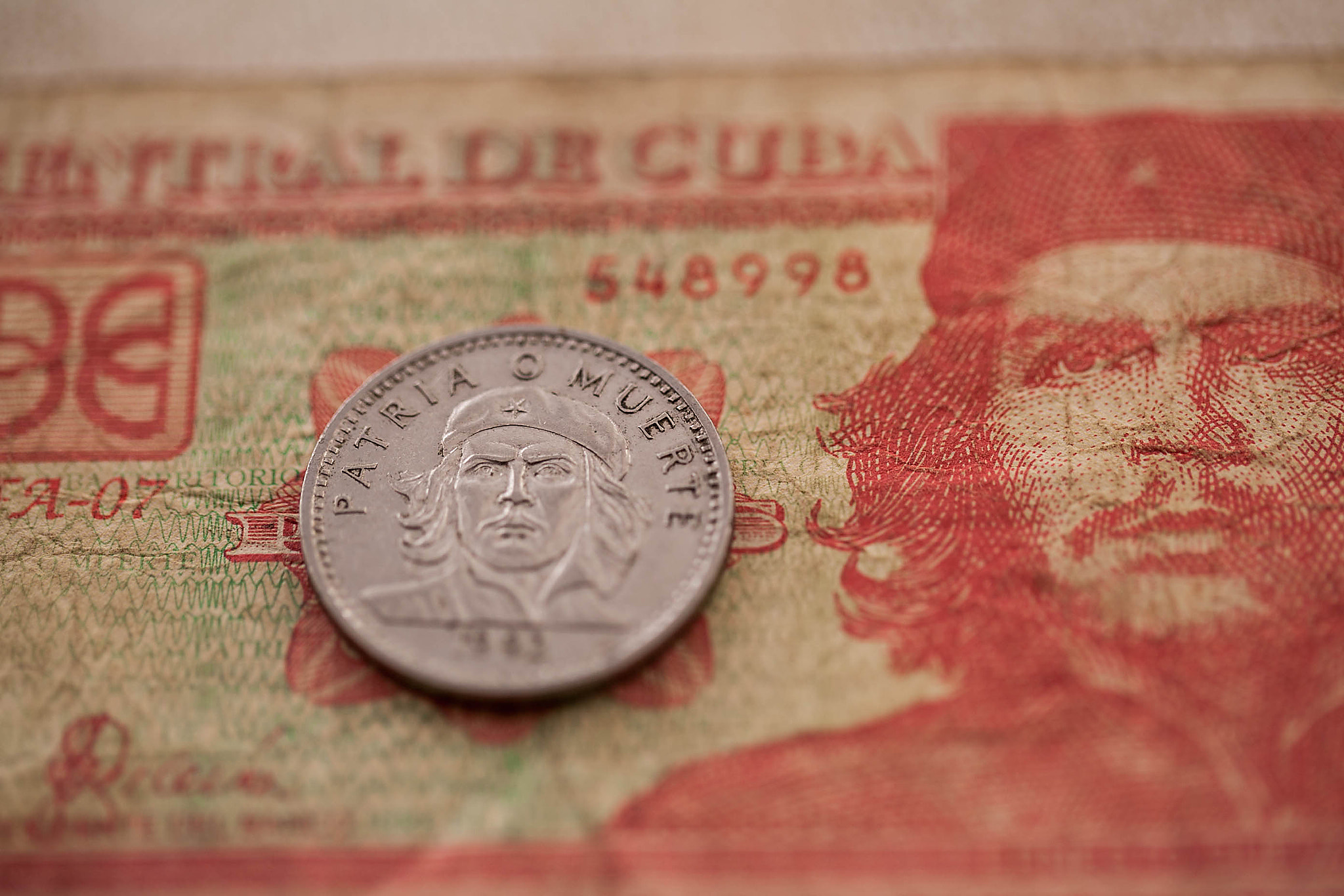
Featured image description: Cuban peso with Che Guevara’s face
Featured image credit: Wikimedia Commons