
Santiago, Chile – On February 2, Chilean President Gabriel Boric formally announced the candidacy of former two-term president Michelle Bachelet for the post of Secretary-General of the United Nations. The bid is also backed by Brazil and Mexico, the region’s largest economies.
“I feel deeply honored to be a candidate for the Secretary-General not only of Chile, but also of Brazil and Mexico.” “I assume the tremendous responsibility that this entails,” Michelle Bachelet stated.
The candidacy aims to place a Latin American woman in the top post of multilateral diplomacy. The backing is based on Bachelet’s record in international bodies such as UN Women and the Office of the High Commissioner for Human Rights, and also reflects an effort to strengthen Latin America’s influence in global debates on security, climate change, and inequality.
“Our nations, through this act, express a shared commitment to contributing to global governance and strengthening multilateralism,” President Boric said when formally announcing the candidacy.
Bachelet, a physician by training and Chile’s first female president, served two non-consecutive terms between 2006 and 2018, shaping a political profile centered on social policy and institutional reform.
Her administrations prioritized inequality reduction and social protection, while her second term saw key advances in higher education reform and inclusion-related legislation, including the Civil Union Agreement and the three-grounds abortion law.
Her time in office also drew criticism over low economic growth and rising migration flows.
Following her presidency, Bachelet held senior international roles within the United Nations system, including Executive Director of UN Women and United Nations High Commissioner for Human Rights.
As Brazil and Mexico back Michelle Bachelet’s candidacy with the aim of strengthening Latin America’s influence in global governance and renewing the region’s commitment to multilateralism, public expressions of support soon followed.
“It is a great honor for Brazil to support Michelle Bachelet’s candidacy for the UN Secretary-General. After eight decades of history, it is time for the organization to finally be led by a woman,” stated Brazilian President Luiz Inácio Lula da Silva on X.
For her part, Mexico’s President Claudia Sheinbaum remarked, “She served twice as Chile’s president, is a well-known figure, knows the United Nations, and has a pacifist vision of the world.”
Bachelet will face competition from other high-profile international figures. These include Costa Rican economist Rebeca Grynspan, who served as her country’s vice president from 1994 to 1998; Argentine Rafael Grassi, currently director general of the International Atomic Energy Agency (IAEA); and Ecuadorian Ivonne Baki, who served as honorary consul in Beirut and later in Boston, before going on to serve as Ecuador’s ambassador to Washington.
The announcement prompted broad support from the governing coalition, while also drawing strong criticism from sectors of the Chilean right.
President-elect José Antonio Kast declined to comment directly on the candidacy, stating that his current priority is prioritizing domestic emergencies and that he will turn to other matters once he assumes office.
“I have no reason to say whether what the President of the Republic has done is right or wrong. All I can say is that Chile is facing an emergency” Kast told the press.
From the Boric’s government, Minister Secretary General Camila Vallejo responded from La Moneda Palace: “Governing is much more than just addressing emergencies”At the same time, analysts have warned that a formal opposition to the candidacy could create tensions both domestically and internationally, given the regional support and the symbolic impact that the potential appointment of a Chilean woman to lead the UN would have for Chile.
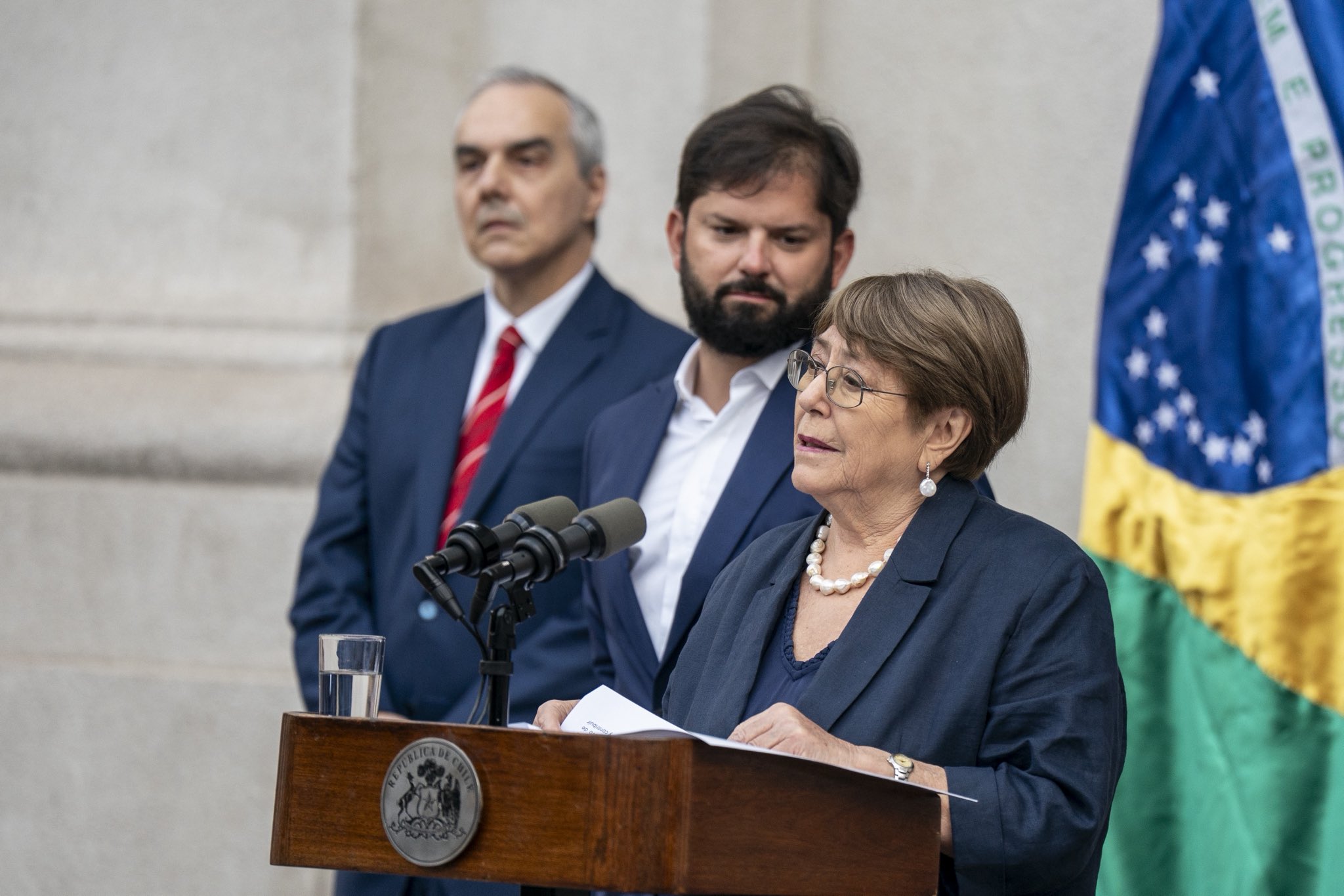
Featured image description: Michelle Bachelet during the press conference announcing her candidacy for UN Secretary-General, held at La Moneda Palace on February 2, 2026.
Featured image credit: Gabriel Boric Font via X