
Caracas, Venezuela — In the first of two planned votes, Venezuela’s National Assembly on Thursday unanimously passed an amnesty bill that could free hundreds of political prisoners in the country.
The law was proposed by interim President Delcy Rodriguez on January 30. On Thursday, her brother Jorge — who leads the National Assembly — said, “The path of this law is going to be full of obstacles, full of bitter moments.”
The Rodriguez’s have long been key figures in the Chavismo political movement, brought about by former President Hugo Chávez and taken over by his hand-picked successor, Nicolás Maduro, who was captured by US forces on January 3 and flown to New York to face drug charges.
If passed, the law could free political prisoners who were detained as far back as 1999. The bill could help heal “the wounds left by political confrontation and violence,” President Rodriguez said.
The government began to slowly release political prisoners following the US attacks, but has been criticized for inflating the numbers of those freed.
Foro Penal, an NGO which monitors political prisoners in the country, reported that 383 political prisoners have been released as of February 5, much lower than the 900 the government claims to have released.
Late Friday, Jorge Rodriguez said that all political prisoners would be freed by February 13.
Read more: Families Of Venezuela’s Political Prisoners Continue Demanding Their Release As Uncertainty Lingers
As the amnesty law moves forward in Congress, some rights groups watch with cautious optimism, as similar laws from the past have fallen short to protect the citizenry and address core societal issues.
Manuel Virgüez, a lawyer and director of the NGO Movimiento Vinotinto, recalled that in 2015, non-governmental organisations made a similar proposal that was not accepted by Maduro’s administration.
In that bill, they considered it necessary to mention some specific events where political persecution of certain members of the public had taken place so that they could be subject to amnesty.
“In the 2015 law we proposed, we spoke specifically about the events of 11 April (2002), we had talked about the events of April 2013 and 2014, and particularly 2014, everything that happened,” he told Latin America Reports, referring to periods of popular unrest that were met with harsh crackdowns by the government.
Amnesty or pardon?
The meaning of amnesty is a topic of debate in Venezuelan legal circles, as many argue that the political prisoners have done nothing they need amnesty from, according to Virgüez.
“Amnesty itself is a term that causes … a certain amount of controversy, right? Because here there are processes that should never have existed, sentences that are invalid and that should never have been, let’s say, enforced by the Venezuelan State,” he said.
He suggested that, although the complete annulment of the trials would be “ideal” because they are “absurd and illegal”, amnesty could be a more practical solution at this time.
Virgüez said that most political prisoners are considered victims of the State and therefore those on the lists of political prisoners compiled by human rights groups should receive favorable treatment.
He suggested that, as a first step, all detainees must be released from prison, followed by the closure of all legal proceedings and, finally, accountability on the part of the authorities to help dismantle the repressive government apparatus.
“What I believe is that the accountability process must involve the dismissal and investigation of the people who committed these acts against these citizens,” he added.
What’s more, investigations and attributing responsibility to those who committed crimes against political detainees are essential to moving forward with a process of reconciliation, although the human rights lawyer recognizes that this is something that will take time and, above all, will happen when the population sees a willingness to change on the part of the authorities.
“National reconciliation is not necessarily a straitjacket, no … you don’t decree it with a law, it comes from the people,” Virgüez said. “If there is genuine remorse in the official discourse and actions, rather than just rhetoric, from the grassroots of the ruling party that implemented this repressive apparatus to the top, a discourse that genuinely shows repentance, a willingness to ask for forgiveness for their actions, then I believe we are talking about national reconciliation,” he said.
Some countries, such as Spain, he said, could provide Venezuela with a path for healing conflict after that country suffered years of civil war.
“Now, in the case of Venezuela, what is wanted is a pact of coexistence; or what should happen. But that does not come about through a law, it comes about through political will and, I believe, through the factor of time,” he said. “Because the problem is that when a sector of the population does not see itself represented or does not have the capacity to make decisions, that is when the pitfalls of social conflict become apparent,” he concluded.
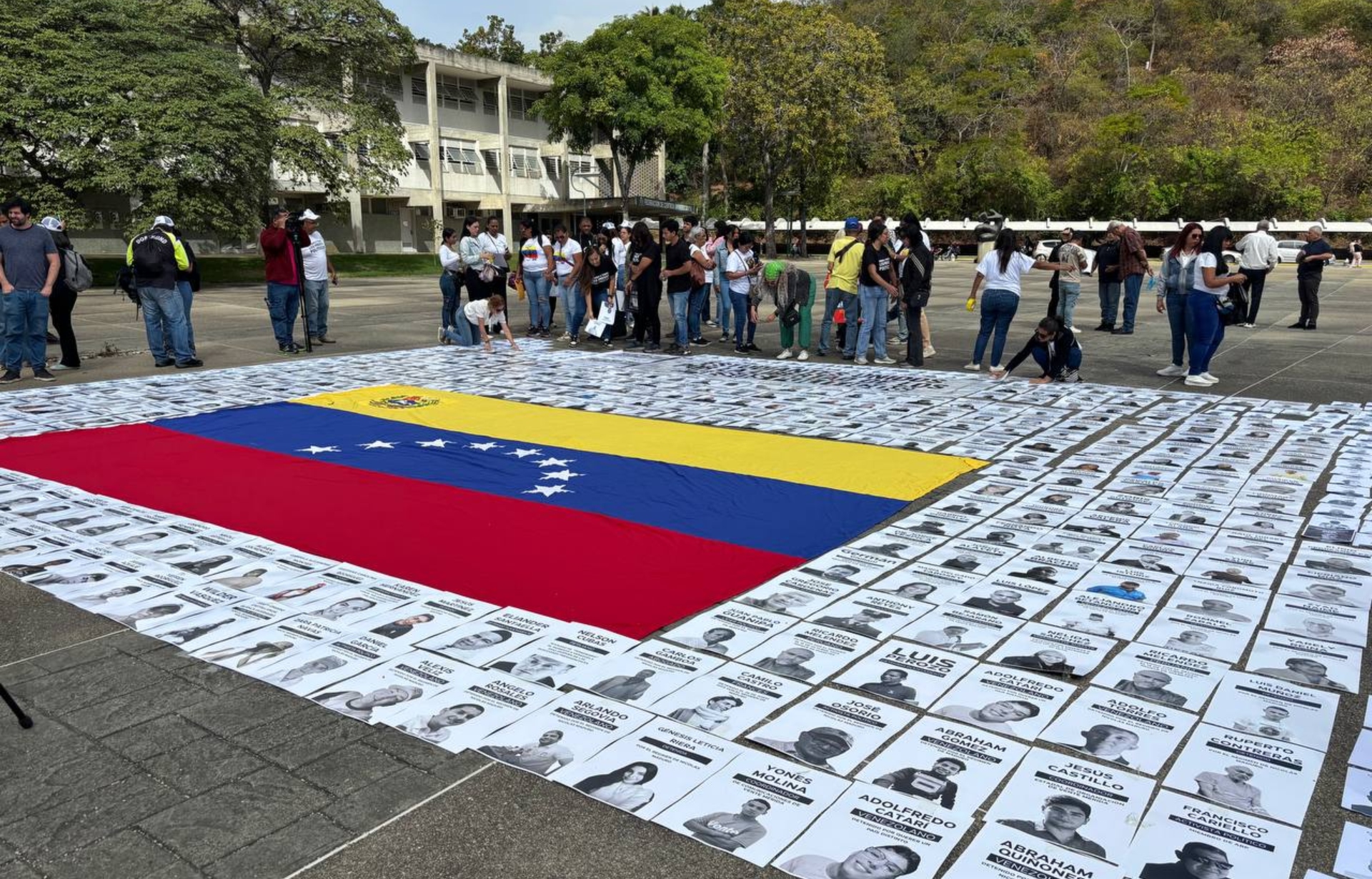
Featured image: Families of political prisoners in Venezuela protest for their release.
Image credit: Julio Blanca