

The U.S. plans to charge the 94-year-old former President of Cuba Raúl Castro with crimes relating to Cuba’s destruction of two planes in 1996, according to anonymous officials cited by CBS News.
Although a spokesperson of the U.S. Justice Department declined to comment on the matter, Florida’s Attorney General announced in March that the southern American state would reopen an investigation into Raúl Castro’s involvement in the 1996 incident.
The revelation comes amidst growing tensions between the U.S. and Cuba, as the Trump administration continues to increase punitive sanctions against the island’s economy and threaten the leadership with political regime change.
Castro, who is the younger brother of revolutionary icon Fidel Castro, served as president from 2008 to 2018. Although no longer head of state, Rául Castro remains an influential figure in Cuban politics: he retains the title of Army General and his grandson, Raúl Guillermo Rodríguez Castro, is allegedly a leading figure in ongoing negotiations between the U.S. and Cuba.
Republican lawmakers, particularly those with connections to the sizable Cuban-American community in Florida such as Carlos Giménez and Mario Díaz-Balart, have repeatedly called for Castro to be indicted. A grand jury would have to issue the indictment after being presented with evidence.
In February 1996, two planes belonging to the Miami-based group Hermanos al Rescate (Brothers to the Rescue) – an activist group which aided refugees fleeing from Cuba to the U.S. by boat – were shot down by the Cuban Air Force.
The issue of whether or not the planes were in international or Cuban airspace is still debated.
Four people died as a result of the attack and, in March 1996, the U.S. government under President Bill Clinton signed the Helms-Burton act into law.
The act strengthened economic sanctions against the Cuban government and stipulated that the U.S. commercial embargo on Cuba could only be lifted after Cuba became a democracy under non-Castro leadership.
Although Fidel Castro was President of Cuba in 1996, several U.S. members of Congress have argued that Raúl must have been responsible for the order to shoot down the planes as he was Cuba’s defense minister at the time.
Independent Mexico-based Cuban journalist Jorge Alfonso Pita told Latin America Reports about the potential implications of the U.S.’s supposed intention to indict.
“I don’t believe this accusation is intended to lead to Raúl Castro being prosecuted,” argued Alfonso. “It seems like a gesture to appease the Cuban-American and Republican lobby, so that Trump and Rubio can say ‘we won’t allow impunity’ while they sit down to negotiate with El Cangrejo [Fidel Castro’s grandson] and Cuban intelligence.”
The move to indict the younger Castro may, however, not be purely symbolic; the capture and subsequent extradition of former Venezuelan President Nicolás Maduro to the U.S. in January demonstrates the Trump administration is willing to both charge foreign leaders and bring them to trial.
Maduro is now facing federal charges related to “narco-terrorism” while in custody in New York.
Latin America Reports reached out to Cuban officials for comment on the potential indictment, but they declined.
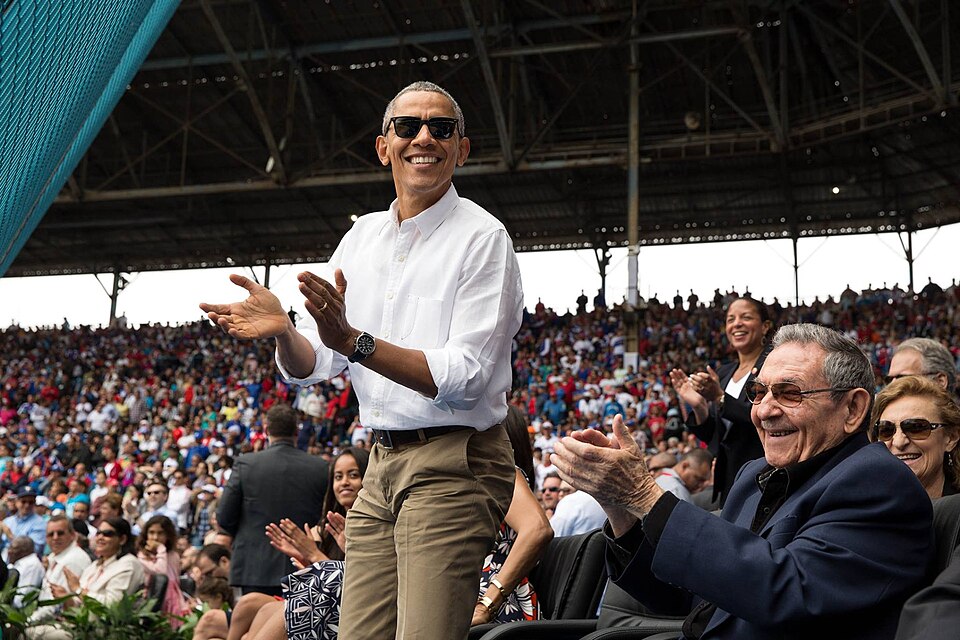
Featured Image: Former U.S. President Barack Obama and then Cuban President Raúl Castro in the Estadio Latinoamericano in Havana, during the former’s historic visit to the island.
Image Credit: White House via Wikimedia Commons
License: Creative Commons Licenses