

Bogotá, Colombia – Colombian President-elect Abelardo de la Espriella announced Sunday night that his government will close more than a dozen of the country’s embassies across the globe.
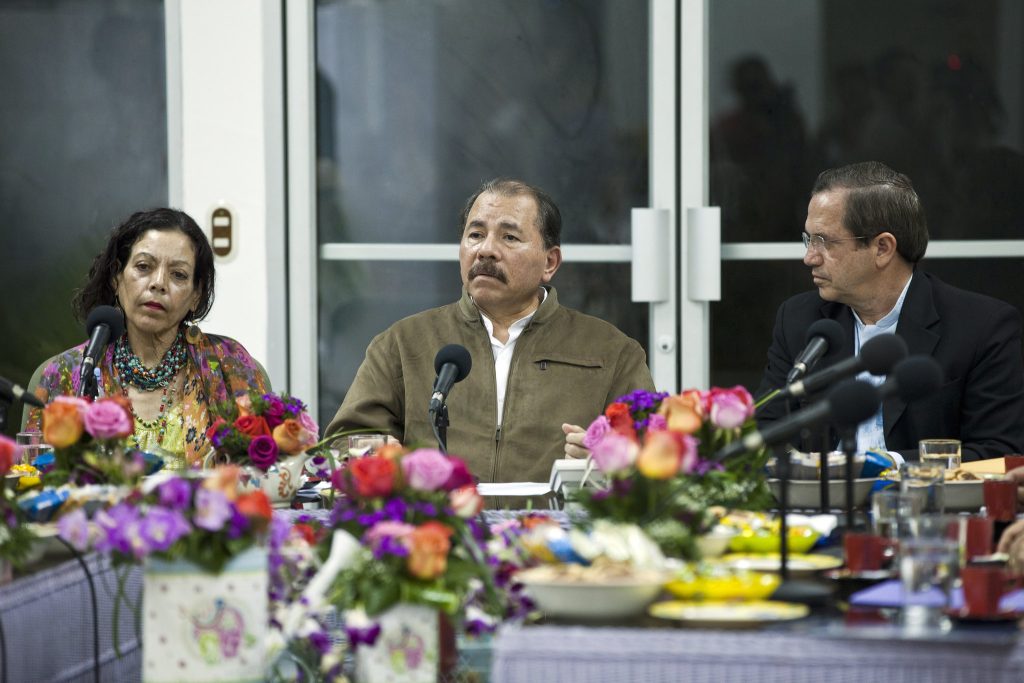
The significant scaling back of Colombia’s foreign presence will include a full severing of diplomatic ties with Nicaragua and Cuba, and embodies de la Espriella’s pledge to drastically cut back on government spending.
“We can’t maintain such an expensive structure that does not produce concrete results for the country,” de la Espriella said in a social media broadcast.
The countries impacted by the embassy closures are Algeria, Azerbaijan, Barbados, Cuba, Czech Republic, Ethiopia, Ghana, Haiti, Hungary, Malaysia, Nicaragua, Romania, Senegal and South Africa.
Aside from Nicaragua and Cuba, which he referred to as “tyrannies” with which his government would not maintain ties, de la Espriella clarified that the decision to close embassies should not be read as an end to diplomatic relations.
In addition to 14 embassy closures, de la Espriella said he plans to shutter 15 consulates, though he did not reveal where.
The incoming president, who is set to take power on August 7, said that the diplomatic restructuring could save Colombia billions of pesos annually.
“Every peso we save on bureaucracy is a peso we can invest in security, health, education, infrastructure, and above all, opportunities for the poorest,” de la Espriella said.
It is a stark departure from the foreign policy of President Gustavo Petro, who opened 10 new embassies.
Luis Carlos Reyes, Petro’s former Minister of Commerce, Industry and Tourism, questioned the savings touted by de la Espriella in a post on X, stating that spending on foreign relations only accounts for 0.35% of the national budget.
“Spending will not be significantly reduced by closing embassies, since it is concentrated in other areas,” he wrote.
De la Espriella referred to the decision as the first phase of a broader reconsideration of Colombia’s foreign strategy that will continue through the first 100 days of his presidency.
“This doesn’t end here. We are going to determine whether all those embassies that still exist will remain open. We are going to reorganize them and consolidate them… based on criteria of efficiency and always in defense of the national interest.”
De la Espriella also announced that he would terminate Colombia’s plans to open an embassy in Palestine. The incoming president had already signaled he would strengthen Colombia’s relations with Israel by opening an embassy in Jerusalem, a pledge he reiterated in Sunday night’s broadcast. Petro closed the Colombian embassy and severed diplomatic ties in 2024.
Colombia will also open a new embassy in Nigeria, which de la Espriella said would make Colombia’s African presence more efficient.
De la Espriella argued for the consolidation of Colombia’s representation in other parts of the world. For example, Bogotá has an embassy in France and the France-based United Nations Educational, Scientific and Cultural Organization (UNESCO) while in Rome it is represented at the UN’s Food and Agriculture Organization as well as its own embassy.
“That’s absurd. From now on, a single ambassador will fulfill and exercise all those representations in the same country,” de la Espriella said.
The government needs to “work hard” to ensure that, in the near future, all consular procedures can be done online, the president-elect added.
Featured image description: Abelardo de la Espriella speaking at an event.
Featured image credit: Abelardo de la Espriella via Facebook.