

Bogotá, Colombia – Human rights defenders, analysts and social leaders in Colombia have expressed concern about the humanitarian situation in conflict-affected regions ahead of the country’s presidential elections on Sunday.
Although the National Liberation Army (ELN) and several dissident groups of the now-defunct FARC rebels have announced temporary ceasefires during the election period, rights groups say fears remain high over violence, mobility restrictions and intimidation in remote areas.
Lina Mejía, coordinator at the humanitarian organization Vivamos Humanos, said there were still significant risks surrounding conditions during and after the vote.
“It’s not just a question of whether armed groups will respect the elections themselves, but also whether there will be mobility restrictions, whether electoral materials will be protected from attacks after the vote, and whether communities will be free from intimidation,” she told Latin America Reports.
Humanitarian organizations say that while armed groups often refrain from directly attacking polling stations, elections can still be affected by the broader security environment in areas where armed actors exercise territorial control and over illicit economies linked to coca production, illegal mining and extortion.
According to the Electoral Observation Mission (MOE), 386 municipalities across 31 departments have been identified as having some level of electoral risk linked to violence and the presence of armed groups.
The organization said the number of municipalities at risk had increased compared to earlier assessments and called for stronger protections during the electoral period, especially in regions like Catatumbo and the southwest of the country, including Cauca, Meta and Guaviare.
This week, at least 50 fighters were reportedly killed in Guaviare during a three-hour battle between rival FARC dissident factions. The faction led by Iván Mordisco allegedly attacked a camp belonging to the rival Calarcá group.
Both factions rejected the 2016 peace agreement that led thousands of members of the former FARC guerrilla movement to demobilize.
In Catatumbo, a region along the border with Venezuela, clashes over the past few months between the ELN and FARC dissident faction Frente 33 have kept security conditions volatile.
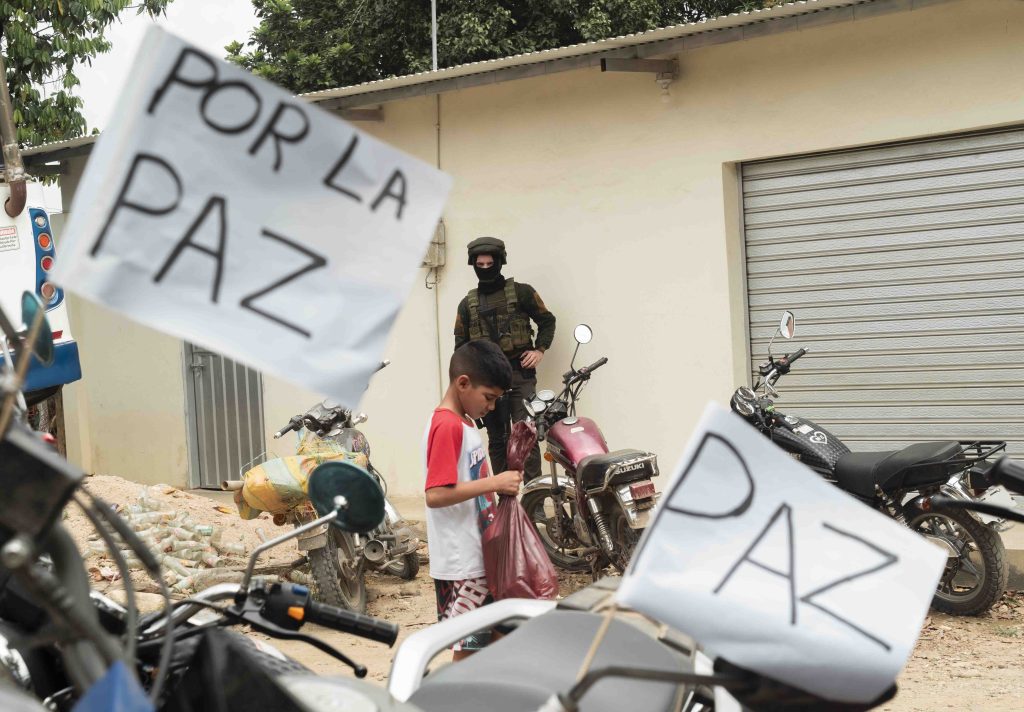
Just this month, Freiman Velásquez, a social leader and member of the Association for Peasant Unity of Catatumbo (Asuncat), was assassinated in Tibú. He was killed alongside his sister and two of his bodyguards. The attack has been attributed to the ELN.
Despite the violence, Carmen Garcia, a social leader in Catatumbo, said elections can sometimes bring brief periods of calm.
“There is one positive thing in the territory: when it comes to voting, the armed actors usually respect the process,” she said.
In Catatumbo, the ELN announced a ceasefire beginning Saturday afternoon until after the elections.
But Garcia, who runs an organization rescuing young people from recruitment by armed groups, said many residents no longer trust such agreements following recent killings and security violations in the region.
“Before, the word of the ELN meant something. The word of the FARC meant something. If they said there would not be an attack, you knew there would not be one,” she told Latin America Reports. “But now people no longer truly believe in ceasefires.”
Rights groups say the violence forms part of a broader deterioration in the humanitarian situation in Colombia.
According to Vivamos Humanos, more than 350 violent incidents were recorded during the first five months of 2026.
These include homicides, mobility restrictions, and the presence of anti-personnel mines and improvised explosive devices.
“Among the main impacts are restrictions on mobility and movement, as well as homicides, and the presence of anti-personnel mines, unexploded ordnance and improvised explosive devices,” said Mejía.
Concerns have also intensified in the southern Colombian department of Caquetá. On May 12, audio messages circulated on social media by a FARC dissident group announcing an armed strike across the Caquetá and Caguán river basins, restricting river and road movement.
“We campesinos are in an extremely difficult situation. It’s so tense,” one resident of Cartagena del Chairá, Caquetá, told Latin America Reports. He and other residents were concerned that the strike might affect the ability to vote due to movement restrictions.
The resident said communities had been forced to carry identification documents issued by one armed group and threatened if they failed to do so.
While the strike ended a few days after it was announced, Colombia’s Ombudsman’s Office, the Defensoría del Pueblo, warned that the situation reflected an ongoing pattern of intimidation and territorial control by armed groups.
“This threat adds to a situation that is not new: since December 2025, communities in Putumayo, Caquetá and Amazonas have faced armed strikes and severe restrictions on movement,” the organization said in a statement published on May 15.
The Defensoría also called for “urgent measures” to guarantee the transport of electoral materials and the installation of rural polling stations in remote areas “to guarantee free and peaceful elections on May 31.”
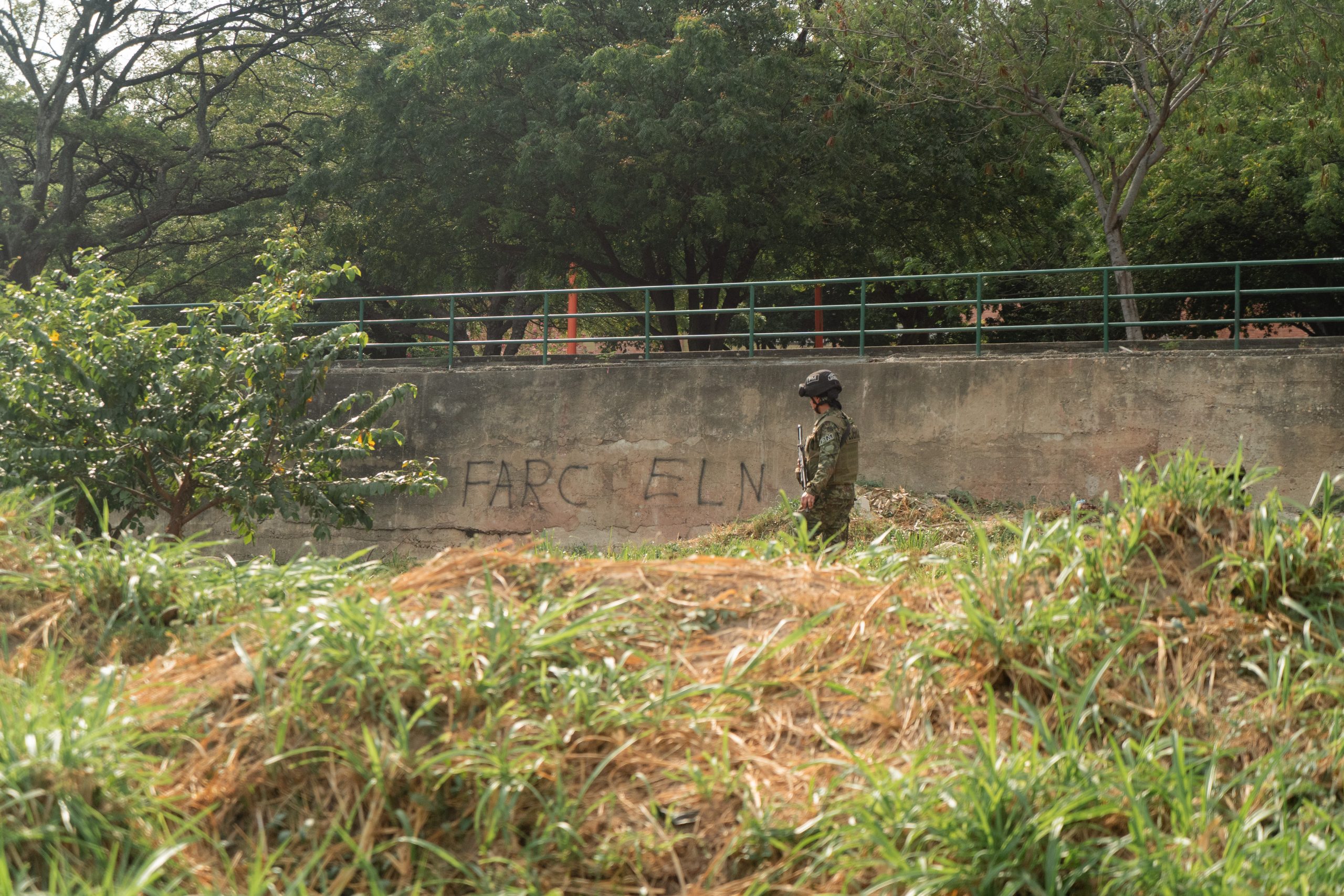
Featured image description: Graffiti from FARC dissidents and the ELN in the city of Cucuta
Featured image credit: Lucas Molet.