
Bogotá, Colombia – Colombian President Abelardo de la Espriella has faced criticism for politicizing international aid after the country was rocked by a 7.4-magnitude earthquake on August 10.
Dozens of nations have offered financial support and humanitarian assistance to the nation as it responds to the tragedy.
But de la Espriella caused a stir by prioritizing aid from ideological allies and being slow to accept help from adversaries.
The first international support arrived on August 12 aboard a Mexican government aircraft. Taking off around 8:00 AM, it arrived just hours after the emergency to deliver 19 tons of aid to Pereira, one of the most affected cities.
Yet, the official Mexican rescue team – which had been granted permission to relocate from neighboring Venezuela – faced administrative hurdles set by the Colombian authorities.
“The rescue team from the Secretariat of National Defense was not approved by the Government of Colombia,” said President Claudia Sheinbaum.
The delays to the team’s arrival sparked criticism against de la Espriella’s administration, with opponents accusing his government of using bureaucratic demands as a tactic to reject Mexican aid.
Even after the setback involving the official team, the independent Mexican rescue team known as ‘Topos Azteca’, one of the most recognized worldwide, arrived hours later from Venezuela and was received by local authorities in Cali.
But they also faced obstacles on the ground related to certification requests, leading to a public complaint by their leader, Héctor ‘El Chino’ Méndez.
“They (authorities) told me, ‘Hey, we need to see the accident insurance coverage for your team,’ and I told them: you’ve got to be kidding me, we’re volunteers,” Méndez said. “Let us work.”
These obstacles came despite the Topos having the support of Cali’s mayor, Alejandro Eder.
Meanwhile, the National Unit for Disaster Risk Management (UNGRD) said it was prioritizing aid from four countries: the United States, El Salvador, Ecuador, and Israel.
Two planes sent by Salvadoran strongman Nayib Bukele arrived in Cali with 100 tons of food, hygiene kits, and medical supplies.
A team of 22 rescuers also arrived from the United States, which announced a US$26.5 million budget allocation for emergency shelters, food supplies, and damage assessment.
The UNGRD argued that these teams hold international certification and operate under INSARAG standards – a methodology to guide countries affected by a sudden-onset disaster causing large-scale structural collapse – set by the United Nations.
But the announcement caused heavy criticism amid accusations the government rejected certain offers and favored countries sharing de la Espriella’s right-wing political ideology.
“Applying an ideological filter to international aid is a mistake. International aid belongs to humanity and is for saving lives, period,” said former President Gustavo Petro.
He took particular issue with the presence of Israeli rescuers, who arrived shortly after de la Espriella formally recognized the country’s claim over the contested Golan Heights, making Colombia only the second UN member state to do so.
The announcement marked a U-turn from former President Gustavo Petro’s decision to cut ties between both countries over the war in Gaza.
Foreign Minister Omar Bula meanwhile defended the government’s aid policy on Friday: “We have not excluded absolutely any country. We work with nations without any ideological or political considerations, and we accept and deeply appreciate their help.”
“There are many who have offered us aid: Czech Republic, Germany, Luxembourg, Qatar, Spain, Portugal, Turkey, Japan, United Arab Emirates, Switzerland, Israel, India, Chile, the European Union, among others,” Bula added. “All of this aid must be channeled effectively; poorly organized aid is not aid, and that is precisely what we are working on.”
A wave of solidarity across borders
Despite the controversy over aid, international assistance has poured in from across the globe.
The South Korean government donated US$1 million and the Korea International Cooperation Agency (KOICA) in Colombia also donated USD 20,000 and set up a one-day collection center.
“I am wearing a yellow vest as a sign of solidarity with the emergency; we are providing adequate aid to the areas most in need,” South Korean Ambassador to Colombia, Choi Hyun-koog, told Latin America Reports during a Press Conference.
“Much strength to the victims and their families following the earthquake. Never forget that the government of Korea will always stand with you,” the ambassador added.
The European Commission provided €2.1 million in life-saving assistance, delivering health, water, sanitation and hygiene materials, as well as shelter, food, protection and cash assistance.
The German Red Cross, a humanitarian partner, has already reallocated €100,000 from an EU-funded project to meet the immediate needs of 2,500 families affected in the Chocó and Valle del Cauca regions.
Meanwhile, India sent a 20-ton aircraft carrying medicines, medical equipment, temporary shelters, hygiene products, and other essential supplies to assist the hardest-hit areas.
“India stands in solidarity with the people of Colombia during these difficult times,” said India’s Minister of External Affairs, S. Jaishankar.
From Brazil, the Belo Horizonte Animal Rescue Group arrived in Cali to assist with the emergency; the team includes civilian firefighters, veterinarians, and biologists.
Global financial support
Other organizations, including the World Bank, the Inter-American Development Bank (IDB), and CAF, announced contributions to support the emergency response.
The World Bank disbursed US$200 million for Colombia’s emergency response and announced that it is working on a damage assessment and providing technical assistance.
It had also previously announced US$200,000 in non-reimbursable cooperation for damage assessment, including US$350,000 from the IDB for the Colombian Red Cross.
“We express our solidarity with Colombia and the communities affected by the earthquake… We are prepared to support the country and its recovery and reconstruction efforts,” they wrote on X.
The IDB contributed US$500,000 in non-reimbursable technical cooperation, including US$350,000 for the Red Cross.
CAF also joined the international response with a US$500,000 humanitarian donation to address immediate needs following the earthquake.
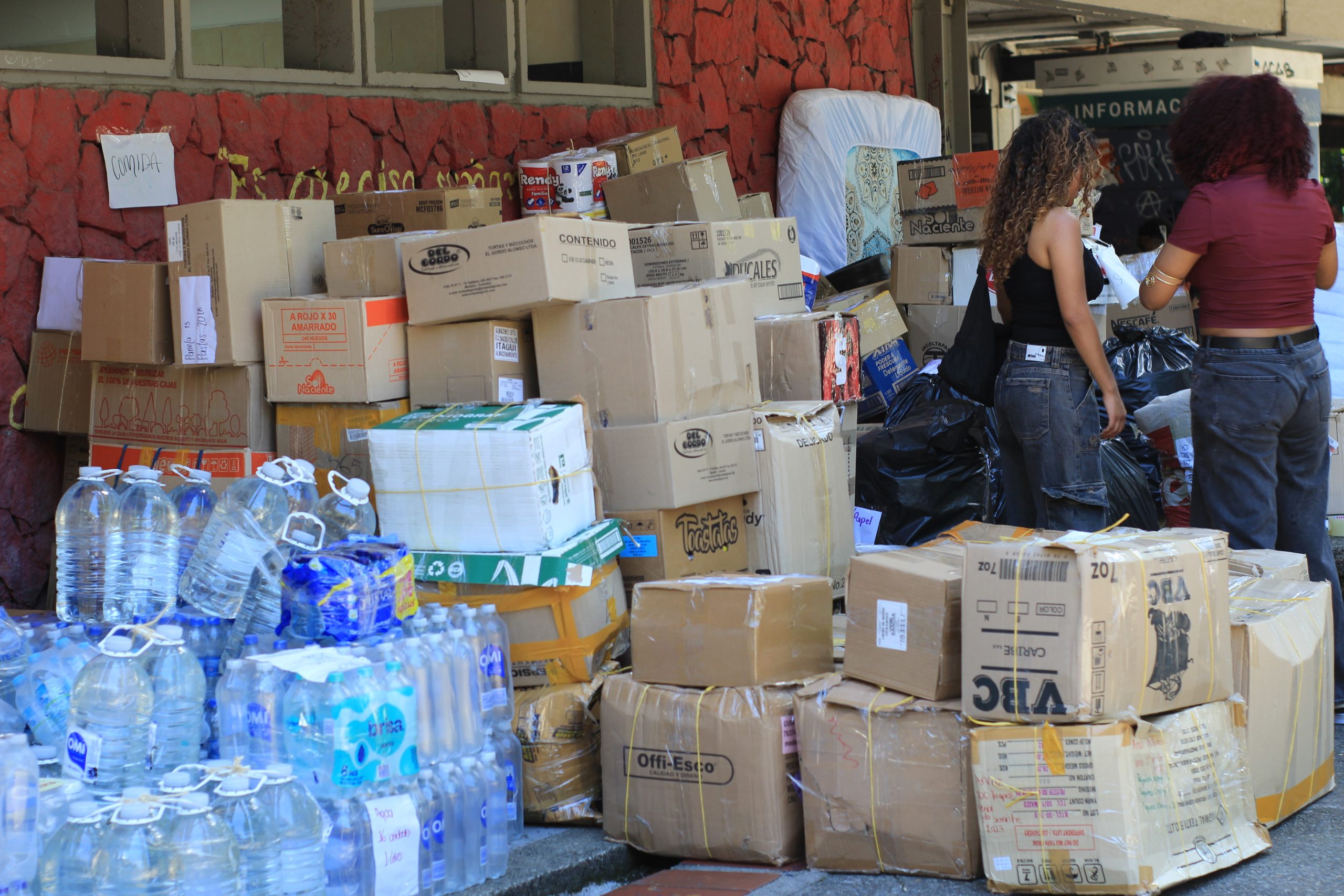
Featured image description: Boxes of aid at a collection point in Medellin after the earthquake.
Featured image credit: Cristina Dorado Suaza.
Additional reporting by Cristina Dorado Suaza.