
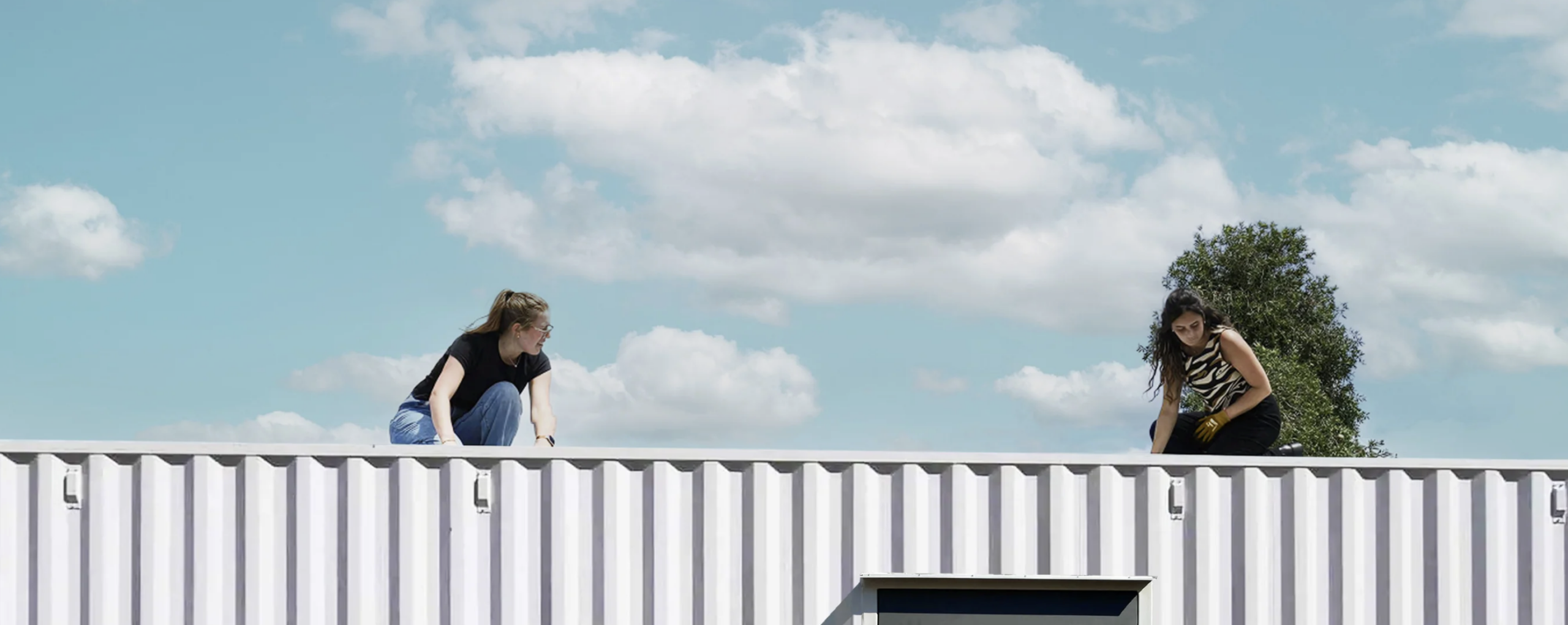

Medellín, Colombia – As Hurricane Maria rampaged through Puerto Rico – the deadliest to hit the island in modern history – Nicole González, a Boricua living in the diaspora, was working on the Mars Rover at NASA’s Jet Propulsion Lab.
She lost contact with her family in Puerto Rico for two weeks as the island went dark when the Category-4 storm made landfall with winds of up to 249.5 kilometers per hour (155 mph) in September, 2017.
“It was all-consuming, and the question that kept replaying in my head was: how can we, as a society, have figured out how to power rovers on Mars for over 10 years, but we can’t manage to keep the lights on for people here on Earth?,” González explained while in conversation with Latin America Reports.
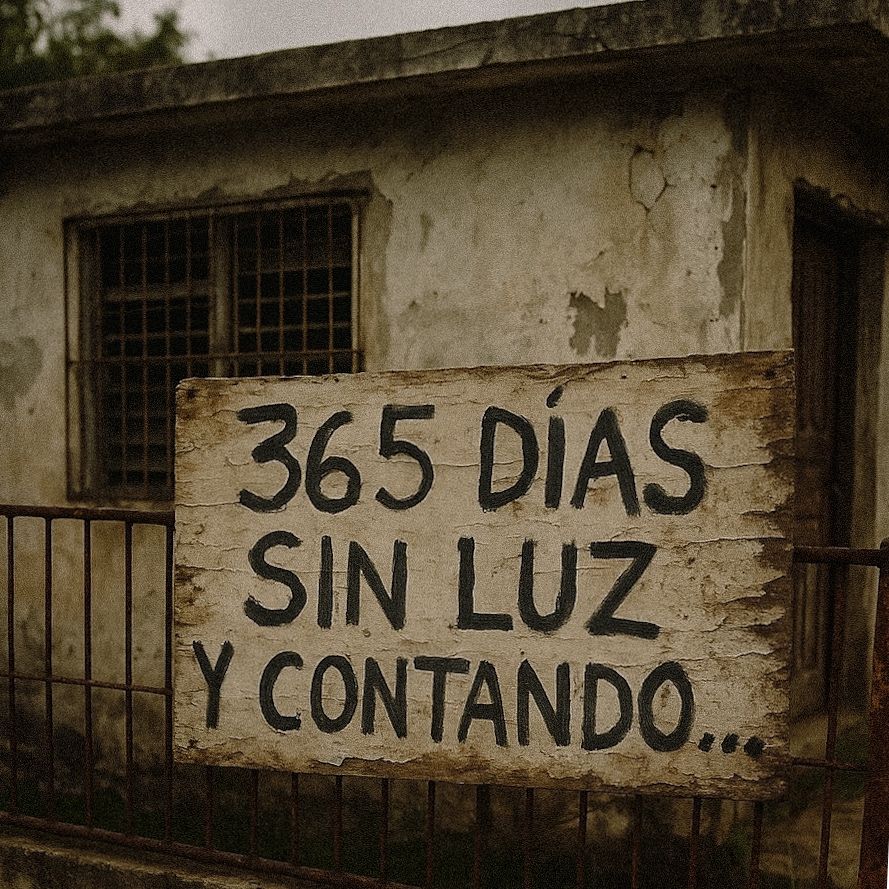
“A year later, driving through the mountains of Puerto Rico, I saw a hand-painted sign on a home that read ‘365 days without power and counting…’ That image never left me.”
When Maria hit, Puerto Rico had already been dealing with the effects of Category-4 Hurricane Irma, which had made landfall two weeks prior, on September 6, 2017, and caused two-thirds of the island to lose power.
Both disasters damaged over a million households, prompted the collapse and obstruction of roads, and led to the deaths of an estimated 4,500 individuals; 64 died from the storm directly – via structural collapse, flying debris, floodings and drownings – but most casualties were associated with lengthy power outages and disruptions in basic services.
As the power outage hindered dialysis, ventricular assistance, and respiratory machines, it also made it nearly impossible to access health records and store medicines such as insulin. Data also estimates that it cost the U.S. $1100 billion USD in economic damages.
“Even though I grew up in the diaspora, Puerto Rico was always home in the emotional sense – my family, my roots, my history are there. And every time I was back, the reality of energy insecurity was impossible to ignore,” said González.
“It wasn’t a theoretical problem; it shaped daily life for the people I love and beyond.”
González realized that access to something as basic as energy should not depend on slow policy timelines or macro infrastructure; she left NASA, earned a masters’ in Design Impact Engineering from Stanford, and learned to design with communities rather than for them.
Today, the startup she co-founded, Raya Power, makes a plug-and-play solar-plus-battery energy system that does not require professional design or installation, and can be set up in just a few hours.
A history of instability
Puerto Rico’s energy crisis much predates the 2017 disasters – as well as the controversial transmission and distribution agreement with Canadian-American firm LUMA Energy in 2020.
The unincorporated U.S. territory’s electricity infrastructure was initially designed as a colonial patchwork, according to a Yale University study. In the early 1900s, hundreds of small private plants were primarily owned by U.S. sugar corporations, and provided urban centers with power – leaving rural areas in the dark.
With the 1947 Operation Bootstrap, which sought to convert Puerto Rico from an agrarian economy to an industrial one, officials consolidated the Puerto Rico Electric Power Authority (PREPA), which included guaranteed federal funding.
Another paper published in the Journal of Political Ecology found that, through PREPA, the island gradually reverted to dependence on fossil fuels. By the 1970s, more than 90% of the island’s power came from imported oil, subjecting it to serious market risk.
PREPA later filed for bankruptcy in 2017 after accumulating $9 billion USD in debt. The Puerto Rican government then signed an agreement with LUMA on June 22, 2020, which granted the private firm full operational control over the island’s electric grid for 15 years.
LUMA took over operations on June 1, 2021, although the Institute for Energy Economics and Financial Analysis (IEEFA) had warned since October 2020 that the agreement would lead to full privatization and higher rates for Boricuas.
Most recently, in December 2025, the Puerto Rico government under Governor Jennifer González-Colón sued LUMA as a first legal step to cancel its contract, following years of chronic outages, increases in power bills and the slow reconstruction of the grid following Hurricane Maria.
“This is unacceptable. They sold the people of Puerto Rico on the idea that they were experts in handling federal issues, that they were experts working on refunds, and that wasn’t true,” Governor González-Colón told AP News last month.
In a statement, the company noted it is “proud of the measurable progress we have made but there is still more more to be done,” adding that it believes the lawsuit is politically motivated. The firm’s CEO, José Pérez Vélez, also said that the consortium will resort to “all necessary defenses” to maintain the validity of its contract, as per Puerto Rican newspaper El Nuevo Día.
How feasible are solar alternatives?
Regardless of political pushback against the perceived inefficiencies of LUMA and prior discontent with PREPA, the fact remains: Puerto Ricans cannot rely on their power systems.
Just this past April, the island saw a system-wide power shutdown which was “not triggered by weather conditions.”
“The fact that the Event happened under clear weather conditions- commonly called ‘Bluesky’ events- raises serious concerns, especially given similar large-scale blackouts that occurred on April 6, 2022, and December 31, 2024,” investigators also noted.
Communities are therefore finding resilient ways through which they can remain connected. According to a September 2025 report by IEEFA, more than 10% of electricity consumption in Puerto Rico now comes from rooftop solar – projected to increase 60% by 2028. And, as of 2025, 18.58% of homes in the island have solar installations.
Raya Power’s alternative, however, is as “easy as getting a new refrigerator or even as setting up an Ikea table in your home,” according to González.
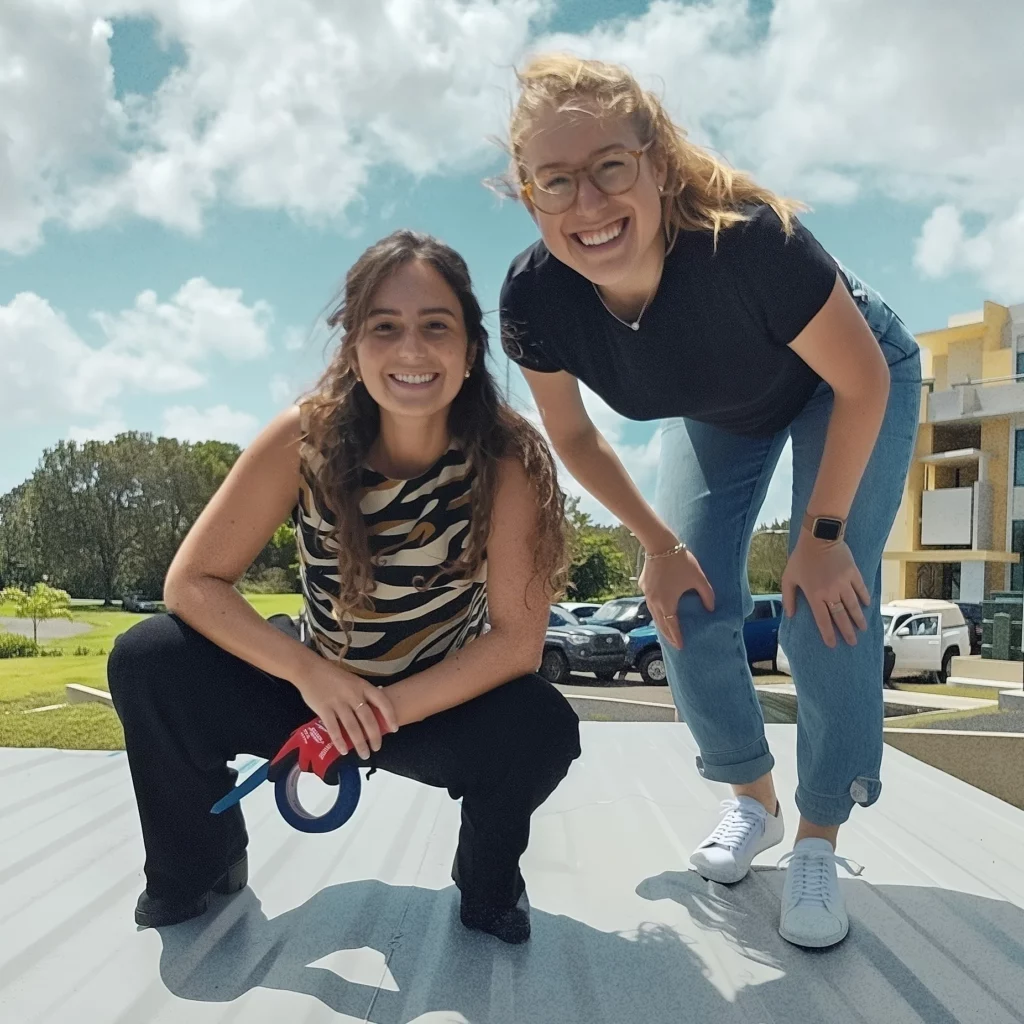
Image Source: Raya Power
“We set up the system in just a few hours, and unlike traditional systems that push power back to the grid, Raya powers your critical appliances directly. When the sun is shining, Raya powers your connected devices and charges its built-in battery; at night or on cloudy days, it seamlessly blends stored energy with grid power,” the Raya CTO added.
When the grid goes down – as many Puerto Ricans now learned to expect – Raya switches automatically to run off-grid, powering fridges, air conditioners, internet routers, and lights without interruption.
Democratizing solar energy, then, is at the cornerstone of the company’s mission: “It’s about giving individuals real control over their energy, their safety and their stability, regardless of where they live or what kind of home they’re in. Not someday, but now.”
Raya’s technology could not come at a better time. On January 22, the administration of President Donald Trump announced it had cancelled solar projects in Puerto Rico, initially aimed at helping 30,000 low-income families in rural areas achieve power stability.
A regional approach
Beyond Puerto Rico, however, blackouts often take center stage in public conversations across Latin America.
In February 2025, 90% of Chileans suffered a blackout due to a failure in a high-voltage transmission line; in Buenos Aires, two back-to-back blackouts in March affected more than 600,000 individuals during a heat wave; and the explosion of a transformer at a thermoelectric power plant in Panama prompted a nation-wide blackout in mid-March,.
Meanwhile, relentless power instability continues to hinder Cubans’ daily life, with the latest blackout occurring on January 26, 2026 – affecting 60% of the country.
However, Global Energy Monitor, a San Francisco-based nonprofit research organization, estimates that the region could become a global leader in renewable energies, with the potential to increase its utility-scale solar and wind power capacity by more than 460% by 2030.
On the other hand the World Economic Forum noted that renewables already provide around 70% of Latin American electricity – with higher shares in countries like Brazil and Uruguay. Yet, its Energy Transition Readiness Assessment showed that while Latin America ranks high on sustainability and equity scores, progress in infrastructure, finance, innovation and human capital continues to lag behind.
The region thus still has a long way to go before solar becomes mainstream – and even further until it becomes accessible to all. Innovations like Raya Power will be imperative.
“Energy vulnerability is not unique to Puerto Rico. Our plan is to scale first across Puerto Rico and California, then to markets like Hawai’i and the rest of the Caribbean, with opportunities beyond – including other states and Latin America,” González shared.
Featured image: Via Raya Power
Disclosure: This article mentions clients of an Espacio portfolio company.