
Caracas, Venezuela – Magalli Meda, a close ally of opposition leader María Corina Machado, has returned to Venezuela after more than a year in exile, becoming the latest prominent opposition figure to come home.
“I’ve been two years and eight months in a horrible situation but right now I feel free. I am here, I have to be here with my people, with the country because we have hard work to do in Venezuela,” she told Latin America Reports, shortly after landing.
Meda sought refuge in the Argentine embassy in Caracas in March 2024, along with five others, after arrest warrants were issued against them amid a crackdown on opposition figures. They escaped the country in May 2025, and Meda has been living in Spain since.
“The first thing I’m going to do is go to my house,” she said. Her home was ransacked by state security forces, who also took some of her belongings, shortly after she and the others escaped the embassy and the country.
She is among a growing number of Venezuelans going back to the country, including María Corina Machado, who returned in October. The easing of repression following the capture of Nicolás Maduro by U.S. special forces in January has encouraged exiles to return to Venezuela.
Meanwhile, many other Venezuelans who left over the last decade are coming back as the political and economic outlook brightens.
Some are returning reluctantly, or even forced by increasingly restrictive immigration policies in the countries where they had sought refuge.
In 2025, the Trump administration in the U.S. rolled back many programmes that had allowed Venezuelans to enter or remain in the United States legally. These included the humanitarian parole programme and Temporary Protected Status (TPS.)
Daniela Peña left Venezuela for the US in 2011, aged 19, to study and look for better opportunities. But when her husband lost his Temporary Protected Status (TPS) they decided to return to Venezuela.
She arrived in the Colombian city of Cúcuta in September before crossing the border, this time to return permanently, and immediately noticed differences.
“The guards, who previously seemed like vultures looking for someone to extort, were this time standing just a few metres away and didn’t even bother looking at us,” she told Latin America Reports.
The experience was a striking contrast with her visits in 2018 and 2019, when the effects of Venezuela’s economic collapse were visible everywhere. Public transport was scarce, people walked long distances to get to work and heavy goods vehicles converted into makeshift public transport, known as rutachivos, became a familiar sight.
“I saw people being transported as though they were livestock. It was humiliating and inhumane,” she recalled.
Now, despite high living costs, low salaries and what she described as exorbitant prices, Peña has noticed signs of increased economic activity in her home city of Barquisimeto. Restaurants were operating normally, new businesses had opened and there were noticeably more cars on the streets.
“Before there were no car dealerships. It was a scene from a zombie film,” she said.
Now that has changed. “Barquisimeto couldn’t possibly accommodate another car dealership. There’s one on every corner,” she joked, explaining there are Chinese, Japanese and European brands being sold.
By the end of 2025, nearly 7.9 million Venezuelans were living outside their country, according to UNHCR, making it one of the world’s largest displacement crises.
But after years in which departures far outnumbered returns, the pattern began to shift. During the first half of 2025, 57% of monitored land-border movements were entries into Venezuela, compared with 43% departures, according to the International Organization for Migration (IOM).
The change was partly attributed to tighter immigration policies abroad, particularly in the United States, where the Trump administration moved to remove TPS for hundreds of thousands of Venezuelans.
For others, the prospect of returning is about more than economic improvements. Some Venezuelans who fled after the disputed 2024 presidential election did so because they feared political persecution.
David Torres, a member of the opposition party Vente Venezuela, went into hiding before eventually leaving the country. He had abandoned his medical studies after helping María Corina Machado’s campaign during the election.
Following Maduro’s capture, the release of hundreds of political prisoners and the passage of an amnesty law, he felt there was finally an opportunity to return.
He came back in July and hopes to resume his medical studies next year while continuing to support the opposition. He described the current moment as a “golden opportunity” for Venezuela.
“I love medicine, but I also love my country. I feel I have a responsibility to continue the task – to achieve freedom and have presidential elections and be a participant in the transformation of the country,” he said.
But he believes there is still a long way to go, not only to secure democratic elections but also to rebuild the economy and the country’s public services.
“Electricity and water services are totally deficient,” he said. “Families, businessmen, merchants suffer because there is no electricity. They suffer because there is no water. They suffer because the high cost of living makes it totally unbearable.”
Ongoing problems in Venezuela
Not everyone is convinced that conditions have improved enough to make returning viable.
A 2026 survey by the Observatory of the Venezuelan Diaspora (ODV) found that 11.4 percent of respondents intended to return in the short term, while another 9.6 percent wanted to return but not immediately. A further 44.5 percent said they would consider returning if conditions in Venezuela improved.
“Problems with water and electricity supplies, among other things, remain serious obstacles that make it difficult for most people to decide to return,” Tomás Páez, president of the ODV, said.
“The damage inflicted on the country is so great that restoring it to the levels of 2013, when the collapse became evident, will take at least a decade. It’s an enormous undertaking.”
For many, however, the decision is no longer entirely their own. The removal of TPS in the United States has forced Venezuelans to reconsider their futures, with some choosing to move to other countries and others heading back home.
“The removal of TPS forced a huge number of people to make decisions, with many deciding to move to other countries such as Spain, Italy, Germany and France, as well as to South American countries,” Páez said. “Others have returned to Venezuela because of the difficulties involved in having to migrate to another country all over again.”
Some of those deported have struggled to adapt to life back in Venezuela.
Omar Arreaza lives in Maracay and was deported in September 2025. “Here it’s hard. There isn’t any work and every day the dollar rises. There still aren’t opportunities,” he said.
An electrical maintenance technician, Omar had worked in the United States as a welding assistant, where he said he could earn US$150 a day. In Venezuela, he estimates he would have to work for a month to earn the same amount. He now makes a living doing odd jobs.
But even those still adapting to life back home feel positive that changes in the country are coming. The government has begun talks with some opposition representatives on political reforms. They come two years after the disputed 2024 election which Maduro claimed he won despite opposition tallies showing the opposition candidate had won decisively.
There is growing optimism among sections of the population that they could eventually lead to fresh elections, a new government – and a new start for Venezuela.
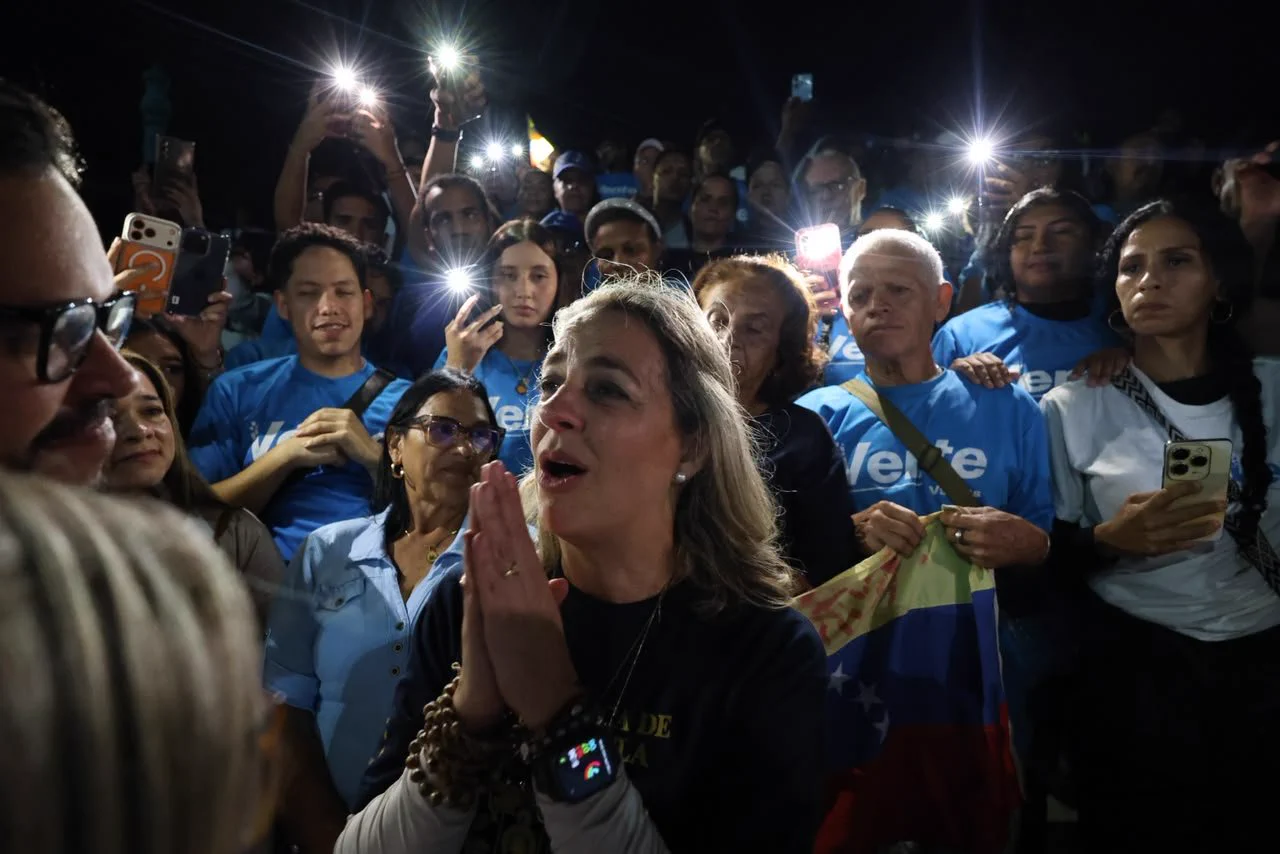
Featured image description: Magalli Meda greets crowds in Caracas.
Featured image credit: Vente Venezuela