
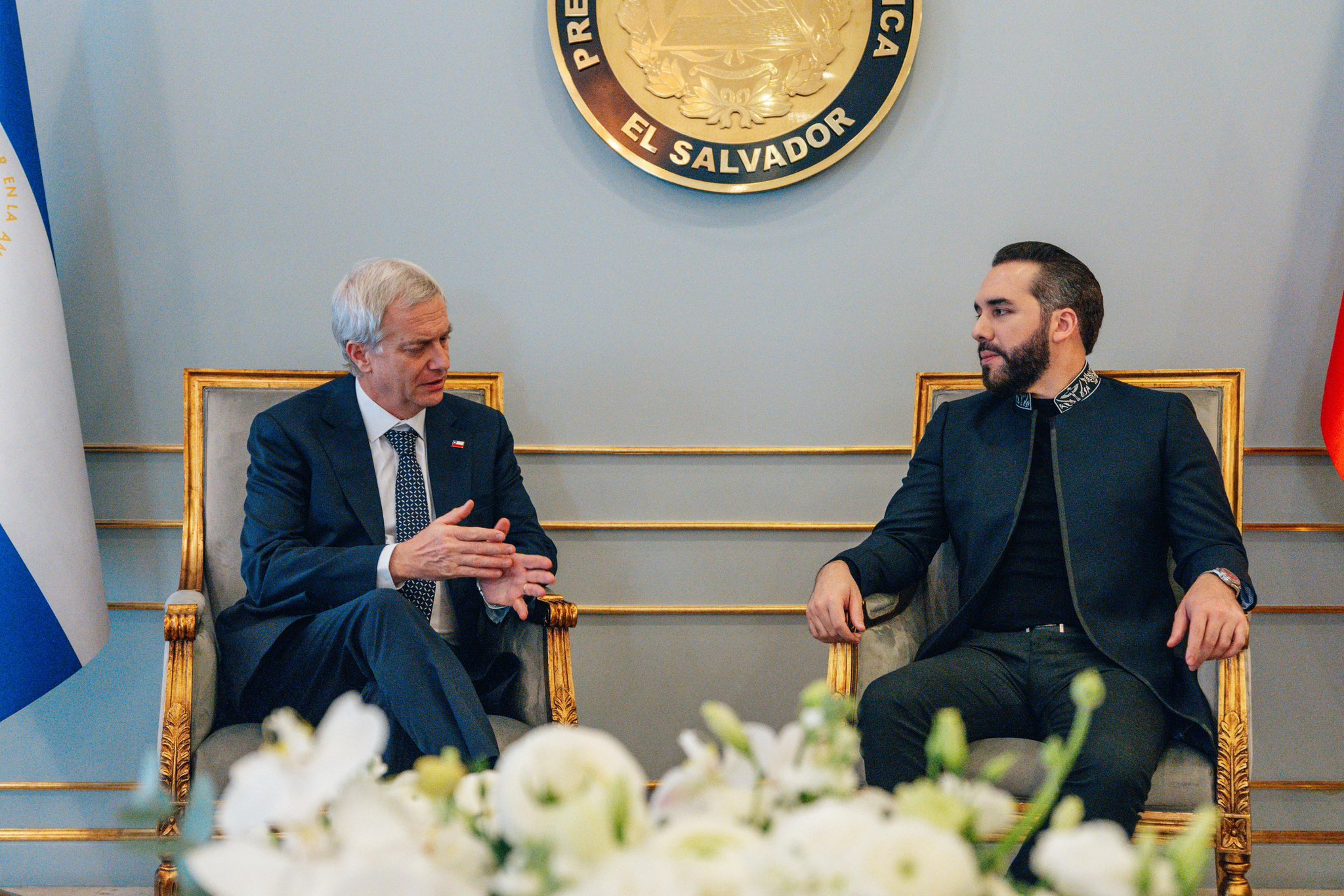
Santiago, Chile – Chile’s President-elect José Antonio Kast visited El Salvador on January 30, meeting with its strongman President Nayib Bukele to discuss – among other things – the country’s notorious prison system, signalling what could be a shift in citizen security policy for Chile’s incoming administration.
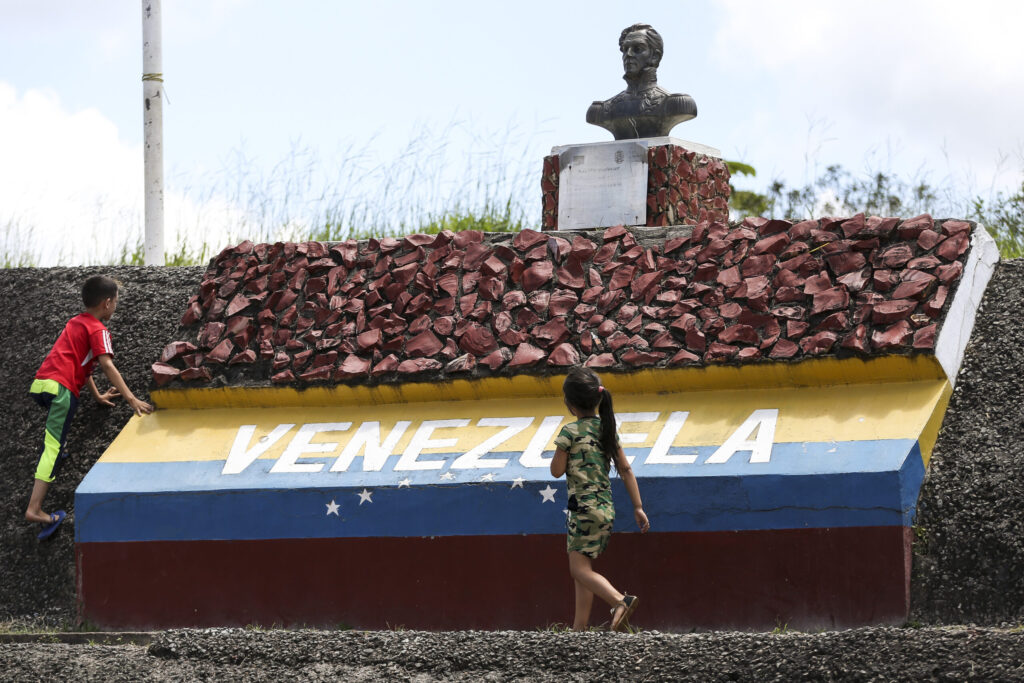
Kast toured CECOT, the mega-prison which has drawn criticism from rights groups for its alleged abuses and was the destination for over 250 Venezuelans deported from the United States last year.
The right-wing politician and member of Chile’s lower house of Congress has shown interest in Bukele’s crime fighting strategy and made public security combatting crime one of the central pillars of his election campaign.
However, Kast has emphasized that he does not intend to replicate the Salvadoran model verbatim, but rather adapt it to Chile’s context. “We do not necessarily have to do the same, because the conditions are different,” he said during a press conference broadcast live after the meeting of the two leaders in El Salvador.
During the press conference, a journalist from Chilevisión Noticias raised concerns about human rights abuses in the Salvadoran prison. Bukele replied, “I have always said that all human beings have rights … What I do not understand is why the emphasis is on the human rights of those who massacre, those who kill children, those who rape women,” referring to alleged gang members locked up inside CECOT.
Amnesty International and other rights groups have raised alarm bells related to CECOT, sighting arbitrary detentions without due process, overcrowding, torture and deaths inside the prison, while Bukele has been criticzed for not only rounding up gang members, but opposition members and journalists as well.
UN High Commissioner for Human Rights Volker Türk has repeatedly expressed concern over conditions at CECOT, questioning the severity of its protocols. The Office of the High Commissioner (OHCHR) has also previously warned of potential human rights violations affecting detainees transferred from the United States to El Salvador. “The rights to due process guarantees, protection against arbitrary detention, equality before the law, protection from torture or other irreparable harm in other States, and access to an effective remedy,” he stated.
During the press conference, Bukele argued that El Salvador’s priority is the protection of the human rights of law-abiding citizens. He stated that those deprived of liberty retain basic rights, but stressed that there is no intention to provide additional comforts, as these are funded by taxpayers. “What are we supposed to tell a low-income Salvadoran—that he must pay higher taxes so that those who murdered his daughter can eat better?” he said.
Kast was also asked which elements of the Salvadoran model could be applied in Chile. He pointed out that, unlike El Salvador, the country faces a severe lack of control within its own prison system, resulting in inmate-on-inmate violence and violations of basic personal rights. He also cited the absence of educational and work programs in prisons, which hinders rehabilitation efforts.
“Unfortunately, organized crime is coordinated from within some prison facilities; we do not have the communications-blocking infrastructure that exists here in this high-security center, and we must aspire to that. Nor do we have our prison guards properly protected,” the president-elect added.
Kast emphasized the need to draw inspiration from specific aspects of El Salvador’s legislative framework, noting that structural changes will be required to achieve the proposed objectives.
The meeting concluded with words of support from the Salvadoran president, who offered cooperation to Kast and stated that El Salvador is willing to contribute or serve as a reference in any area that may be useful to his administration.
“We consider President Kast a friend, and our doors are open for anything you wish to observe,” he said.
Featured image description: Visit by José Antonio Kast to Nayib Bukele in San Salvador, the capital of El Salvador, on Friday, January 30, 2026.
Image credit: José Antonio Kast via X