
Pete Hegseth, the highest-ranking official in the United States Department of War, told a congressional hearing on Tuesday that he considered Cuba a national security threat, citing the Caribbean nation’s alleged intelligence sharing with and support for U.S. adversaries, such as Russia.
His comments came the same day that U.S. President Donald Trump said the White House was still entertaining negotiations with Cuba, although he also said the regime was going “down.”
The mixed signals fuel speculation that Washington may be preparing an operation in Cuba similar to its intervention against Venezuelan dictator Nicolás Maduro in January.
“We’ve long been concerned that a foreign adversary using that kind of location, that close to our shores is highly problematic … we don’t want foreign adversaries attempting to use that environment,” Hegseth told Cuban-American Congressman Mario Díaz-Balart.
Venezuela’s association with U.S. geopolitical adversaries, namely Russia and China, was a key factor in the U.S. attacking the country and removing its President Nicolás Maduro in a military operation.
U.S. President Donald Trump also criticized Cuba yesterday, calling it “a failed country and only heading in one direction – down!”. The U.S. leader also, however, wrote that “Cuba is asking for help, and we are going to talk!!!”
The Cuban government had previously confirmed that it was engaged in talks with the U.S. in order to de-escalate the brewing tensions between the two nations. It is unclear whether Trump is referring to a continuation of these existing talks or is proposing a higher-level meeting between Cuban and U.S. leaders.
Emerging parallels to Venezuelan operation
Criticism of Cuba’s alliances is not the only sign that the U.S. is seeking to conduct a Venezuela-style regime change operation there. Before Maduro’s capture, surveillance flights over Venezuela by the U.S. military increased significantly, a pattern which seems to be repeating itself over Cuba.
According to CNN, the U.S. Navy and Air Force have flown at least 25 intelligence-gathering flights over the Cuban coastline since early February, with the vast majority of them taking place near the major cities of Havana and Santiago de Cuba. Before February, such flights had been very rare.
These intelligence flights follow a recent intensification of sanctions against Cuba by the Trump administration, months of a near-complete U.S.-enforced oil blockade of the island nation and repeated threats of regime change by Trump’s government.
The U.S. government had also enforced a blockade of Venezuelan oil tankers and escalated its rhetoric of threatened regime change before striking the nation. These parallels may not be a coincidence; successive U.S. administrations have seen weakening both Cuba and Venezuela simultaneously as key ideological priorities.
In 2018, then-U.S. National Security Advisor John Bolton called the two nations – along with Nicaragua – part of a “troika of tyranny” that threatened U.S. interests in Latin America in 2018. U.S. Secretary of State Marco Rubio has also previously mentioned that a positive effect of regime change in Venezuela would be the debilitation of the Cuban government.
Venezuela had been a longtime Cuban ally and, as the nation with the world’s largest oil reserves, was Cuba’s primary oil supplier for decades; the Chavista Venezuelan government and the communist Cuban one had been close regional allies.
However, the removal of Maduro from office and his replacement by Delcy Rodríguez, who has so far acquiesced to U.S. pressure, seems to have severed the Cuban-Venezuelan alliance.
The political risks of U.S.-backed regime change in Cuba
Dr Andrew Gawthorpe, a U.S. foreign policy and history lecturer at Leiden University, spoke to Latin America Reports about the similarities between the geopolitical developments in Cuba and Venezuela.
“Current events [in Cuba] look like those which preceded what happened in Venezuela”, argued Gawthorpe, noting that the “activity could be a prelude to a direct attack … or it could be an attempt to pressure the Cuban government into making concessions to U.S. demands. It’s hard to tell which it is.”
The professor also noted that Washington is tied up with its war against Iran right now, which may complicate any intervention against Cuba.
“What happens in the Caribbean is connected to what is happening in the Middle East. The Pentagon has moved a large amount of its military capacity to the Middle East for the war with Iran, and it might still need more,” said Gawthorpe.
He also warned that an attack on the Caribbean nation in the midst of the ongoing U.S.-Iranian conflict could prove politically imprudent: “Although it’s possible that Trump might be tempted by the idea of a quick win in Cuba … it’s politically and militarily risky to take on another military engagement”
The U.S.-Iran war, which began in February, has grown increasingly unpopular with the U.S. public, with Silver Bulletin reporting that over 55% oppose the conflict as of today.
Gawthorpe believes that the Iran conflict is contributing to a shift in U.S. public opinion towards conflict aversion, a factor that Trump would have to consider before striking Cuba.
“In America right now there is a tremendous appetite for the administration to focus on domestic problems – especially the cost of living – and to not spend its time starting foreign wars which have little relevance to the average American. This feeling is particularly strong in Trump’s base.”
However, the operation to remove Maduro, given its success and the lack of U.S. casualties associated with the operation, had lower disapproval ratings. Reuters reported in January that only 34% of Americans disapproved of the raid, while 33% approved.
“Americans in general – and Trump’s base also – are not going to get too exercised over something that looks exactly like the seizure of Maduro: a quick operation without American casualties that nets someone they see as a bad guy,” explained Gawthorpe.
But, such an operation would not be without its risks: “The big risk for Trump would be that he can’t guarantee that any operation in Cuba is going to go the same way.”
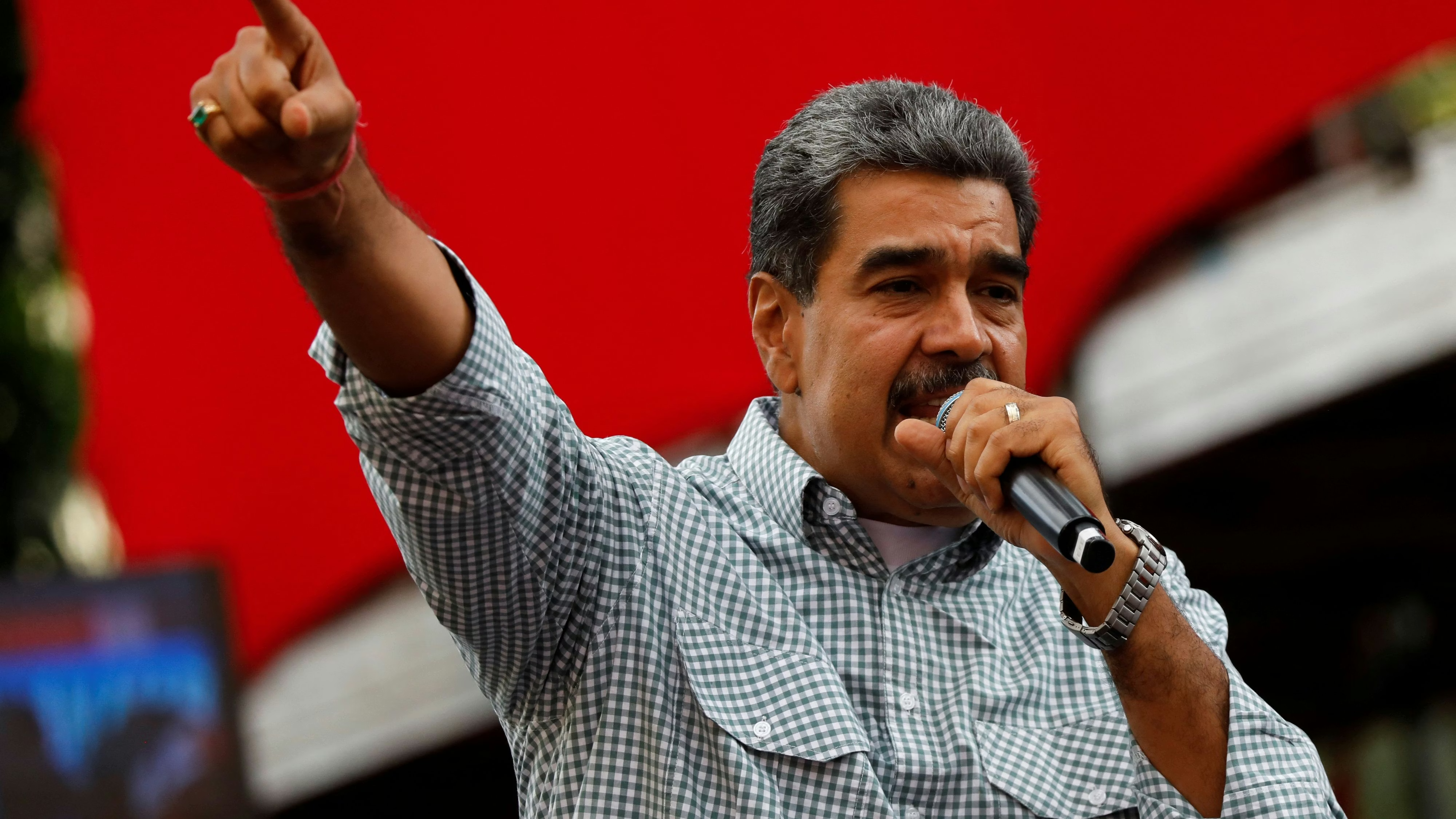
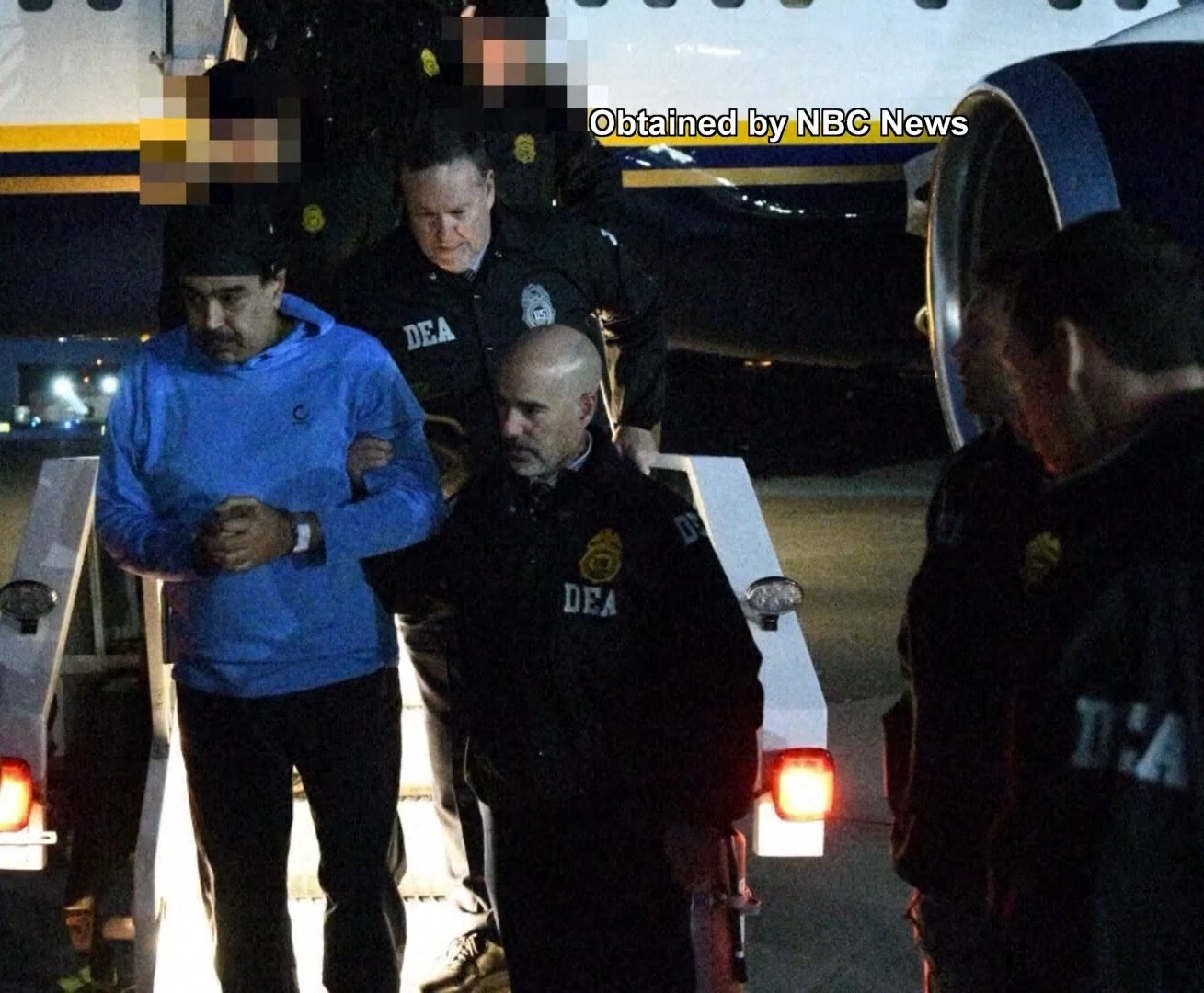
Featured Image: Former Venezuelan President Nicolás Maduro being escorted off a plane in New York by U.S. DEA agents after his capture by U.S. Special Forces.
Image Credit: Drug Enforcement Operation via Wikimedia Commons
License: Creative Commons Licenses