
Medellín, Colombia – A new United Nations Human Rights High Commission report has warned that non-State armed groups are using violence to control civilian populations in Colombia, threatening the integrity of presidential elections scheduled for May 31.
Following the killing of presidential candidate Miguel Uribe Turbay in August 2025, the report warns that escalating violence prevents the full implementation of Colombia’s peace process and “may undermine the electoral process”.
After a year that saw 18 homicides and 126 attacks or threats against political leaders, the UN warns the country “faces the prospect of reverting to the serious human rights situation” that preceded the 2016 peace agreement with the FARC rebels.
The report also highlighted other issues, including the recruitment of children into armed groups, gender-based violence, and the disproportionate effects of violence on Indigenous and Afro-descendant communities.
The UN verified the recruitment of 150 children by non-State armed groups, a number that it claims is likely much higher due to fears surrounding the reporting of cases. The report also reported the deaths of thirty child recruits.
Scott Campbell, the representative for the United Nations High Commissioner for Human Rights in Colombia, told AP that the report warned “that there are risks of a more serious setback”.
“In most cases, where there are negotiations ongoing between the government and the armed groups, we have not seen a reduction in human rights violations.”
The UN highlighted the most affected departments as Antioquia, Atlántico, Norte de Santander and Valle del Cauca. The rise in mass forced displacement, which has increased by 85% since 2024, was partly attributed to the escalation of violence in Catatumbo, where nearly 90,000 have been forced to flee their homes since January of last year.
Progress in some areas was also highlighted by the UN, including judgements through the Special Jurisdiction for Peace (JEP). This mechanism, established in 2017, investigates those involved in the armed conflict before the 2016 peace deal, including guerrillas, paramilitaries, and state security forces
Among the UN’s recommendations were the guarantee that “communities, ethnic authorities and human rights defenders participate in and can influence agreements” surrounding human rights, security, and peace policies.
The report concluded that a new government offers a “decisive opportunity” to consolidate Colombia’s peace agreement, while noting that the state must respond more strongly to prevent violence and limit the territorial control of armed groups across the country.
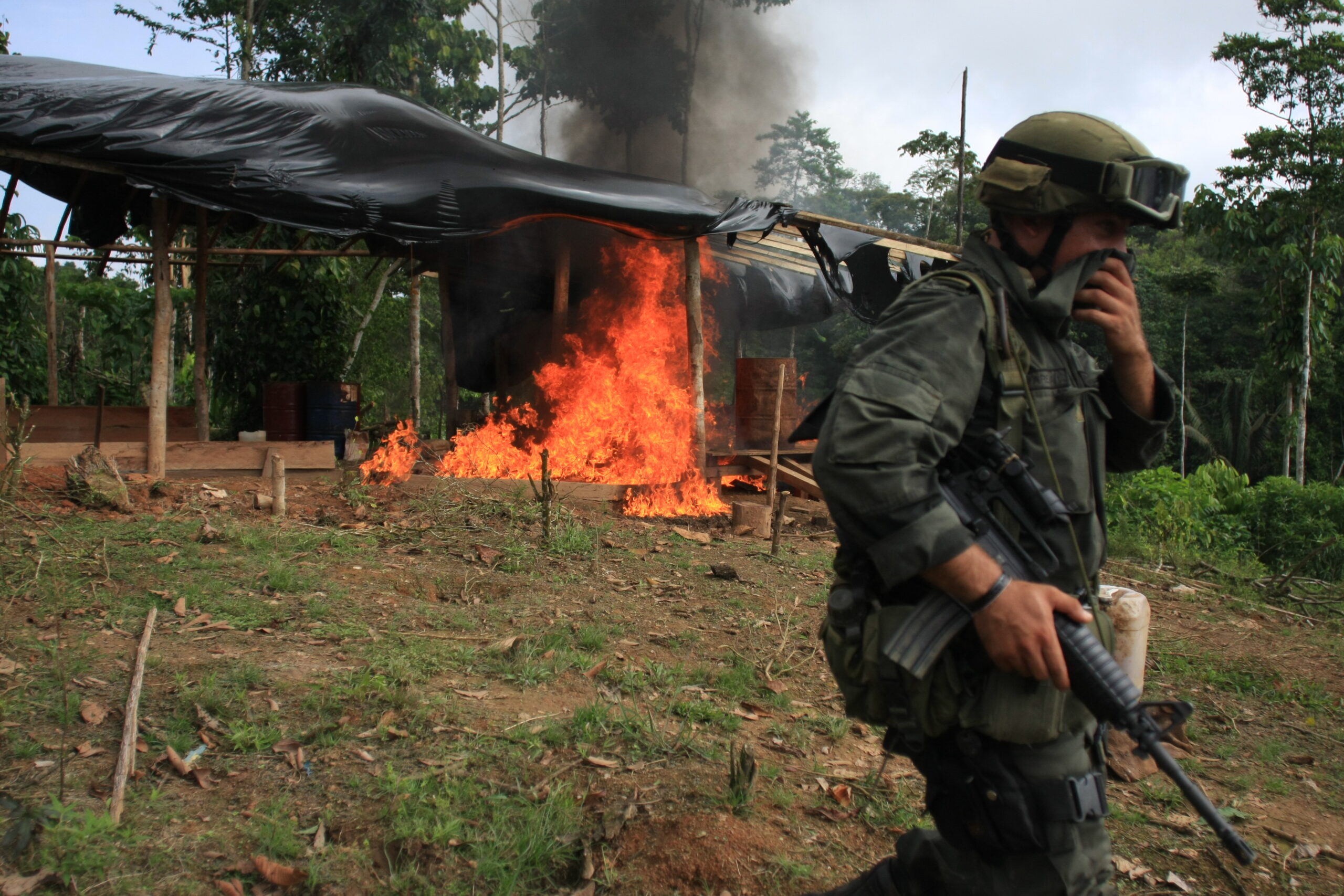
Image credit: Policía Nacional de los colombianos via Flickr