
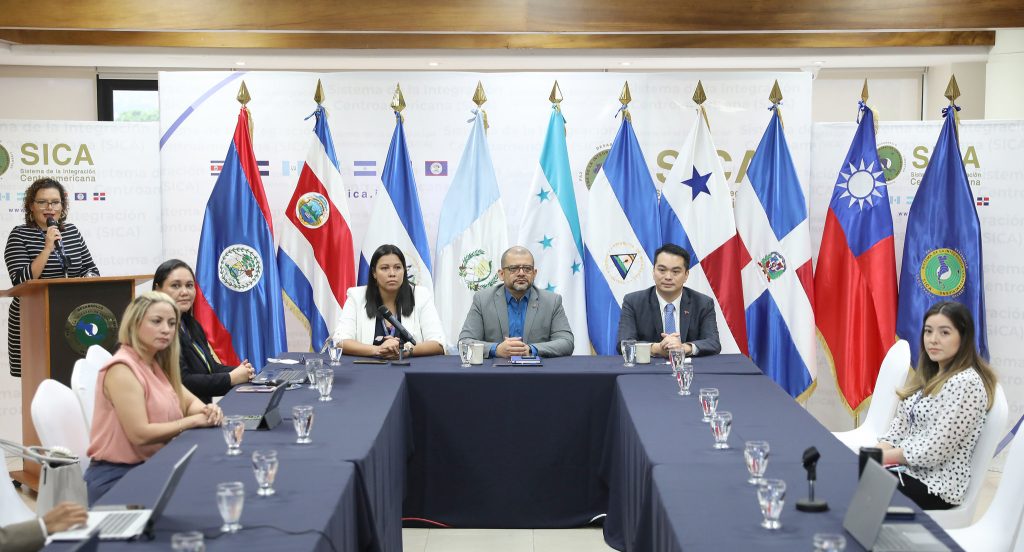
Amelia Makstutis, Lily O’Sullivan and Jonathan Hernández Nassif contributed to reporting.
Medellin, Colombia — Colombians went to the polls on Sunday to choose new representatives to Congress and the Senate, as well as presidential candidates for three main political blocs. Both the ruling leftist party and opposition right-wing party had good showings, setting up a potentially polarizing next legislative term.
Despite warnings of possible political violence by the country’s illegal armed groups, elections took place “without any major security incidents” according to the United Nations mission in Colombia. Overall voter turnout was around 48%, about on par with previous legislative election years.
With over 3,000 candidates competing for 102 Senate and 182 House seats, leftist President Gustavo Petro’s Historic Pact (Pacto Historico) party and the opposition Democratic Center (Centro Democratic) — founded by former right-wing President Álvaro Uribe — had the strongest showing Sunday.
By 10:00 PM, with nearly 100% of preliminary votes tallied, Historic Pact secured 22.8% of Senate votes while the Democratic Center tallied 15.6%, according to the National Civil Registry. The Liberal Party (Partido Liberal), Green Alliance (Alianza Verde), and the Conservative Party (Partido Conservador de Colombia) trailed with 11.7%, 9.8% and 9.6% respectively.
Official tallies for the lower house are still unclear, but analysts expect a divided Congress.
The results could keep Colombia’s legislature polarized as no party was able to secure an absolute majority. Throughout his presidency, Petro has faced barriers in Congress to passing his progressive legislation and he even called for a constituent assembly to circumvent the body.
His party’s presidential candidate, Senator Ivan Cepeda, who aims to carry the torch for Petro’s reforms, celebrated the party’s win in the senate race saying, “Today our second half begins, with a strong and committed caucus we will begin a new stage of transformations.”
Political risk consultant Sergio Guzman told Reuters, “The left showed that it is here to stay, the right that it is divided, but it is not weak. We are going to have a fragmented Congress for the next legislature.”
Jeni Suarez, 41, who voted for the Historic Pact for the Senate and Congress, told Latin America Reports in Medellin that the most important problem at the moment is the “political war from side to side.”
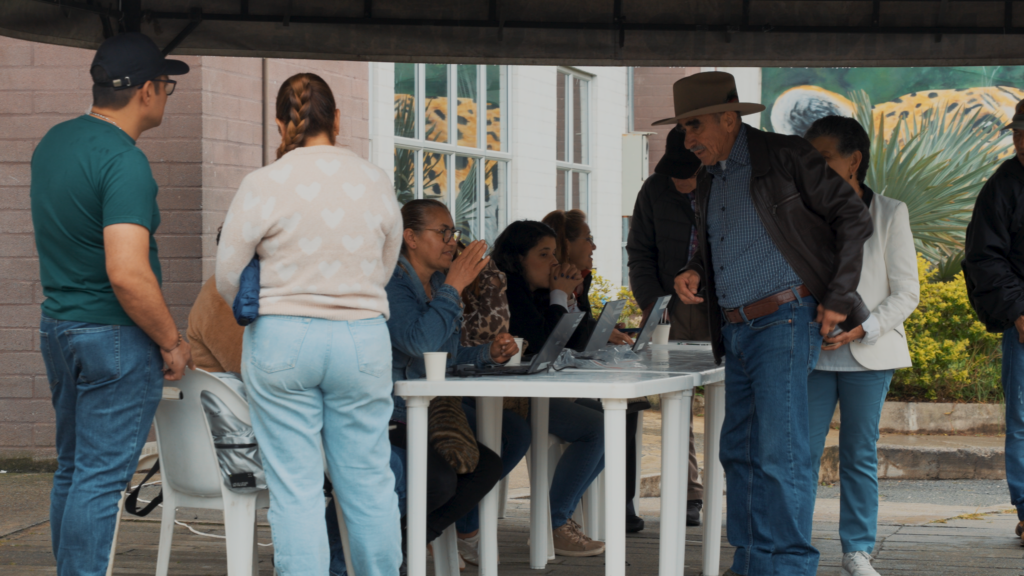
Presidential primaries
In addition to the House and Senate, Colombia also held three primary elections — known as inter-party consultations – to choose candidates for the three main political blocs: left, centrist, and right-wing.
Two candidates currently leading in the polls — far-right lawyer Abelardo de la Espriella and left-wing Senator Ivan Cepeda — were not included in the primaries and the eventual nominees from the three consultations – “The Consultation for Solutions: Health, Security, and Education” (center); “Front for Life” (left), and “The Great Consultation for Colombia” (right) – will go on to compete against them in the first round of presidential elections on May 31.
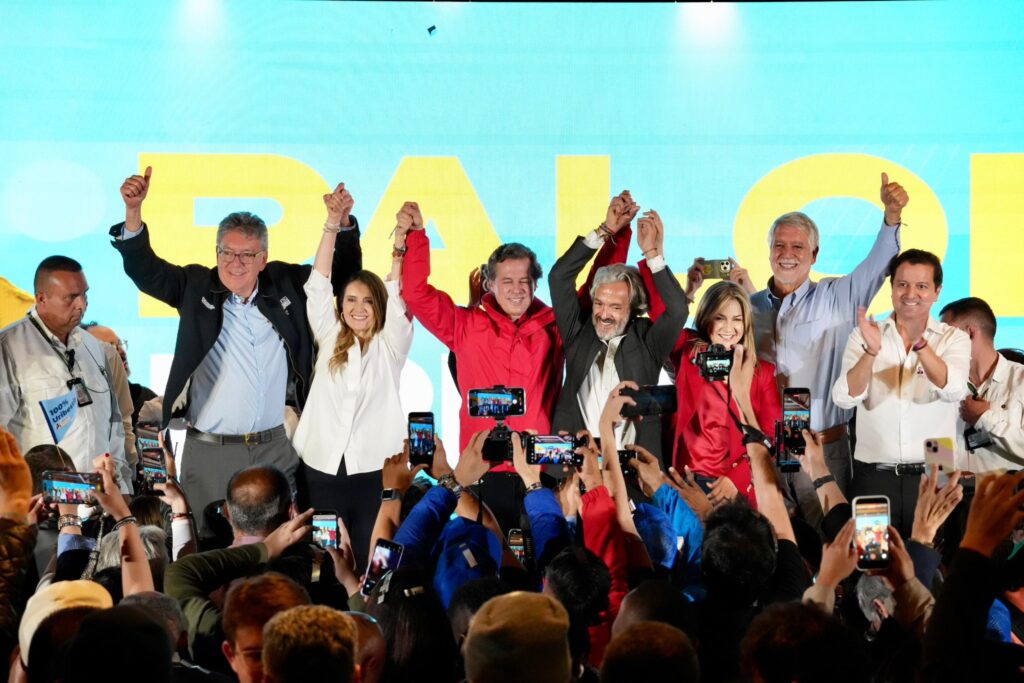
Sunday night’s big winner was Paloma Valencia, a protégé of former President Uribe’s Democratic Center party with a political pedigree that includes a former president grandfather and an aunt who was Colombia’s first female cabinet-level minister.
Addressing her base at her victory party, Valencia lambasted President Petro, calling his administration “a time bomb that’s ticking down the seconds until it explodes.”
In an interview ahead of the primaries, Valencia told Latin America Reports, “I am Uribista, and I will die Uribista,” and said she plans to follow in her mentor’s footsteps.
Former Bogotá Mayor Claudia Lopez handily won her Consultation for Solutions primary, and former Medellín Mayor Daniel Quintero conceded to longtime politician and former Senator Roy Barreras in the Front for Life consultation.
“I want to congratulate Roy on his victory. I will support him as required by law,” said Quintero on X. “I hope he leads us toward a process of unity.”
Election security
In the days leading up to elections, the UN High Commissioner for Human Rights warned that non-State armed groups were using violence to control civilian populations in Colombia and could undermine election security.
Last year, the UN recorded 18 homicides and 126 cases of attacks and threats against political leaders, including the high-profile assassination of right-wing pre-presidential candidate Miguel Uribe Turbay, who was shot in the head at rally in Bogotá’s Modelia neighborhood in June and succumbed to his injuries in August.
On Sunday, Minister of Defense Pedro Sánchez said over 240,000 security forces had been deployed to safeguard elections, which a delegate for the National Civil Registry called a “peaceful day at the polls, except for some isolated cases in the regions.”
Voting was temporarily suspended in the rural municipality of La Macarena, Meta following an alleged drone strike by a guerilla group near a polling station, according to the National Civil Registry. The agency also denounced “100 million cyberattacks” against its website.
Other election interference, including vote-buying was also reported. Colombia’s National Police said they captured 88 people related to elections and seized over $990,000 (COP 3,761,000,000) in cash meant to influence voting.
In the hours leading up to the election, Víctor Hugo Moreno Bandeira, the Democratic Center congressional candidate in the southern Amazonas department, was arrested with $5,200 (COP $20 million) in cash allegedly meant for vote buying. His party later suspended his candidacy.
And Fredy Camilo Gómez Castro, a senatorial candidate for The U Party (Partido de la U), was arrested and accused of being the right-hand to Colombia’s contraband king, Diego Marín, alias “Papá Pitufo.”
On Colombia’s eastern border with Venezuela, Defense Minister Sánchez denounced mass illegal border crossings, with an estimated 2,400 people crossing the Tachira river “presumably headed to vote.”
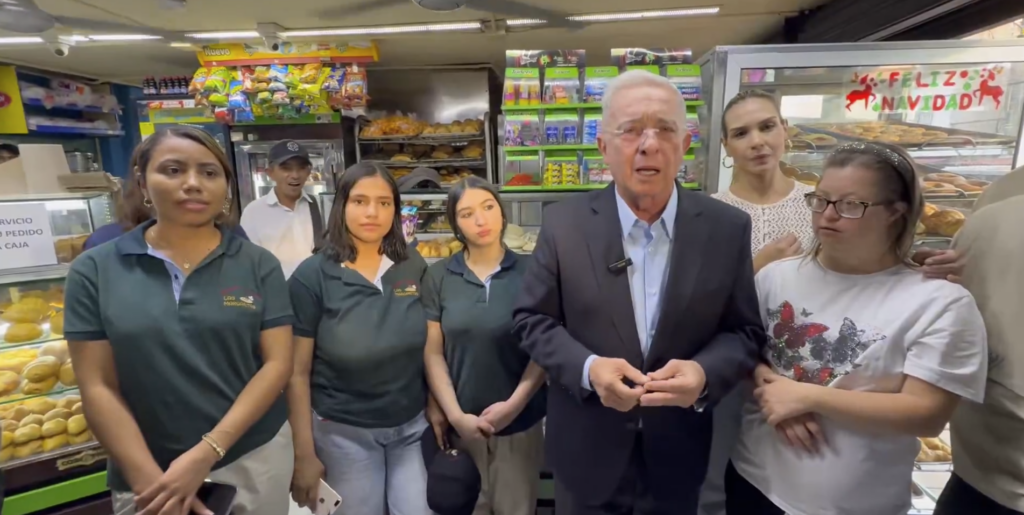
While his party had success, Álvaro Uribe fell flat
For the first time in his storied political career, the History Channel’s “Greatest Colombian in History”, Álvaro Uribe, failed to win a seat in the Senate.
Projections indicate that Uribe’s Democratic Center party will secure 17 seats in the Senate, and he was placed 25th on the list of his party’s candidates, effectively excluding him from a seat.
Uribe, who won over much of Colombia’s electorate for beating back leftist guerrillas during his presidential terms between 2002 and 2010, has come under fire in recent years for his ties to drug traffickers and paramilitary death squads.
Last August, the controversial president was convicted of procedural fraud and bribing a witness and was sentenced to 12 years house arrest before Bogotá’s Superior Court overturned the conviction two months later.
Amelia Makstutis, Lily O’Sullivan and Jonathan Hernández Nassif contributed to reporting. A version of this article was also published on The Bogotá Post.
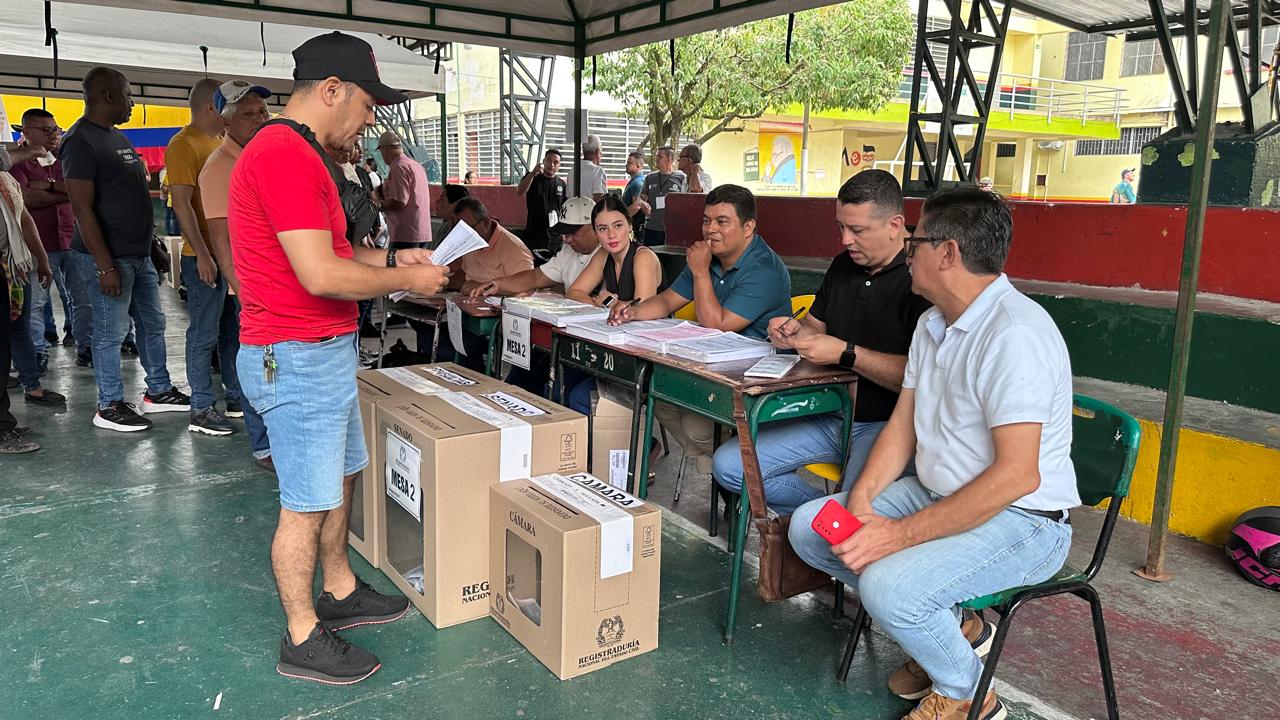
Featured image: Colombians headed to the polls on March 8 for legislative elections.
Image credit: Registraduría Nacional del Estado Civil via X.