

Bogotá, Colombia – Protesters clashed with security forces in Bolivia’s capital La Paz on Monday as tensions over the country’s dire economic situation boiled over.
After marching toward the capital for 6 days, demonstrators, many wearing miner’s protective helmets, tore down barricades and hurled projectiles while police dispersed crowds with tear gas.
By Monday night, peace was restored to the streets of La Paz with reports of more than 100 protestors arrested, while the government remains in power.
The conflict in the capital followed two weeks of protests against fuel shortages and inflation, among other concerns.
The unrest began with a miners’ strike but has widened to include teachers, farmers and Indigenous groups, many of whom are calling for the resignation of President Rodrigo Paz less than seven months since his inauguration.
At the root of the conflict is the decision by President Paz in late 2025 to eliminate fuel subsidies that many rural communities in Bolivia have relied upon for two decades, but which had drained the country’s international dollar reserves.
Protestors have a variety of grievances, but all center on concerns around the country’s economic direction. The Andean nation is suffering a deep economic crisis, and while inflation has come down steadily from a high of almost 25% in July 2025, it remains over 14%.
Disgruntled citizens have blocked 32 highways, choking the country’s road network and leading to shortages of supplies of food and medicine. The Argentine government sent emergency supplies by air at Bolivia’s request.
The combination of fuel shortages, increased prices and austerity measures, which Paz says are needed to ensure fiscal stability, have caused deep division in Bolivian society and within its government.
Vice-president Edmand Lara has accused the president of not fulfilling campaign promises.
Meanwhile, President Paz has criticized protesters saying, “There is no reason to attack innocent people.”
Ex-President Evo Morales, who governed Bolivia from 2006 to 2019, defended the protestors on X, writing: “That the people exercise their right to freedom of expression and protest is not an assault on democracy. An assault is to criminalize that right with false accusations, violent infiltrators, bonuses to repressors, division of organizations with perks, and dirty media campaigns.”
Economy Minister Jose Gabriel Espinoza dismissed the protesters as “political operatives seeking to serve as a stepping stone” for Morales to return to power.
Colombian President Gustavo Petro also weighed in on X, declaring that, “Bolivia is experiencing a popular insurrection. It is the response to geopolitical arrogance.”
Paz was elected on a promise to end the costly fuel subsidies, comfortably defeating the far-right candidate, Jorge Quiroga in a run-off.
Nevertheless, the policy has been a major cause of unrest. The country’s largest labor federation, Central Obrera Boliviana (COB), declared a general strike last November.
Yesterday, an arrest warrant was issued for Mario Argollo, the secretary-general of the COB, charging him with terrorism and inciting crime for his role in the blockades.
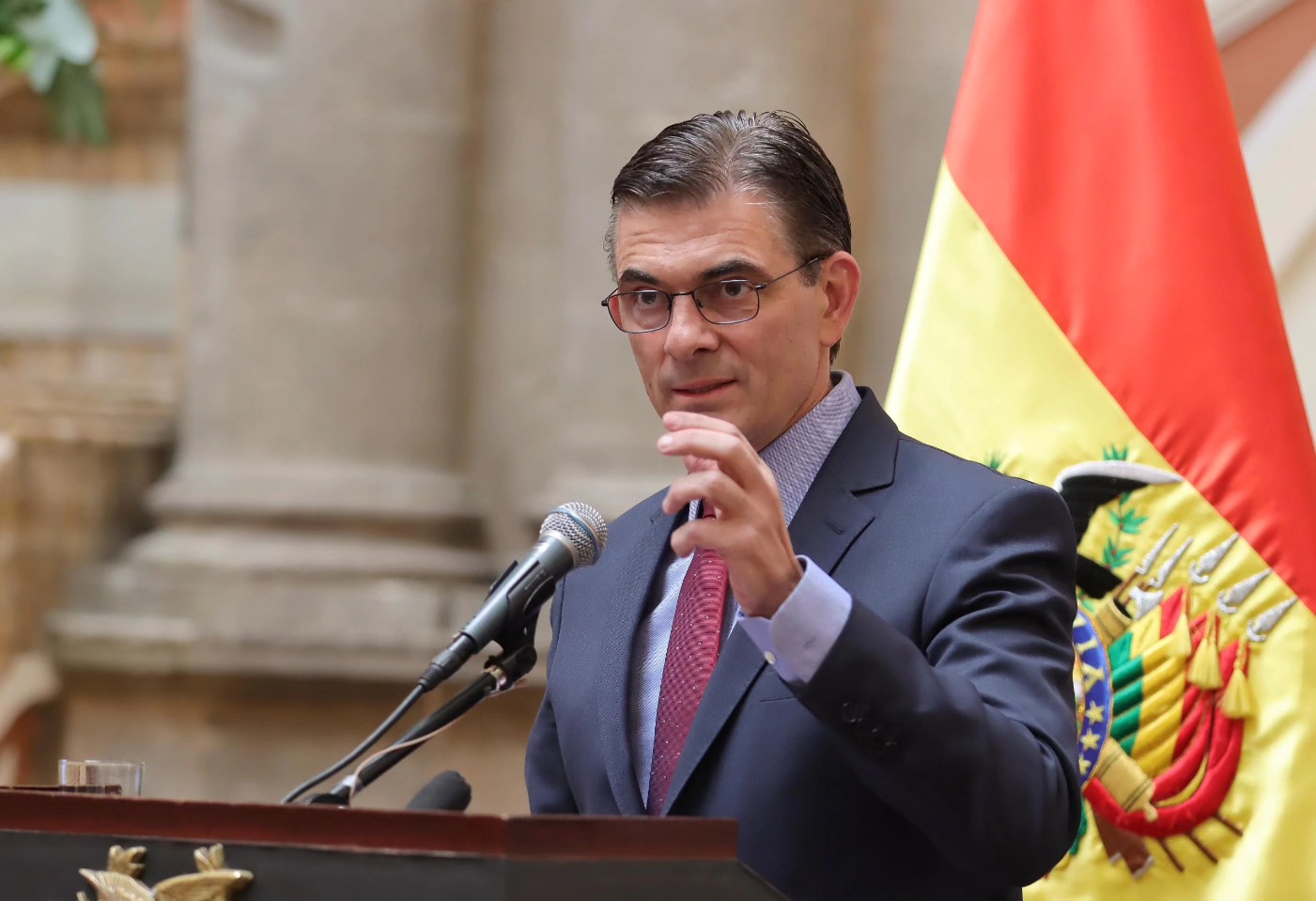
Featured image description: President Rodrigo Paz speaks
Featured image credit: Pavel Špindler via Wikimedia Commons