
Caracas, Venezuela — Propaganda featuring Nicolás Maduro is disappearing from various public spaces and institutions in Venezuela. According to some analysts, it’s a sign of interim President Delcy Rodríguez’s attempt to distance herself from her predecessor and rebrand her government for political survival.

Five months after the authoritarian president’s capture by U.S. special forces, murals, posters, and other symbols associated with Maduro — including the anti-imperialist cartoon character Súper Bigote — have been gradually removed by the interim administration.
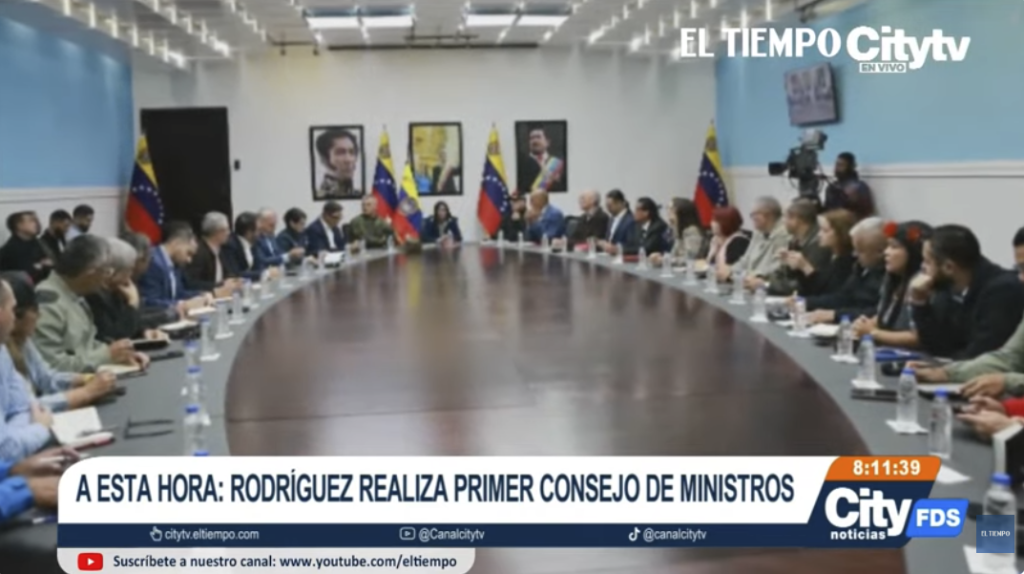
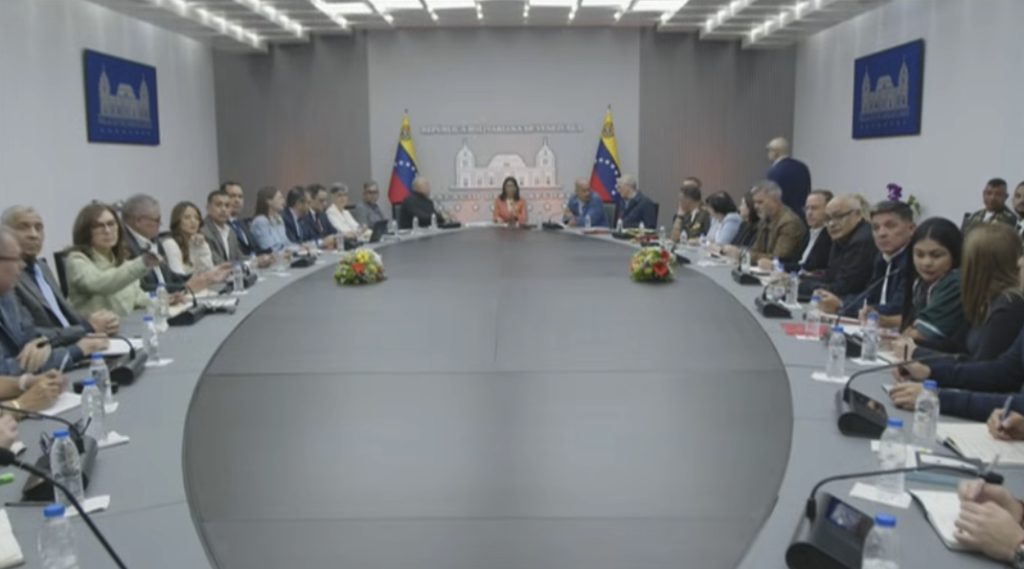
Social media posters have spotted Maduro’s image removed from toll roads, financial institutions including the Banco de Venezuela (BDV), even inside the Cabinet Room at the Miraflores Palace, home of Venezuela’s presidency, where pictures of Maduro and his wife, Cilia Flores, that hung on the wall after his capture, have since been replaced by a palace seal.
“Maduro is a figure with a very poor image. The revolution turned out to be one of the worst things that has happened to the country, and now they are seeking to disassociate themselves from that image conveyed by people who ultimately caused great harm to the country,” José Vicente Carrasquero, a Venezuelan political consultant and adjunct professor at Miami Dade College, told Latin America Reports.
In late May, a Bloomberg and Atlas Intel poll showed 68% of Venezuelans surveyed had a negative perception of Maduro. Other influential members of the regime, such as Minister of Interior, Justice and Peace Diosdado Cabello and National Assembly President Jorge Rodríguez also received 68% disapproval ratings while 59% of Venezuelans perceived Delcy Rodríguez in a negative light.
Carrasquero suggests that the erasure of Maduro-related propaganda could be an attempt to rebrand the political project known as Chavismo — which gets its named from Maduro’s predecessor and the deceased leader of the Bolivarian Revolution, former President Hugo Chávez.
“Something that is disappearing — and hopefully will disappear forever from Venezuelan politics — is the cult of personality. The attempt to associate the political project and its progress with individuals,” he explained. “It is a mistake, especially when those individuals are as mediocre as Chávez and Maduro. Clearly, we must return to institutionalized politics, centered on a project, on parties, on things that endure over time and do not vanish.”
Chavismo’s new look
Carrasquero argues that Rodríguez’s administration is “very pragmatic” and desperately wants to remain in power because “power is what keeps them from being held accountable” for offenses committed during Maduro’s presidency.
As part of this pragmatic shift, the government, the professor said, is showing concern for issues it previously would ignore, including corruption and basic services for ordinary Venezuelans.
Rodríguez recently announced that her team is establishing a hotline to report corruption amongst authorities. “I want to put an end to the harassment and extortion,” she said.
In April, she also announced negotiations with Siemens and General Electric to resolve the electricity crisis in the Zulia state.
“They’re trying to stabilize the situation to see if they can stay in power as long as possible,” Carrasquero said.
Despite the fresh paint job, Carrasquero believes Chavismo will have a tough time winning any future elections, should they occur.
Rodriguez remains interim president despite her 90-day emergency mandate expiring in April. The country’s opposition has called for elections but government officials have pushed back, saying that they need to stabilize the economy before any political transition takes place.
Congressman Nicolás Maduro Guerra, Maduro’s son, told the Spanish newspaper ABC, “When I walk down the street, I don’t get the feeling that Venezuelans want to vote yet this year. People need to breathe, they need a plan that leads to economic growth.”
The same Bloomberg/Atlas Intel poll showed opposition leader Maria Corina Machado with a 55% approval rating and her political stand-in, Edumundo Gonzalez Urrieta, with 47% approval. U.S. President Donald Trump and Secretary of State Marco Rubio also saw mostly positive perceptions amongst Venezuelans, with 45% and 49% approval ratings respectively.
“In my view, it is almost impossible for [Chavismo] to win an election again in the near future, basically because they are responsible for what Venezuela is going through,” he stated.
Featured image credit: SuperBigoteOficial via YouTube