
La Guaira, Venezuela –– About a dozen women were waiting to be seen at the McDonald’s in Caraballeda, a town in La Guaira that was hit hard by Venezuela’s duel earthquakes on June 24.
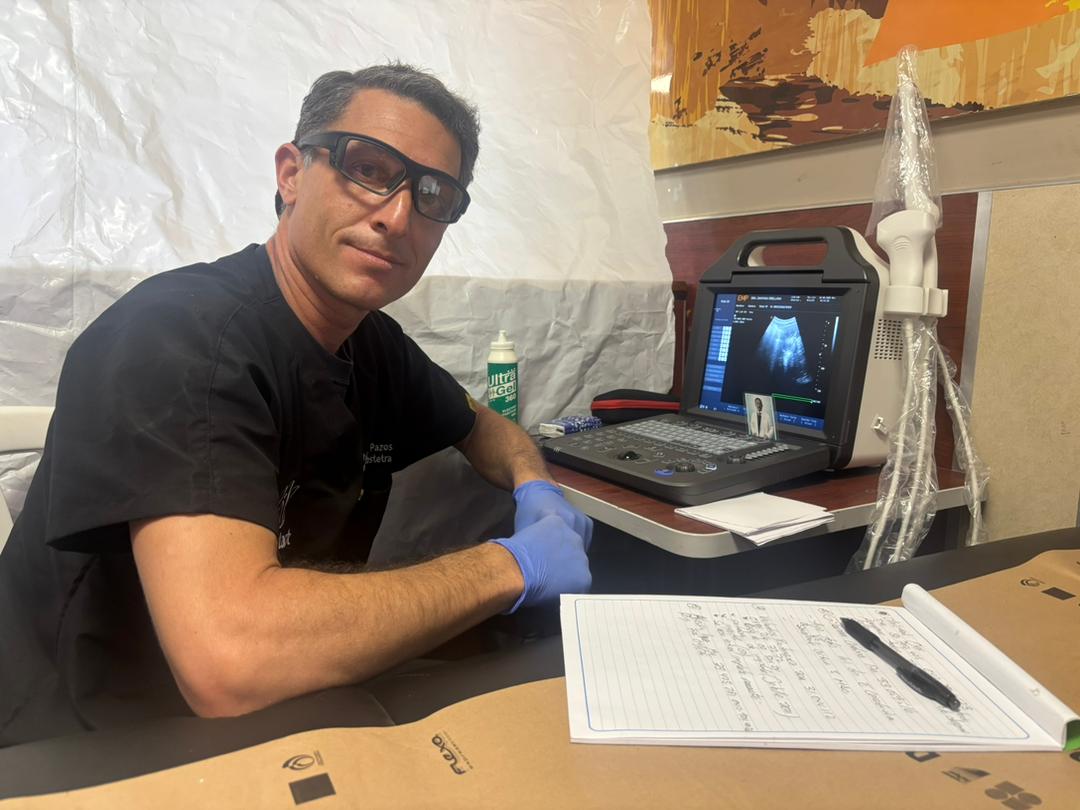
In late August, at one of his makeshift clinics that moved around to different locations in La Guaira, Dr. Alejandro Pazos took walk-ins from women from all walks of life. He is a specialist in gynecology, obstetrics, and minimally invasive surgeries and carries out his work in partnership with the “Más que un aporte” foundation, where he serves as medical director.
“At the ‘Más que un aporte’ foundation, we have made a great effort to address the needs of women in this situation, and therefore we have designed and implemented the women’s health project in disaster situations,” he said.
The initiative focuses on five objectives, he said.
The first is to prevent maternal mortality among pregnant women, who, according to the organization’s estimates, numbered 30,000 in La Guaira prior to the tragedy. Of that number, 4,000 were near term, which is why the organization is focused on caring for them to ensure continuity of prenatal care and identifying health centers where they can receive treatment.
Additionally, the organization aims to prevent unplanned teenage pregnancies by administering contraceptives; prevent sexually transmitted diseases; helping with menstrual health and women’s health; and fighting against gender-based violence.
“It has been a complex, demanding experience, because the earthquake has created many female refugees, displaced to places where sanitary conditions are very limited, where women are highly vulnerable to extortion, manipulation, and even abuse—and that is why we have been addressing this issue,” Pazos told Latin America Reports.
Expanding aid
The doctor explained that, although many efforts are underway, the scale of the tragedy means more collaboration is needed—especially when it comes to health clinics for women, which cannot be held just anywhere because certain conditions must be met, primarily privacy.
“Any contribution that helps us get equipped and expand our capacity to provide care will be welcome,” he said.
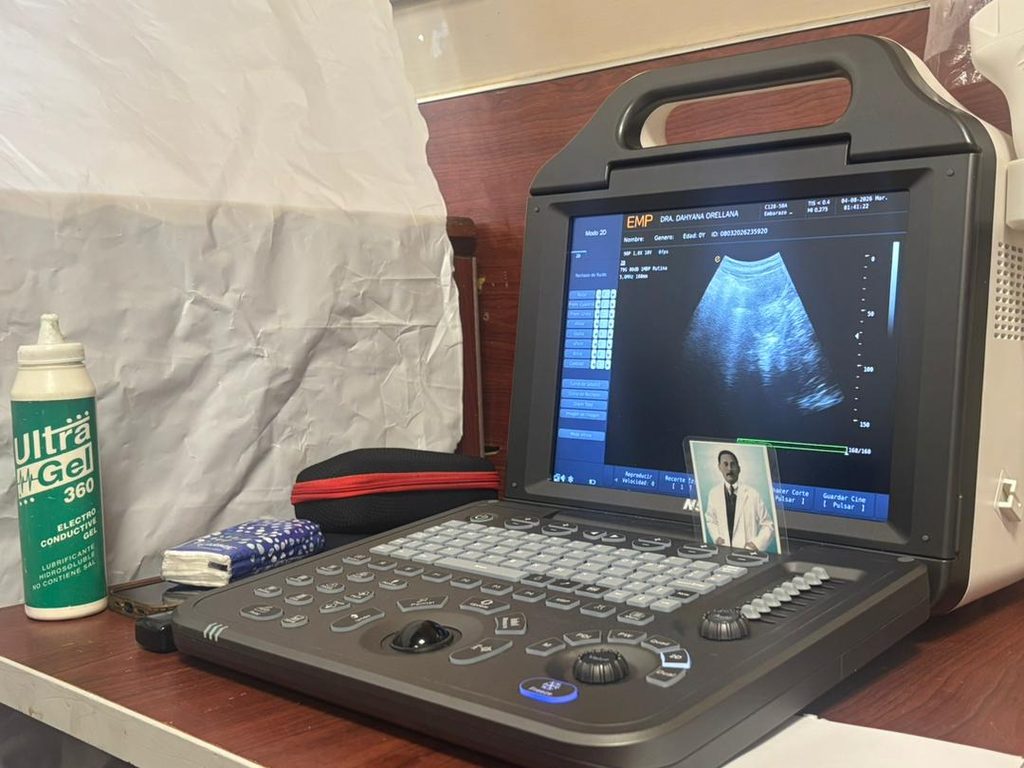
Pazos gave the example that the ultrasound machine they use for these activities was loaned to them by a colleague and that they also have to make do with makeshift stretchers because they lack the necessary equipment.
He explained that anyone wishing to help can donate privacy screens to ensure privacy during consultations and thus respect the patients’ dignity.
Another way to support the effort is by donating medical supplies. “We’re using a variety of supplies—gloves, cotton, and others—and, finally, contraceptives are extremely important. Condoms are the easiest to distribute, the most affordable, prevent unplanned pregnancies, and protect against sexually transmitted diseases. So, condoms are an excellent method of contraception,” he added.
In his work, the doctor is not alone; there is a team in place led by Jocselyn Porco, president of the foundation. She told Latin America Reports, “We bring women together to provide them with care that lasts over time.”
They said they have encountered cases of women who had appointments scheduled for late June but, due to the earthquakes, were unable to receive their checkups for months.
The aid workers say they’re in it for the long haul. “We’re seeing just the tip of the iceberg of all these needs and the social situation unfolding because of this tragedy, so we have to make this sustainable—and the best way to do that is by bringing more people, volunteers, and causes on board so we can hold more outreach events,” said Porco. “Today we’ve identified cases that require follow-up; if these outreach events don’t continue, how can we follow up with these patients?”
The saint who guides Pazos’s work
Inside his improvised ultrasound room, among the different medical instruments and supplies, a small, holy card stands out.
Pazos displays a prayer card of José Gregorio Hernández, a Venezuelan physician active in the early 1900s who in 2025 was canonized by Pope Leo XIV. Known for his work helping the poor, Hernández was one of the first Venezuelans to receive the act from the Catholic church.
When asked about the saint, Pazos’ voice broke.
“When you dedicate yourself to this, it obviously hurts; it’s difficult, but you need help—help that goes far beyond the earthly realm. You have to make decisions, make sure nothing slips through the cracks, and in the end, it’s my responsibility. If everything goes well, that’s fantastic, but it’s difficult; we don’t have the capacity to solve everything. So may He be with me.”
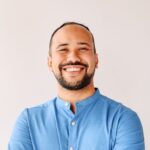
Featured image: Dr. Alejandro Pazos
Image credit: Julio Blanca for Latin America Reports